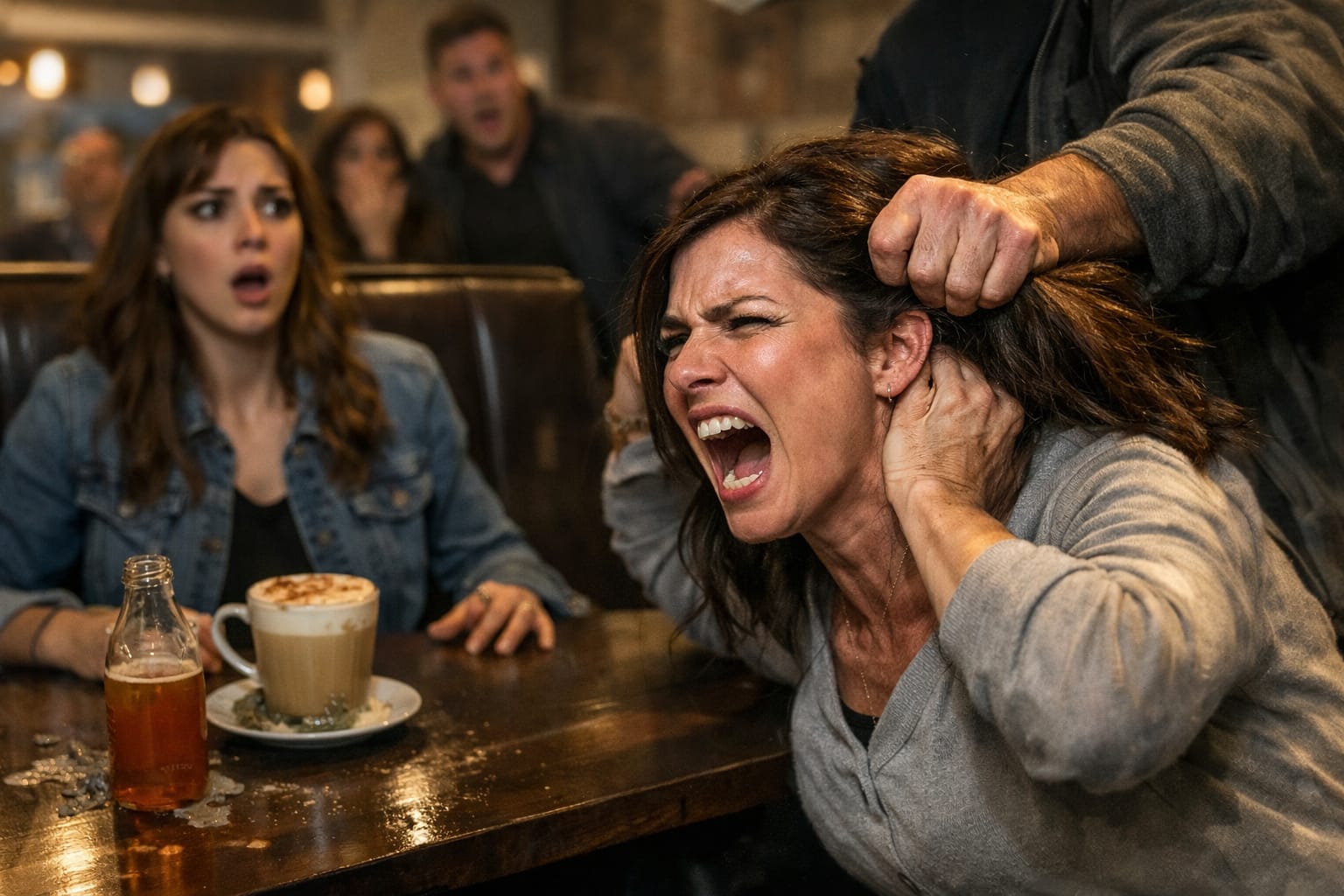
I was sitting in a booth across the table from my oldest daughter, in our favorite Coffee Shop. The high-backed seats provided privacy and a perfect setting for catching up on life events. The aroma of her Dirty Chai made me wish I had ordered coffee instead of my tart Kombucha. Her voice mingled with the background murmurs of other conversations around us as she told me about my grandson’s first day of kindergarten. I was studying her face as she talked. I cherished these moments, admiring how her long eyelashes accentuated her chocolate eyes. They sat under perfectly manicured eyebrows so as not to resemble the unibrow she inherited from her Father. The tiny scar on her cheek was barely visible; a reminder of the time her sister threw an old metal hanger at her in an attempt to win an argument. Her perfectly heart-shaped lips reminded me of her Dad.
Suddenly, out of nowhere, I gasped when I felt someone grab me by my hair, wincing as my head and neck jerked from the force. My heart sank to my stomach, beating hard and fast. The attacker behind me growled, “You’d better get out of this place. Get back home!”
I did not need to look up to know who it was. I began screaming, “Help! Somebody, please help me!”
He pulled me out of the booth and dragged me toward the front door of the cafe.
My hands went to my head, trying to free myself from his grip. As always, he was much bigger and stronger. She sat motionless, shaken, not knowing what to do. Her mouth hung open, her eyes wide and glassy with tears.
I was trying so hard to have a different life, a better life. I did not want my children to experience this violence anymore. I wanted them to know that this is not OK and that life can be peaceful.
The harder I fought to break free of his grip, the tighter he held on. There was no way I was leaving without a fight. Part of me wanted to give in, to stop the pain in my scalp, but I couldn’t let him win. Not this time. I tried to plant my feet on the floor, but they slid effortlessly across the tile. What if he overpowers me? What if I can’t get away?
I stopped screaming for help, and I started yelling at him. “Stop! Get away from me! Leave me alone! You can’t control me!”
Healing does not require closure or resolution. It begins with accepting who you are today, even if you feel unchanged, fractured, or unfinished. Growth does not have to be visible. Healing often happens quietly, alongside uncertainty and setbacks.
The idea that healing requires resolution feels almost heretical in a culture that insists healing must end in understanding, apologies, or neat conclusions. We are taught that peace comes after explanation, justice, or when the other person finally says, “I’m sorry.” But sometimes healing can begin much earlier. It is a willingness to accept who we are today.
Healing happens underground, in the places where confusion and pain still live. It can exist alongside fear, anger, and unanswered questions, even when the body remembers what the mind wishes it could forget.
I know this because I have lived it.
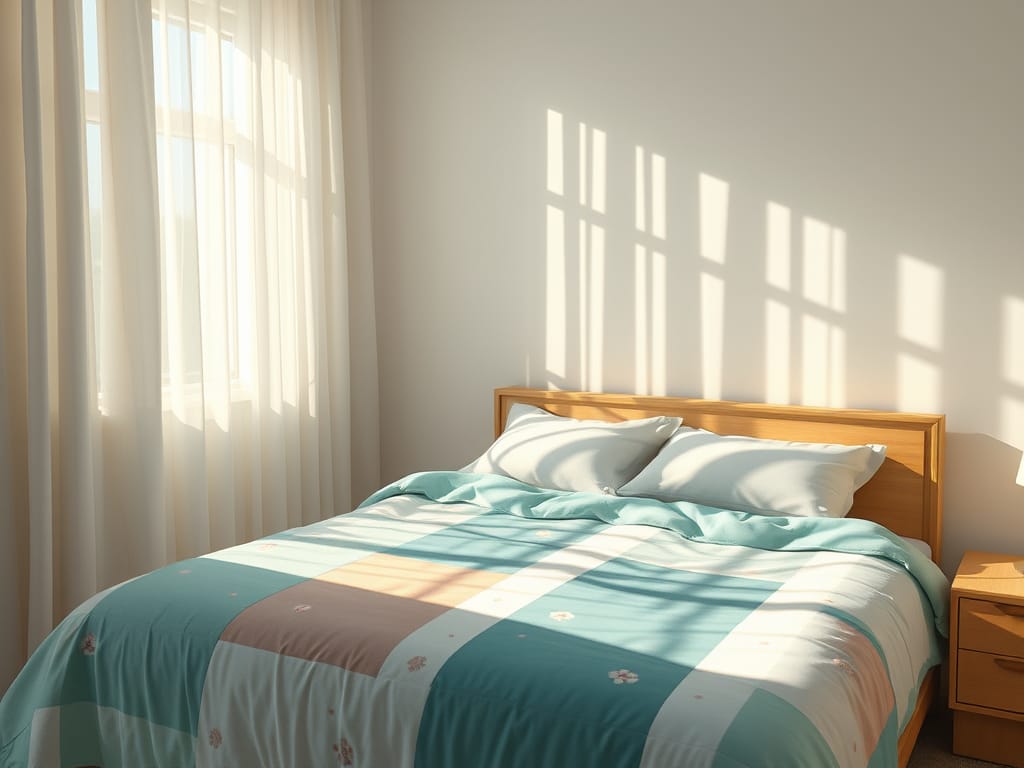
In 2005, a moment suspended in my memory, I am 37 and pregnant. He is 37 and a Pastor. I am standing in a bedroom, confused. Sunlight spills through the curtains. The carpet is cool beneath my feet. The room looks ordinary, unchanged, which makes the cruelty harder to understand. How can someone do something so violent and act as though nothing happened? How can the world remain intact when something inside me has shattered?
My body holds the truth even when words fail. The truth: his actions triggered a miscarriage. There is tension everywhere: my tight chest, my knotted gut, a heaviness that presses me toward the ground. I feel dry, depleted, unable to cry. I can’t even empty the pain. I want to scream, run, disappear into sleep. My soul feels suppressed, distant, unreachable. In my desperation, I wish for divine intervention, punishment done to him, not because I want violence, but because I want acknowledgment. I want the harm to be seen, named, made real.
The wish for an apology is not about reconciliation. It is about validation. If the one who caused the harm were to seek forgiveness, it would mean admitting the harm existed. It would allow me to acknowledge it too, to stop wondering whether I imagined it, whether it counted. Without that acknowledgment, I am left alone with the knowing, carrying both the wound and the responsibility of believing myself.
Today, 20 years later, through the inner work of healing, when I return to that memory of the bed, something or someone else appears: a protector, an ally, a voice that says, “Fuck you,” to the bed, not to destroy it, but to defend me. A hand reaches out to help me sit up, to wipe my tears. Although I am still afraid to face the bed, I am willing to peek around my protector’s shoulder. This, too, is healing. Not the absence of fear, but the presence of support.
The bed itself has not changed. It is an inanimate object, made as always. And yet it holds meaning. The comforter had light teal squares, abstractly arranged, some solid, some floral, hints of pink scattered throughout the pattern. Calm existing in chaos. I want to burn that bed, to erase the sight of the pain. But I also want to save the comforter, folding it carefully, rather than destroying it. Because I am allowed to carry reminders without being consumed by them.
This is not closure; it is not resolution. It is acceptance of where I am now and how far I have come.
Healing, in this sense, is not happiness or forgiveness. It is a quiet decision to stand with yourself, even in uncertainty. It is the recognition that healing can happen while questions remain unanswered, while anger still flickers, while the past refuses to stay neatly behind you. It is the understanding that being unfinished does not mean being broken.
Healing begins the moment you stop waiting for someone else to give you permission to believe your own experience. Healing does not require closure, because closure depends on other people behaving in ways they often never will.
There was a time when I hated to be alone. The prospect of eating in a restaurant alone scared me. The idea of living alone terrified me. I was scared of being alone, so I surrounded myself with boyfriends, then eventually with children. Never again to be alone. I was an only child. I was alone a lot. I was alone in my room, alone after school. Alone. I was alone with my own choices, alone to whatever and whoever tried to hurt me. Alone. I was used to being alone, and I hated it.
Of course, my parents loved me. My parents did not learn how to love an only child. They did the best they could with the tools and knowledge passed down to them. They didn’t know about attachment styles. They did not know they were prone to denial and avoidance. They had no idea how lonely that would make their only child feel.
I tried to fix my loneliness by going to parties, hanging out with friends, getting married twice, and once again. I noticed that although I was married and not alone, I still felt alone, so I had a child. And it filled a hole. So I had another child, felt fulfilled, and then had nine more. Each time, feeling complete and whole at the birth of each. Because no one feels more loved than when that newborn babe suckles your breast for the first time. But they outgrow that, and the loneliness always creeps back in.
I was in the midst of a house full of people whom I loved, and they (except one) loved me. Then why did I feel so alone? Why was I so lonely? I was looking for these people to fill me. My validation came from these people: my husband and my children. I was dependent on them for my self-worth. And since no one can validate you better than yourself, and no one can love you better than yourself, and no one can know your worth better than yourself, it did not work.
It took me years to figure out how to fill that void. Now I understand what I was doing wrong and what actually works. Until you stop looking at the people beside you to fill your lonely hole and start looking in front of you in the mirror at yourself, nothing else will work. Nothing else will satisfy.
Ask yourself what the void is. What is it that you need that you are not receiving? Is it love? Is it validation? Is it understanding? What do you need? I needed to be heard and seen. I needed to feel loved.
Here’s to stop loneliness:
Stop reaching out to other people to fill the void. I’m not saying you shouldn’t have friends. Having friends is good. Often refreshing. But it is not healthy to depend on them for your fulfillment and happiness.
Start looking in the mirror and say. “You are loved.” Say it five times, pointing to yourself. Then put your hand on your heart and say, “I am loved.” Say it again. Again. Say it again. Louder. Say it like you mean it. And say it with a smile. At first, you might not feel it, but as you practice this, it will become easier, feel lighter, and have more meaning.
Lonely people just want to be loved, feel loved. That is all I ever wanted, to feel loved. And I was looking for love in all the wrong places, when it was right in front of me, staring at me in the mirror the whole time.
Grief and trauma don’t vanish just because we decide it’s time to be happy. Healing isn’t about pretending the pain is gone or forcing ourselves to move on. It’s slower than that, quieter. It asks to make room for what hurts, instead of pushing it away.
But even when loss has taken more than we ever thought we could survive, we still have something left. We still have a choice. Not always in the big ways, but in the gentle, daily ones. We can choose how we care for ourselves in this moment. We can choose rest and compassion instead of self-blame and sorrow.
Breathe. Pause. Allow yourself to be grounded instead of letting the overwhelm take over.
Happiness after grief doesn’t mean forgetting who or what you lost. It doesn’t mean the pain has vanished or that what you lost no longer matters. It means hope is making space beside the sorrow. Not replacing it, just sitting next to it.
Choosing joy is not a betrayal of your pain. It’s an act of survival.
The nuthatch teaches this well. A bird that doesn’t soar or flee, but stays close to the trunk. It climbs downward, upside down, navigating the world in ways that feel strange but steady. When everything is tilted, when nothing feels safe, it continues anyway. The nuthatch holds tight. Its strength isn’t in beauty or speed, but in holding on.
It doesn’t rush. It circles back, rechecks, and returns.
And that is how grief moves. It isn’t in a straight path, with clarity or closure. It returns, pauses, then returns again.
The Nuthatch teaches us to stop reaching for an escape. Stay connected to the present moment, even when life feels upside down, and return to the things that support us.
Where the hummingbird says, “I am still here despite the cost.”
Where the mourning dove says, “Peace can exist with sorrow.”
The nuthatch says, “I will stay with what steadies me, even when the world feels upside down.”
Is it possible to have the marriage of your dreams? A wife wishing you felt loved? What if I told you that true love and soulmates can and do exist? Would you roll your eyes? That’s what I did when people mentioned it.
I remember doing a cleaning estimate in the home of an elderly couple, Elsie and Jim. I always asked our potential clients to walk us from room to room and tell us what they expect, and I would, in turn, tell them what we would do as I would reach up and rub a finger across the top of the door frame, checking to see how much dust was up there. I had a notebook and a pen, jotting down each room we entered, anything I noted, and anything they specifically mentioned.
It was a modest home in an older neighborhood that was once home to the upper middle class. The home’s original layout was smaller, with add-ons such as a step-down den and an attached, closed-in sunroom. The trees no longer let the sun in. The furniture and decor were what you would expect for someone in their 80’s. Their house was not dirty by any stretch of the imagination, but they could not keep up with the cleaning, as their eyes and muscles just were not up to the task.
Elsie was walking us from room to room, explaining what she expected and asking whether we had done certain things. She went on to tell me how she found out about us, which ensured her a discount.
When we reached the formal living room, we found metal sculptures throughout the space. Unique and clearly custom-made. Elsie could see I was looking at them with intrigue. I always like creativity, and she began to boast about how Mr. Jim had handcrafted them. She was so proud of these unusual, out-of-style, out-of-character art pieces.
“Jim had a welding hobby, making ornamental iron and porch rails. Every time he would do a project, he would make me a sculpture and bring it home. I told him he had to stop making them because I was running out of room. But it sure is the sweetest thing.” She was telling me.
I looked up. She was right, she didn’t have room for any more. When she told me the ways he showed her love, I had to admit I was a little jealous, since I was married to a self-centered, unaffectionate man. There were never birthday cards, anniversary cards, or even Valentine’s. No, those were holidays for him to have a rage because he felt like I expected him to do something, and since I expected it, he refused. I didn’t receive anything on any other day of the year, either.
“Wow, that is so cool! How long have you guys been married?” I wondered.
“Sixty years.”
When I heard those words, I stopped and felt as if something had pushed me back. How? That is more years than I had been alive, and I was surprised. I could not recall knowing anyone else who had been married that long. My parents were approaching 50 years of marriage. How in the world can you be with and live with someone that long? There is no way. One of us might kill the other first, and I was sure he’d be the one to do it to me.
She immediately answered without hesitation, “I married my best friend.”
That was that. Nothing more.
I hope she could not see the cynicism in my response,
“Oh, that’s awesome.”
But boy, did it get me thinking. Really? Are you telling me you guys actually like each other? That is incredible, and oh my god. We are doomed. I can’t stand him, and he can’t stand me. Friends? Absolutely not. Whenever there was a fight, he would announce, “I am not your enemy,” but it sure felt like he was. If he wasn’t my enemy, and he wasn’t my friend, then what was he? What would you call him?
We definitely were NOT best friends, and we were struggling to be friends, but more like acquaintances. I could not stand being around him; we had nothing in common. We were complete opposites. Whoever said opposites attract failed to add “misery.” Opposites attract misery. I desperately wanted to marry my best friend, but that had long since left the table. I do not remember a single moment we were friends. The closest we came was that my best friend and his best friend were siblings, and we were friends through friends.
After that meeting, I determined to do my best to make my husband my best friend. But how do you do that? Quick disclaimer: You don’t. I will spare you the sickening ways I tried, because this particular article isn’t about my ex.
“Mom, you need to start dating.”
It was good to hear those words. I was afraid of what my kids might think when they found out that I was on a dating app. Yes, I used a dating app because I had been so sheltered that I had no idea how to meet people. And I was not interested in going to bars. I had long left the formal setting of church, and quite honestly, I was not interested in getting back into religious control. I wanted to stay as far away from “god-fearing-church-going men” (read my other memoir material, and you’ll understand why).
During my divorce, I kept Natasha Bedingfield’s songs “Soulmate” and “Unwritten” on repeat. Those were my jam. I played them over and over. They were a lifeline to me.
I purchased a membership to the Zoosk Dating App, figuring that if I used the paid version, it would weed out the guys looking for a booty call. On the app, you can check boxes of what kind of person you do or do not want. Then they would show you a photo and a little bio. It wasn’t too hard to narrow it down. I was certainly aware of what I did not like. And I was exploring ideas of what I did want. I did not want to be with someone in my own town, but left it open just in case. My parents live 2 hours away, so I was hoping for a guy nearby them.
I put in my bio that I wasn’t looking for marriage or a long-term commitment. I just wanted adult companionship, someone to hang out with occasionally. There were two guys from Crosset. One of them had a son, and he made it clear he was looking for a mother for his boy. He was a love bomber and came on so fast and furious that it made me sick. It was too much, too soon, so I stopped conversations with him quickly. The other guy in Crosset had a working relationship with his ex and never wanted to leave her in the first place. It was apparent he was still in love with her, and I sure did not want to start a love triangle. There was the guy in El Dorado who wanted someone a little younger, a party girl. He was not my type at all. And then there was the guy who took me on my first date after the divorce. I do not remember where he was from or what his name was. I don’t recall any of their names, for that matter. Our date included Geocaching and dinner. He was a dirt bike rider, and although he was kind, we had nothing in common. We agreed to keep in touch, but we both knew we wouldn’t, and didn’t.
I did not get discouraged, as I kept seeing the face of this guy from Hot Springs. There was something about him that intrigued me; he looked like a Guru. Maybe it was his profile picture. He was squatting in a field of pansies, yet his face was fierce, not threatening. It was confident. I thought, if a man is willing to take a photo in a field of flowers, he must be pretty harmless. So we started a conversation in the app. We had several things in common, including poetry. The only thing that scared me about him was that the church still had a place in his life. I wasn’t opposed to church, but I was very hesitant.
We never spoke on the phone. Our entire conversation was via text on the Zoosk app. This went on for a few weeks, maybe a month, then he finally asked me for a date. It was arranged that he would pick me up at my parents’ house (neutral ground) while they watched my kids. I drove up after a hard day of cleaning houses, exhausted and nervous. When he announced he was on his way, I took a shot of tequila to calm my nerves.
The text came in, “I’m here.” I went outside, and he hopped out of his big white Ford F150. I had no idea what to expect. Zoosk had been our only form of communication.
Here he was, dressed in jeans and a dress shirt with boots, bald, not nearly as tall as my ex, thank god. And cute. Wow, was he way better looking in person than on the app. And his eyes were slate blue like water. His blue shirt made them pop.
I chuckled inside when I heard his voice for the first time. He had such a southern accent. It was a welcome contrast to my ex-husband.
He opened my door as I climbed up into the truck. It was nice to have someone plan everything for me. I do not think I ever had that, not in the last 24 years for sure! He would not stop staring at me. He kept saying I had the most beautiful eyes he’d ever seen.
He found a parking spot downtown, and we walked to Rolandos, where he insisted we start with the top-shelf margaritas, claiming theirs were the best in town. We talked and talked. It was as if we had known each other our entire lives. There were no awkward moments of silence. Each sentence went on to the next. When we felt we had outstayed our welcome at the restaurant, we walked downtown for a bit. It was misting, so he held an umbrella over both of us while I linked my arm in his.
We decided to stop in the Bathhouse Brewery for a beer and more talk. Being with him felt right, comfortable, normal. I was so comfortable in his presence that I even set my hand on his leg while we were talking. He understood me, he listened. And I got him and hung on every word. Some would say we bonded over our similar traumas, and maybe we did. But we also had the same life goals. We had a lot in common and a few things that weren’t. But the things we did not have in common were what made us individuals. And I learned he wasn’t as active in church as he’d made out on the app, which was a relief.
Since he was driving, we decided to cash out and head back to my folks’ house to continue our conversation in the driveway. I didn’t want to get out, nor did he. After a long day at work, I fell asleep while we listened to one of his favorite songs. He woke me, and we decided to call it a night.
He once again hopped out and opened my door, such a gentleman. When we kissed goodnight, his lips were trembling. It made me smile. He felt like such a virgin. He was fresh out of a 20-year marriage with 3 kids, so I knew he wasn’t. But his sweet innocence was a delight.
He picked me up for lunch the next day, and our conversations picked up where we left off in the truck.
And here we are, ten years later, and I can honestly say I found my soulmate and married my best friend.
It wasn’t until I went on that date with my husband that I saw a future friend. I can say without hesitation that he is my best friend. There is something so different about being married to your best friend.
You’re friends because you have things in common and can sense what the other person is feeling and thinking. You care about their feelings, and they care about yours. And if you accidentally hurt them, you will apologize. You enjoy each other’s company.
I now understand what else Elsie meant when she said she married her best friend. They’re your support system, and you’re theirs.
Reflection is resurrection!
I fell in love with a stare into those green eyes, then a smile that turned into a comfortable laugh, washing away the nerves of newness.
Then… when we danced and swayed in each other’s loving arms as we found each other.
I fell in love with the placid lake, colored blue eyes that caught my gaze, and a tender gentleness of spirit as I listened to you from across the table.
Your hand that reassured mine when I reached for your arm. The laughs and giggles… The quivering lips that kissed me goodnight.
I fell in love with a woman I could embrace with my quivering lips …
…at The Baker … you made love to me so tenderly, while looking into my eyes the entire time.
I won’t forget the beautiful woman across the table, trying Irish beers, or the face of my love, smelling the roses.
I won’t forget a man casting a voodoo wish behind a screen and kissing me in the rain.
I won’t forget us being the only two on Bourbon Street kissing, while it was raining!
I won’t forget how you held my hand the whole time when I had hurt you… Yet, you still reassured me of your love.
That’s because I’ve loved you ever since the day I said it.
I think you loved me before you said it.
And you?
I fell in love with you the first time our eyes met.
Reflection is resurrection! Plaster it on the palette of your life
Sometimes our written words pierce louder than any voice spoken.
True. Sometimes they’re easier to go back and reflect on because they are tangible.
(A Poem we wrote to each other reflecting on a few memorable dates.)
When I become a quadrillionaire, I will put up billboards all over the country with the 3 words: You Deserve Better.
YOU DESERVE BETTER.
This statement applies to anyone who reads it.
You, who just read that, can think of areas in your own life where you do indeed deserve better than what you are currently receiving.
Partners in abusive relationships, you deserve better.
“You dont get what you deserve, you get what you tolerate.” – Tony Robbins
Workers under a narcissistic boss, you deserve better.
Adults of emotionally immature parents, you deserve better.
Maybe it is simpler than that. Maybe you deserve a car that runs better, a better house, or better health, and we all could work on better thinking.
That was the statement I read when I realized I deserved better than what I was living in, and it changed my life.
“We cannot achieve more in life than what we believe in our heart of hearts we deserve to have.” ― James R. Ball
I am on the other side of abuse, trauma, suicide survivor, suicide loss, and religious abuse. All because I realized I deserved better.
“I will not try to convince you to love me, to respect me, to commit to me. I deserve better than that; I AM BETTER THAN THAT… Goodbye” by Steve Maraboli
Let me take you on a journey through my own cycle of pain, one that might mirror your own.
For over 24 years, I stayed stuck in a cycle of pain. Not only because I didn’t know how to escape, but also because I had no idea that part of me had become used to it. That pain was my comfort zone; I needed it. That is not easy to admit, but maybe that is precisely what you need to hear.
I was addicted to pain and suffering. And maybe you are too.
Consider if your life feels like a constant storm, with relationships that break rather than build you, where chaos feels more familiar than peace.
Then I want you to consider that you might be emotionally addicted to your struggle. In the same way, someone is addicted to alcohol, cigarettes, or drugs.
You don’t choose to be this way on purpose, but you can choose to stop feeding it.
How Does Someone Get Addicted to Suffering?
It might seem strange, but when survival mode becomes your norm, your body adapts to a constant state of fear, anger, and panic, as if these emotions are essential for survival. The body doesn’t know good adrenaline from bad. It just feels familiar. So if pain becomes what you’re used to, your brain will start chasing it like a drug.
I’ll be honest with you: After I left my abusive husband, I thought I’d be free. But instead, I felt lost, restless, and empty. And one day I caught myself missing the drama, missing the feeling of being needed, even if it came with cruelty.
That’s when I realized I wasn’t just healing from abuse. I was detoxing from it.
Understanding the Chemistry of Emotion
Here’s what’s really going on under the surface. Every emotion you feel, love, sadness, rage, guilt, and fear, comes with a chemical mix your body gets used to. When you feel anger or shame over and over, your body floods itself with stress hormones like cortisol and adrenaline.
And your nervous system thinks,
“Ah, yes. This is normal. Let’s keep doing that.”
It doesn’t care if it’s killing you emotionally. It only cares that it’s predictable. That’s why breaking the cycle is more than leaving them. It’s also about rewiring your system and healing your brain. You have to teach your body that peace isn’t dull, it’s safe.
Why You Keep Ending Up With the Same Kind of Person
If you’ve ever escaped one toxic relationship only to fall into another… and another…
You’re not weak or broken. You’re still addicted to the feelings that chaos brings.
And your brain will unconsciously lead you straight to people who can give you the fix.
It’s not because you want to be hurt, but it’s because deep down, you don’t yet believe you deserve anything else.
The Good News: You Can Break Free
I won’t lie to you. Healing is hard, but so is staying stuck. The difference is that one of them leads somewhere beautiful.
Here’s how I started the process, and you can too:
1. Tell yourself the truth.
Not the story you’ve been told or the lie that “this is just who you are.”
Say the truth, you are addicted to survival mode, and you were made for so much more.
2. Decide that it ends with you.
Not tomorrow, not when it gets easier. Right now.
You don’t need to hit another rock bottom to be done.
3. Catch yourself.
When the negative self-talk kicks in or when you feel that familiar urge to sabotage yourself, tell yourself, “I deserve better.
Then, breathe, even if you don’t believe it yet.
4. Let peace feel weird for a while.
Because it will, trust me. Quiet will feel loud, and safety will feel foreign.
That’s okay. Stay there anyway. Let yourself get used to calm.
5. Give it time. Give yourself grace.
This isn’t about perfection; it’s about persistence.
You’re teaching your nervous system a new language. That love doesn’t hurt, and peace doesn’t mean danger.
One More Thing,
You’re not broken. You’re not stupid for staying too long. You were surviving.
And now? You’re waking up.
Your addiction to struggle isn’t your fault, but healing is your responsibility.
You deserve a life that doesn’t hurt. And it’s waiting for you, whenever you’re ready.
I remember the first time I noticed a mourning dove was at our backyard feeders. Its coo stood apart from the others. A sound that seemed to linger instead of passing through. I remember thinking how different it was, like a new voice I had not heard before.
I had read that mourning doves sometimes appear after a loved one has died, offering comfort. I wondered briefly whether that was true and whether it was meant for me or someone else. Then I did what I had learned to do over the years, I dismissed the thought. Too many beliefs I once held had not unfolded the way I thought they would, so it felt safer not to attach any meaning to this.
Later that afternoon, my husband called to tell me they found his brother. He had died in his car during the night. It was the end of his quiet battle with addiction.
That mourning dove stayed, reminding us of how fragile life is. And that people are delicate too. Potential and talent do not protect or shield us. My brother-in-law was profoundly gifted, a creator, a man with vision and skill in the horticulture world. But addiction did not care about any of that; it never does.
Now, three years later, a small flock visits our feeders regularly. Like grief, showing up a little here and there and sometimes all at once.
The mourning doves have become a regular presence in our lives, just like grief.
My husband lost his mom when he was 14. We lost my son in 2020, and now his brother. Sadness has a way of settling in quietly, rearranging our lives without permission. But the coo of the Mourning Dove reminds us to pause and notice that calm can exist alongside pain.
The word Mourning carries a lot of weight, yet the Dove itself is gentle. It does not exaggerate loss; it endures it. Instead of feeling like a symbol of sadness, it becomes a symbol of peace and survival. Encouraging us to persist after something irreversible happens, reminding us that love does not disappear when someone is gone.
Now, when I hear their coo at the feeders, I do not dismiss it. I stop, listen, and remember. I take that moment to whisper a prayer for my mother-in-law and husband because I understand that grief can show up at unexpected times, and that peace can make remembering them easier.
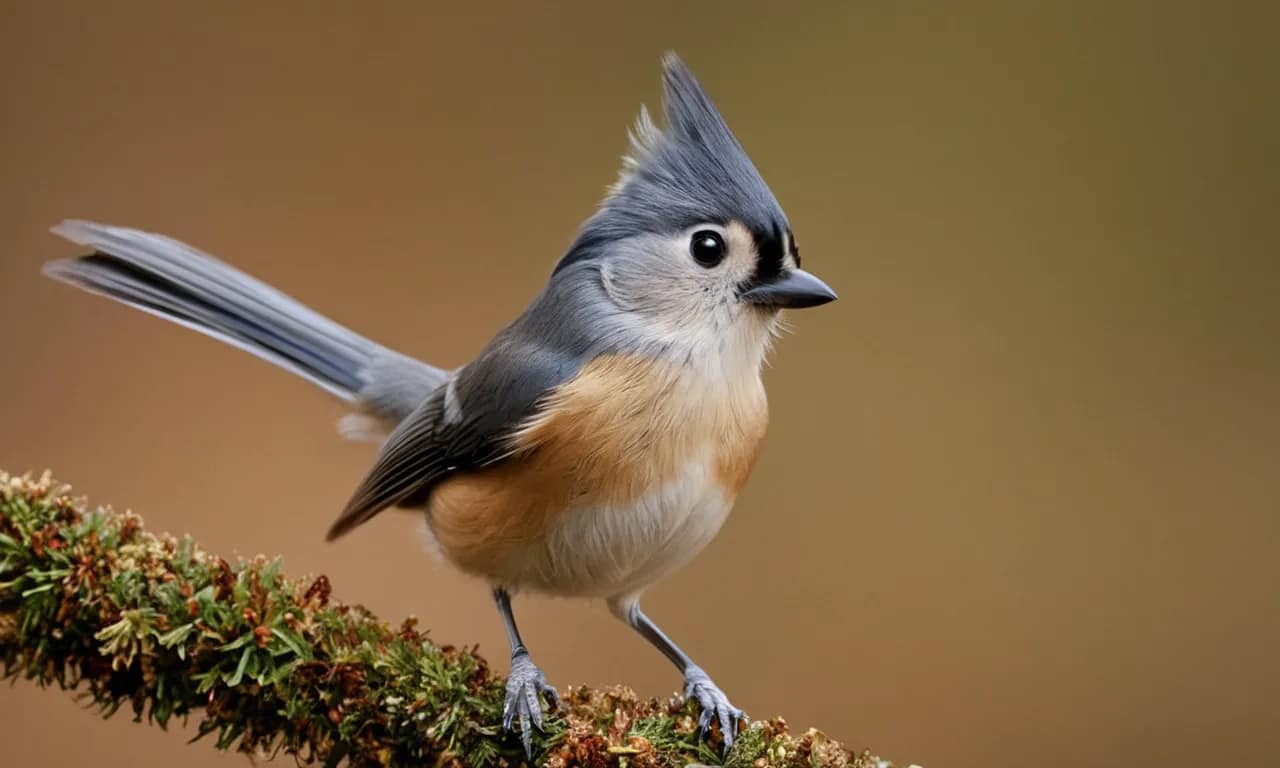
This morning, I was noticing the Tufted Titmouse at my feeders. It is a small, alert bird with a soft voice and a steady presence. A symbol of healing, but not in the way people often think. It is not promising closure or answers. It tells us to keep going even when life has permanently changed.
After losing a child, life stops making sense, and grief collapses time. The future feels unreachable, and the past feels too heavy to carry. Most days are not about hope or meaning; they are about surviving the stage you are in. The Tufted Titmouse reminds us to stay present, do what the moment requires, nothing more. It isn’t suggesting that we “move on.” It invites us to survive this moment, then the next.
The bird’s small, persistent movements mirror how we, as bereaved parents, can continue living through each season. Maybe you are just surviving, fragment by fragment. But getting up and feeding yourself is showing up. Saying their name and breathing through waves that come without warning does not weaken us; it is an endurance that strengthens us.
The titmouse is also known for its song, reminding us how important it is to speak our child’s name, tell their story, and to allow our grief to have a voice. Silence can isolate us. Sharing does not mean we are stuck; it means our love did not end. It does not mean “everything happened for a reason.” But it does imply that life still has purpose, even while we carry this permanent loss.
Some days, noticing something simple in nature may feel like the only thing that can ground us. It’s a Tufted Titmouse at the feeder, a windchimes melody, a foggy morning of calm. These moments do not minimize our loss; they remind us that we are still here, even when our hearts are broken. The Titmouse teaches us to live with grief rather than resolve it. Strength is not the absence of sorrow; it is learning how to carry it.
I am the mom on both sides of a complicated story. Loving one child who was sexually abused and loving the one who caused the harm.
There is no road map for navigating something like this. No clean language. No version of the path forward that does not cost something deep and painful. Some days it feels like my entire role is simply to remain standing when I feel like falling and to stay present when everything in me wants to hide. Functioning while absorbing this kind of shock is a challenge in itself.
And yet, here I am. Learning how to love without chasing, how to hold boundaries without disappearing. How to remain myself even when relationships have changed form in ways I would have never imagined.
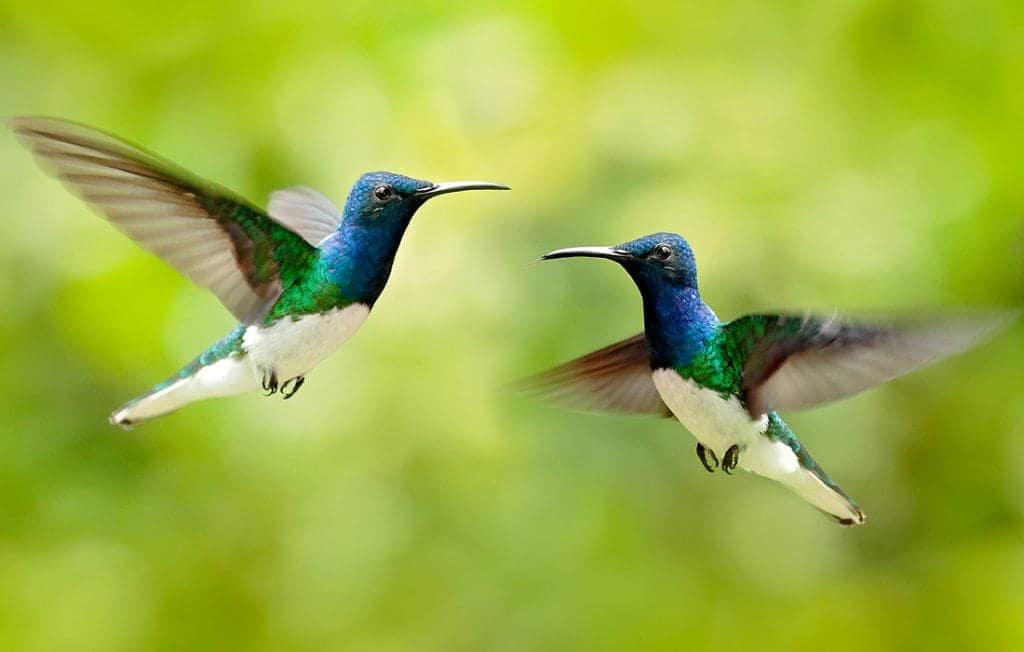
Lately, I have been thinking about the hummingbird.
A hummingbird migrates thousands of miles relative to its size. It burns enormous energy simply to stay alive. Even hovering in place takes constant effort. It does not rest the way other birds do. It must keep moving its wings just to remain where it is.
That feels familiar.
As parents and humans navigating trauma, we expend energy just to stay standing and emotionally present. We hover. We show up. We pay attention even when everything in us wants to give up. We absorb pain and strain quietly and keep going. Like the hummingbird, we need nourishment, spiritual and emotional, because the work of staying present is exhausting.
The hummingbird symbolizes resilience after hardship. It represents the return of joy and lightness, not because things become easy, but because survival itself requires strength. It reminds us that connection does not require possession, love does not require obligation, and presence does not require control.
We can love deeply and still protect ourselves. We can hold grief and hope at the same time. We can remain connected without losing who we are, and we can stay in place without collapsing.
If you are hovering right now, barely holding yourself together, that is worth remembering! Your quiet strength counts! The energy you put into staying present matters!
Even in the most challenging seasons, strength can exist. You are not failing, you are surviving. And sometimes that is the bravest thing any of us can do.