

Paul sat at his dining table, staring at the license plate number he’d scribbled on the palm of his hand in haste as the woman from the library sped off. She barely acknowledged him, and he wasn’t even able to get her name. Instinctively, he smelled the palm of his hand, remembering the way her bookmark smelled, the way she smelled. He searched the internet for her address. Talking to himself, he said, “Oh, look, the car belongs to Mildred Huff. Mildred? Millie, that’s what I would call her. Mildred seems a bit old-fashioned. No, that can’t be right. Let me see how old this Mildred is.”
Upon further investigation, Paul discovered that Mildred was way older than the woman in the library. But Mildred did have a daughter named Debbie. “Hmmm, Debbie looks like she may be who I’m looking for. Dang, these privacy settings are getting on my nerves. I just want to find one good photo to confirm. I will keep searching.” Mouthing his thoughts, Paul continued searching the internet looking for a photo of Debbie.
****
Meanwhile, Debbie was conducting her own investigation. She kept her TruthFinder account active, one of the few apps she allowed herself to use. TruthFinder was a background-check app she downloaded after her incident with that guy at the coffee shop. She decided she would never go on another date without knowing everything she could find out about a guy first. But she didn’t find out anything more than she already knew about Paul. He was rich and donated generously to the library, at least that’s what the internet said.
For a brief moment, Debbie wished she still had social media so she could stalk him properly. But she’d deleted everything. Instagram, Facebook, TikTok, all gone. She’d even tried creating a fake account under a different name once, thinking she could slip back into the digital world undetected. But it didn’t feel right. She couldn’t keep up with all her friends and acquaintances without raising suspicion, and the isolation of a half-life online felt worse than no life at all. Not because of strangers like Paul, but because of her mother, Mildred.
Mildred stayed glued to social media, watching Debbie’s every move, commenting on her photos, messaging her friends, inserting herself into every corner of Debbie’s digital life. It was suffocating. So Debbie erased herself from them entirely. At least with TruthFinder, she could protect herself.
Mr. Paul was a handsome guy, but there was something about him that made her feel uneasy, and she wanted to know why. She wanted something tangible, something that she could say, Aha, see? This is why. But she found nothing. Still, his presence at the library triggered something in her, reminding her that she was never truly safe from being watched or consumed by someone else’s need.
Earlier, Mildred noticed Debbie had grown quiet, so she inquired about her night. “Are you okay, sweetie? Did something happen at the library?” she said in her raspy smoker’s voice, intently watching Debbie’s facial expression.
Debbie explained her awkward encounter with Paul. She told her Mom that he would not stop staring at her and how he would interrupt her reading to try to have a conversation with her. “In the library of all places, where you’re supposed to be quiet,” she said, frowning.
But as she spoke, she felt the memory of him again, how close he’d gotten, so close she could feel the warmth of him behind her. She remembered how he made her flush, but also that flutter low in her stomach. She was attracted and terrified at the same time, and that contradiction left her confused and a little ashamed. How could she be scared of someone but also drawn to them? It didn’t make sense, and she couldn’t explain it to her mother without sounding foolish.
Mom blew her off, said he was probably just trying to be nice. The reaction Debbie expected, which is why she left out the details of how he sniffed her hair and took a whiff of her bookmark before handing it back to her. She didn’t want to seem like she was over exaggerating. Even though Mom supported Debbie throughout the trial those ten years ago, she could tell it had worn Mom out, as if the incident had happened to her instead of Debbie.
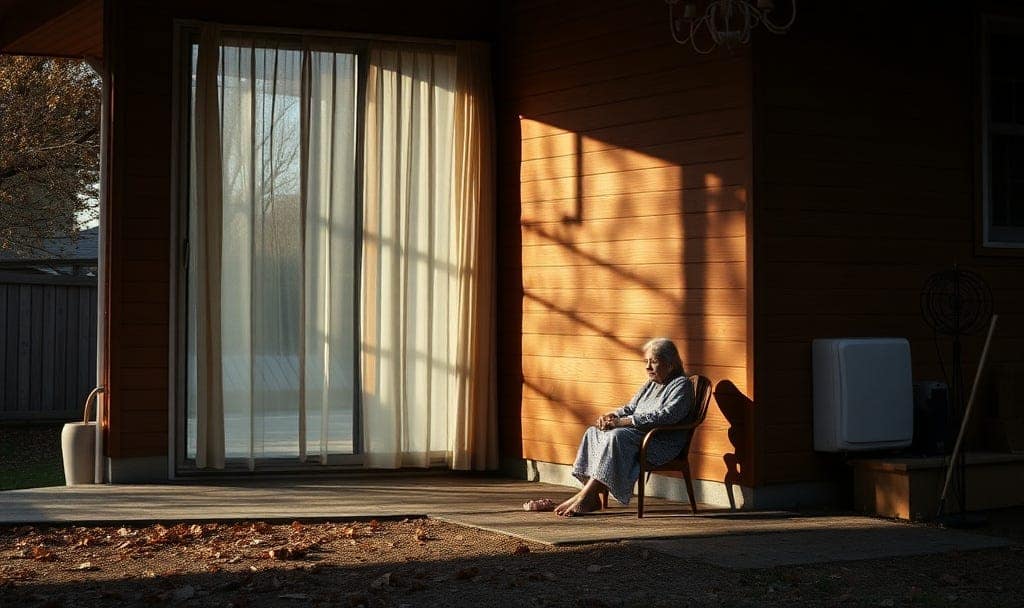
She loved her Mom, but she was ready to have her own place again. She moved here to help her out after Dad died. No one thought Dad would go first; he was the healthy one, the one who held everything together. After he retired from military service, he drove Mom everywhere, even though she had her license. He cooked every meal, managed the finances, and made every decision with precision and authority. Mildred never questioned it. Although she spent decades resenting his control, she never actually did anything about it. Dad managed her as an Air Force Captain would.
When he died suddenly of a heart attack, Mildred didn’t just lose a husband. She lost her framework for existing. She didn’t know how to be alone, make decisions, or function without someone telling her what to do. So she’d turned to Debbie.
And Debbie had to step into her father’s role, driving her Mom to appointments, managing her medications, making decisions about the house, money, and everything. Once again, she became the one to hold her Mom together to absorb her anxiety and fear. Dad had chosen it, but Debbie had to slip back into it. The weight fell entirely on her, just like it had when she was a child, when she had to be Mom’s emotional support. Back then, Dad tried to be the buffer, but now he was gone.
Living here with Mom did come with a few perks, though, like free room and board and a classic car to drive. Mom’s old ’68 Ford Mustang. Debbie couldn’t wait to make it her own. Not that she was trying to rush Mom on to Gloryland with Dad, but rather that she was looking forward to it when the time came. At least that’s what she told herself.
It would be pretty shitty if she wished for her Mom to move on that way, wouldn’t it? But she did. And she even wrote about it in her journal once. It was late, she was exhausted, and she admitted it on paper. I wish she would die.
Only five words. And yet they looked so unforgiving and shameful on the page. She trembled as she stared at them. She didn’t plan to write them; they just spilled out like blood on paper.
Then she started to panic. What if Mom found it? What if she went snooping through Debbie’s things again? Debbie ripped the page out, tore it into pieces, and flushed it down the toilet. She watched the water swirl them away as her heart pounded.
But the thought of it didn’t flush away with it. It stayed, along with the guilt, the religious kind of remorse. Wondering how you could honor your father and mother while wishing she were dead. That verse haunted Debbie, her Mom reciting it whenever she disobeyed as a child or expressed a different opinion as a teen, and she remembered her pastor’s sermons in church. But how could she honor someone she resented? Someone whose neediness drained her dry, whose tears and complaints filled every room and every thought? Mom made love feel like a debt Debbie could never repay.
Often, Mom would sit and cry because no one talked to her, even though Debbie had just spent hours listening to her. Mom would get her feelings hurt when Debbie didn’t give her the time she felt she deserved, as if being a mother meant Debbie owed her everything. And maybe she did, wondering if that’s what honoring meant. But Debbie was tired of the one-way emotional labor; she was drowning in it and felt guilty for wanting her own life.
So, she endured her Mom’s smothering ways and how she made everything about herself. Sometimes she even caught herself doing the same thing. Once, she was texting a friend who was complaining and needing reassurance, and Debbie found herself telling her friend all about the times something similar had happened to her, instead of comforting her. She always did this, deflecting instead of dealing with it head-on.
Today, Debbie decided to stay in her room and read to avoid Mom. Also, because she was afraid to go back to the library. Now, where was she going to find good books to read for free? She hated reading books on an electronic device; there was something special about holding a book in your hands, the way it feels, the way the pages smell when you turn them. On a device, everything felt trackable. Books were real and tangible, something her Mom couldn’t scroll through, couldn’t monitor, couldn’t comment on.
Debbie loved underlining the words and phrases on the pages that spoke of her hunger and need for escape and self-knowledge. It was empowering and bold. Like being a graffiti artist in a small act of rebellion. Until the weight of guilt crept in. What if Mom finds the book and reads what was underlined? She would think it’s about her. And she would get her feelings hurt.
****
Paul refreshed the page again. Debbie Huff. No photos or anything to scroll. He leaned back in his chair, smiling.
“That’s okay,” he said quietly. “I know where to find you.”
****
From down the hall, her mother called her name. Debbie closed the book, thumbing the edge of the pages. She set it aside and closed her eyes, pretending to be asleep.
About the Author:
Yoli Kae Reynolds is an author and Certified Journal Therapy Coach based in Central Arkansas. Her writing explores suicide loss, family trauma, and survival in the aftermath of abuse. Her personal essays have appeared on Medium in Women Write and Reaching Hearts. Through both her coaching practice and her fiction, she investigates how systems fail survivors and the violence that echoes through families.
Originally published at The Fiction Journal https://open.substack.com.
