Every writing community I’ve been in repeats the same line. “Readers are writers.” It’s said with such certainty that you start to feel like a fraud if you don’t keep up. That quote is repeated so often that people start treating it as a rule rather than a tendency.
Some writers are voracious readers. Some are observers. Some are storytellers first. Some are processors who write to make sense of life. And honestly, when you are balancing work, responsibilities, family, and everyday survival, reading can start to feel like another task on an already overloaded list.
But writing is still feeding you.
You are still studying human behavior. Still collecting dialogue. Still noticing tension, grief, silence, resilience, and contradiction. Still living inside the story. Because reading isn’t only something you do with a book.
Writers read people. We read faces, tone shifts, the pause before someone answers a hard question, and the body language that contradicts the words. We read rooms — who’s tense, who’s performing, who just got quiet. That kind of reading sharpens a writer just as much as a paragraph on a page.
Life itself becomes part of the material.
As writers, we often write from a deeply internal place. A lot of our work comes from reflection, emotional excavation, memory, and meaning-making. That is a different creative fuel source than someone writing purely from literary influence.
I’m not saying writers don’t need fuel. I’m saying the fuel sources are more varied than the maxim admits. Observation, memory, emotional excavation, and listening to how people actually talk in a grocery store line. Reading the look on someone’s face before they say what’s wrong. Catching the tone underneath the words. All of that is study. All of that is reading, just not the kind that comes bound between two covers.
The “readers are writers” crowd tends to collapse all input into one specific kind.
And here’s what the maxim misses: the reading of people never stops. You don’t put it down. You don’t finish a chapter and close the cover. Writers are reading people the entire time they’re alive — at the dinner table, in line at the pharmacy, in the silence after a hard conversation. That’s literacy too. And perhaps that matters most.
That said, reading books does help in specific ways — rhythm and pacing, sentence flow, structure, expanding vocabulary naturally, and reminding you what is possible on the page.
But it does not have to look like consuming 50 novels a year.
It can be:
Essays before bed
Audiobooks while driving
One chapter at a time
Poetry
Medium or Substack pieces
Memoir excerpts
Listening to stories instead of physically reading them
A lot of writers quietly go through seasons where they produce far more than they consume.
Here is my truth: I don’t read books as much as I’d like. I spend most of my time writing. The rest of my time goes into work and the everyday business of being alive. But the writing keeps coming — because I read life every day.
✍️ From the Founder of Threads of Life, Money & Momentum.
Money & Momentum is dedicated to honest conversations about money mindset, earning more, and building income beyond a salary. This is not about hype or get-rich-quick promises. It’s about clarity, responsibility, identity shifts, and real momentum.
For over 20 years, I lived in poverty. Not the kind people always see. The kind where the electricity gets turned off in winter, the gas gets turned off in summer, and rent becomes something you either cannot pay, or simply do not.
There were stretches when we were homeless. Oh, we had a roof over our head, but it wasn’t our home. We lived in church basements and gymnasiums. We stayed with family members and even with a church member for a little while. And in a hotel once. To us, financial stability was almost taboo, sometimes looked down on as being worldly and loving money more than God. So, when we “sacrificed” in the name of God, we thought it made us holy.
But there came a point in my life where I was tired of struggling financially. The scriptures even promised an abundant life, but I wasn’t seeing it in my life. It was discouraging and quite frustrating, to be honest. But the thing that stopped us from being financially stable was not just one thing. It was a combination of things and belief systems. I was married to a man who controlled my every move, and working outside our home was not something I was allowed to do. And working wasn’t something he liked to do.
So, we struggled to make ends meet. And if we did come into some money from an anonymous giver, he felt like Taco Bell was more important than an electric bill or rent. We never invested any time, attention, or money into a financial future. There were no steps to increase our income, only steps to make what was necessary to survive. That is what poverty actually does. It shrinks your time horizon down to the next bill. You stop thinking about financial stability because all your energy goes into surviving today.
I grew up in a middle-class home, an only child. My dad was a CPA and very good with finances. So, I knew what it was like to be financially stable. It took me several years and some religious deconstruction to believe that I was worthy of that financial stability. No amount of budgeting advice reached me until I dealt with the belief that being broke made me holy. That mindset had to break before the money could change.
When I became aware that I deserved better, not just in my marriage relationship but also financially, I started to think differently, respond differently, and stand up for myself and secretly save money. I sold things on eBay and tucked the cash into an envelope hidden in a place he would never look. It wasn’t much. But it was the first money in my life that was mine. And through the process of events, I filed for a divorce. Because you see, sometimes financial stability means being with the right person and leaving the one who drains what you already have.
When I started dating through a dating app, there was one guy in particular who stood out to me. He met all the criteria for what I was looking for in a man, but even better, he made a bold statement in his bio: I know how to make money. And by this time in my life, I had a motto: it is only money, and money can be made as easily as it can be spent.
We started dating, and for the first time in my adult life, I learned what it felt like to have a man step up and be responsible. I continued working and paying my own way because I did not want this amazing guy to think I was with him just for his money. But the truth is, he didn’t have any either when we first met because he had just gone through a very expensive divorce, giving his ex-wife more than she deserved, and a business.
The year we got married, he bought his dad’s business, and he has more than tripled its size and income. Being around someone who knows how to make money taught me things no book had. Watching him operate, take risks, and follow through reshaped what I thought was possible for me.
To me, financial stability means being able to pay your bills, have money left over to buy the things you need and want. I have a number in my head of what I would like to make, and we are not far from it, but I am already financially stable, so those numbers are just a test to see when the universe will make it happen.
I am currently working as an office manager in the family business, handling all the books and payroll. I also suggest ways to invest our money, and I’ve moved some of it into CDs. I am still in the money market, but I don’t like its inconsistency — it moves with the market, and your principal isn’t guaranteed. So now I am looking into T-bills. They are backed by the government, the return is fixed, and you know exactly what you are getting. For someone with my history, predictability matters more than potential. I am also working on monetizing my social media presence while finishing my first book.
What I am learning is that financial stability is not one decision; it is a hundred small ones. Which CD to choose and when to sell. Whether to risk a property offer or to say no to it. Every one of these decisions used to feel out of reach to me. Now they are just part of my week. That shift, more than any dollar amount, is what stability actually feels like.
My husband is a money magnet, and opportunities come to him all the time. For me, however, I seek opportunities. Sometimes I find a great piece of property for a really good price. Like the 10 acres my husband wanted for his greenhouse business. They refused his offer. A few months later, I made a lower offer for the same land, intending to build houses on it. They accepted mine. Same property, different vision, and the timing was on my side.
The skill I am working on improving is presence. I don’t mean being present in daily life, I mean putting myself out there. Being present and visible publicly.
I am working on improving my writing skills and turning them into publishable books. Not only do I have stories from real life, but I also have many that could be made into fiction. This is the part of my life I want to keep improving.
Because I lived in poverty for so long, I went on a shopping binge as soon as I had some extra money in my pocket. It got worse during COVID. I became addicted to the online shopping experience. Grocery delivery, DoorDash, Amazon, all of it. The addiction shows itself when a package arrives at my door, and I cannot remember what I ordered — or worse, why I ordered it.
But now, as I get closer to looking towards retirement, I have had to have an intervention with myself. I have too much stuff and have wasted too much money on things I did not need. Financial stability isn’t a number you hit. It’s a behavior you practice. And the old habits don’t just go away because the income has changed.
At times, I still fear poverty, because I lived in it longer than I have been living in abundance. But there is a strange comfort in doing the same frivolous spending. And because I have made it a habit, stopping it will take me out of my comfort zone.
I had already been thinking about this area of my life for a while, and this prompt is a great opportunity to take action. I will stay off social media — the ones that keep giving me ads for cool stuff I don’t need — for at least 24 hours. And if I can last the 24 hours, then the plan is to go for a few days, weeks, and maybe a month.
I deserve financial stability, and the truth is, I am financially stable now. But I do not always behave like someone who respects that stability. I still spend out of fear sometimes. I still buy things I do not need because poverty taught me to grab comfort when I can. And this is what I am working on now.
Money & Momentum is dedicated to honest conversations about money mindset, earning more, and building income beyond a salary. This is not about hype or get-rich-quick promises. It’s about clarity, responsibility, identity shifts, and real momentum.
My first memory of journaling was when I was around five or six years old. As soon as I knew how to write, I poured my angst about my father onto the page.
I was too young to know that I was doing something therapeutic. It was the only place I was allowed to say what I was feeling. Where I could be heard, even if my homemade diary was the only one listening.
Journaling is what helped me survive a 24-year abusive marriage. And it helped me process a way out. Journaling helped me as I parented through the horrors of sibling sexual abuse, and it still helps me process the emotions of being the mother of both the child who was harmed and the child who caused the harm. Journaling has helped me through the grief of losing a son to suicide.
And journaling still helps me sort through my feelings. Especially with trauma and grief. It’s the salve for wounds that still like to fester sometimes.
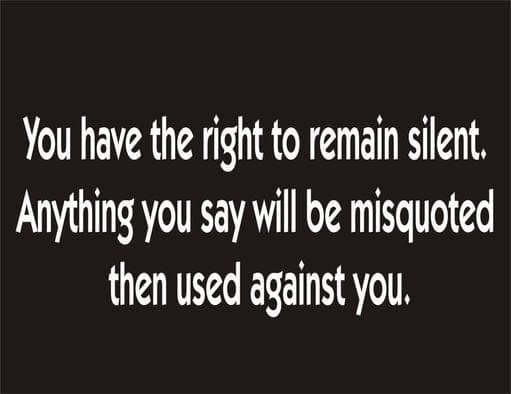
When I first went public with my journaling, I came up with a name — The Write to Sanity. My opening page began like this:
I have the write to remain sane.Anything I say or do can and probably will be used against me at any given time.I have the write to my own opinion.If you do not like or accept my opinion, another one will be presented to you.Do you understand these writes as they’ve been given to you?I am “the Write to sanity”.
Because I knew I had the right to have mental clarity, my own opinions, and to tell my story.
And eventually, I realized that the thing that had kept me grounded since I was a child could be taught to other people who need a place where their words are safe.
So I built it into a program — a self-paced journal therapy course with guided prompts and lessons designed to help people use writing the way I did. To process grief and trauma. A place where they can be honest with themselves without spiraling. And a place where they can find their own voice again.
It’s called The Write to Sanity Journal Therapy Program.
Lately, I’ve gained a few pounds. “Few” is the word I give it when I do not want to face the actual number on the scale. But while the numbers keep climbing, I can’t help thinking my body is trying to tell me something — that my hips and belly are not the only places in my life where I am carrying too much weight.
Maybe it isn’t about what I am eating. But about what is eating me.
The root cause of weight is rarely one thing. On the surface, we are told it is simple: calories in, calories out. Move more, eat less. But a human body is not a math equation. Weight can be shaped by hormones, sleep, stress, medication, genetics, inflammation, poverty, trauma, family patterns, and emotional pain. Sometimes it is not even about overeating. It can be a hormonal imbalance, metabolic resistance, low energy expenditure, poor sleep, changes in insulin, or other medical factors that quietly rewrite how the body uses food.
When hormones are low, the body defends its weight more stubbornly. It slows the metabolism, holds onto water, and scrambles the signals for hunger and fullness. It leaves us tired in a way that sleep doesn’t fix, and then asks us to exercise more anyway. Weight loss starts to feel impossible, not because we are weak, but because our bodies have been given new instructions.
This is not a failure of discipline. It is a body responding to a signal from within.
We are quick to turn physical struggles into personal shame. When the weight does not come off, we start saying, “I am a failure.” But failure is a verdict, not a fact. Our bodies are not betraying us. They are trying to survive according to the instructions given. The pain comes when we blame ourselves for something our body is struggling to regulate.
I am learning to say it differently. “I am not a failure.”
“I am struggling.”
The feeling of failure makes you want to give up, but the knowledge that you’re struggling gives you the sense that it can be figured out in the end.
Weight can also carry emotional meaning, turning the body into a fortress. Extra weight can feel like insulation against shame, attention, rejection, or grief. And sometimes eating is not about hunger; it is about comfort. I have eaten when I was not hungry. And eaten because something in me needed to be held, and food was the closest thing.
Weight is often a symbol of old wounds. It stops being about our body’s size and becomes about whether we feel lovable, acceptable, and safe.
For many of us, this wound is sharpened by the gaze of men. We know intellectually that our worth is not defined by our bodies. But we still feel judged when men comment on it. The words of our parents or past relationships become ghosts that haunt us. Even current casual comments about other women’s bodies can awaken an old fear: “They say I am fine, but their values are watching me.”
The body only hears danger, even if the mind can reason it away.
The fear can show up physically. A sinking feeling in our stomach can become an alarm bell. It asks: “Am I safe? Will I be rejected?” This reaction does not belong to the present moment. It belongs to a younger version of us who once learned that being judged by appearance could threaten our sense of belonging.
For me, the wound began in middle school, when my teacher looked at an old picture and commented on how fat I was. But I did not hear the past tense. I heard, “This is who I am now. This is how people see me, and the real me is unacceptable.” At that age, a careless comment became my inner law.
Our inner child may pretend not to care, but pretending is often a form of protection.
The middle school girl in me who acted untouched was the same girl who was deeply hurt.
Healing begins when we separate our body from the judgment that was placed upon it. Our body is not evidence of failure. Other people’s gaze is not the truth. We can work with doctors, regulate our hormones, track symptoms, and care for our physical health without turning our bodies into the enemy.
My younger self does not immediately know what she needs. She does not want to move closer to me. She only acknowledges that she has finally been seen. And that is enough for now. She does not need to be forced. She just needs me to say, “I saw what happened. And that hurt.”
The deeper work is not about weight loss. It is learning to live in our body without putting it on trial. It is telling our wounded self, “You are not a failure. You are frightened, exhausted, and you are trying to solve something difficult.” It is asking our partners not to comment on other people’s bodies, because our home should be a place where bodies are not judged. It is replacing shame with protection and punishment with care.
The root reason we might be carrying too much weight could be physical, emotional, social, or unconscious. Often, it is several of those at once. But whatever the cause, the person living inside our body deserves compassion.
Weight is not identity. A struggling body is not a failed body.
Healing begins when we stop asking, “What is wrong with me, why can’t I lose this weight?” and begin asking, “What has my body been carrying, and how can I help it feel safe?”
The scale is no longer my enemy. It is a tool reminding me to slow down and listen to my body.
The Weight Beneath the Weight was originally published in Women Write on Medium, where people are continuing the conversation by highlighting and responding to this story.
I’m writing a book for women who feel stuck, confused, exhausted, controlled, unheard, or afraid to be fully themselves in a relationship.
This book is still in progress, but the message matters: every woman deserves to know her worth, recognize what love should and should not feel like, and believe that peace, safety, healing, and freedom are possible.
If you’d like to follow the journey and receive updates, you can join my email list here: