Skip to content

Category: Divorce

This Is Not What God Promised

Many women in coercive marriages confuse endurance with love, obedience with devotion, and survival with commitment.

โ€œThis is not what God promised,โ€ I said, letting all the air out of my lungs.

I felt so deflated, defeated. In that moment, a dark, cloud-like curtain parted to the right, and the room was filled with light. Little did I know that my heart was, too. This is not what God promised, and He didnโ€™t.

God was trying to tell me, โ€œI did not promise this!โ€

He was nearly screaming the words out of my mouth, but I no longer recognized them. I no longer knew Godโ€™s words or voice from my husbandโ€™s, and what I thought was the voice of Satan or the voice of doubt and self-doubt.

This is one of the most damaging effects of spiritualized abuse. When someone uses religion to control you, your internal compass gets scrambled. You stop trusting your own perception. That is not a weakness; it is conditioning.

God did not promise me a life full of fighting and abuse. God did not promise me a life of poverty. No, He said, โ€˜He came to give life and to give it more abundantly.โ€™

How often do we settle for a pauperโ€™s life, thinking we are suffering for God or sacrificing in Jesusโ€™ name, when He never intended that to be our life.

That is not what God promised. I was beginning to reclaim my moral and spiritual authority. I was no longer accepting someone elseโ€™s interpretation of God over my lived reality. I was beginning to realize: abuse is not holy. Poverty is not proof of righteousness. Being diminished is not devotion.

He did not promise me a husband who called me names. A husband who said I was stupid or that I was a worthless piece of shit. God did not promise that my husband would love me simply because I obeyed and submitted to him under all circumstances.

What God desired was that I be loved and feel unconditional love. Love that has peace. The โ€˜peace that passes all understanding.โ€™

God does not give us fear. He gives us power and a sound, clear mind. Power and strength to overcome and accomplish anything we set our mind to, and love that never fails.

I thought I loved my husband, and that verse (I Cor. 13) perplexed me because I felt as though my love was failing daily.

Download my Free Red Flags Guide to identify them in your relationships.

But was it?

Because he would say frequently that no one would put up with him and that I deserved better than him.

For the longest time, I did not believe that. I thought I deserved him. That he was who I was supposed to be with the rest of my life.

But did I really love him? Or was I just conforming and compliant?

Many women in coercive marriages confuse endurance with love, obedience with devotion, and survival with commitment. There is a difference.

What is love?

Perhaps the love that doesnโ€™t fail is the love we give ourselves.

Self-love is not selfish. It is recovery. It is the beginning of wholeness.

After years of being taught that self-erasure was godly, I arrived at self-regard. And that matters.

I write not only from personal reflection. But of a theology born from experience. Untangling God from control, faith from fear, and love from submission.

Leave a Comment

You Can’t Control Me

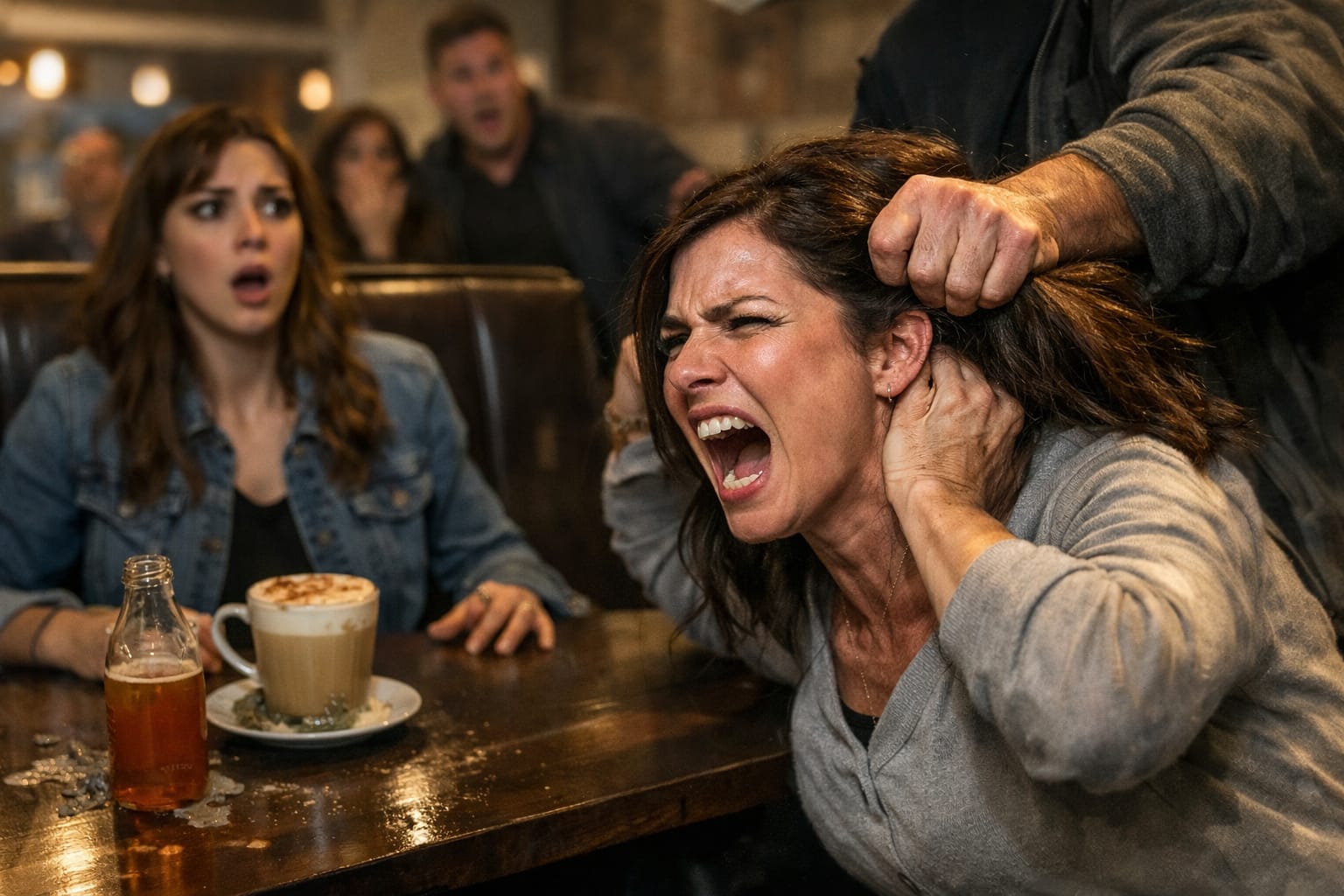
I was sitting in a booth across the table from my oldest daughter, in our favorite Coffee Shop. The high-backed seats provided privacy and a perfect setting for catching up on life events. The aroma of her Dirty Chai made me wish I had ordered coffee instead of my tart Kombucha. Her voice mingled with the background murmurs of other conversations around us as she told me about my grandsonโ€™s first day of kindergarten. I was studying her face as she talked. I cherished these moments, admiring how her long eyelashes accentuated her chocolate eyes. They sat under perfectly manicured eyebrows so as not to resemble the unibrow she inherited from her Father. The tiny scar on her cheek was barely visible; a reminder of the time her sister threw an old metal hanger at her in an attempt to win an argument. Her perfectly heart-shaped lips reminded me of her Dad.

Suddenly, out of nowhere, I gasped when I felt someone grab me by my hair, wincing as my head and neck jerked from the force. My heart sank to my stomach, beating hard and fast. The attacker behind me growled,
“You’d better get out of this place. Get back home!”

I did not need to look up to know who it was. I began screaming,
“Help! Somebody, please help me!”

He pulled me out of the booth and dragged me toward the front door of the cafe.

My hands went to my head, trying to free myself from his grip. As always, he was much bigger and stronger. She sat motionless, shaken, not knowing what to do. Her mouth hung open, her eyes wide and glassy with tears.

I was trying so hard to have a different life, a better life. I did not want my children to experience this violence anymore. I wanted them to know that this is not OK and that life can be peaceful.

The harder I fought to break free of his grip, the tighter he held on. There was no way I was leaving without a fight. Part of me wanted to give in, to stop the pain in my scalp, but I couldn’t let him win. Not this time. I tried to plant my feet on the floor, but they slid effortlessly across the tile. What if he overpowers me? What if I can’t get away?

I stopped screaming for help, and I started yelling at him.
“Stop! Get away from me! Leave me alone! You can’t control me!”

(To Be Continued)


Leave a Comment

WHEN CHRISTMAS CHANGED

I donโ€™t know when Christmas turned from magic and lights to misery and blight. I only know that one day the lights didnโ€™t sparkle as much anymore. Shopping feels like a waste of time and a drain on life savings. I donโ€™t see why we spend four weeks preparing for something that lasts a day and two more weeks taking it apart.

For me, Christmas starts at Thanksgiving, when our family combines the holidays. The tree goes up a week or so beforehand and stays for the long haul, like an unwanted guest. Or a fly trapped in a car. Some years, I play Christmas music. Most years, I keep playing my usual, Ozzy and the like. This year has been an Ozzy year (RIP).

I donโ€™t know exactly when I started to hate Christmas. Maybe it was when my former husband threw a fit because I wasnโ€™t decorating the tree the way he thought I should, or in the colors he preferred. I remember standing in the living room, feeling crushed. It was Thanksgiving night or the evening after. I had cooked all day, and the meal was devoured in about fifteen minutes. Then came the cleanup, too much for three young children to help with, while he lay on the couch and napped.

After a few years of begging to do it myself, I learned it was easier to stand by and hand him the ornaments. There was rarely a time when I was alone. He took up most of that space unless I woke earlier than him, something I trained myself to do after a few years of marriage.

.I was excited to put up the tree so the kids could feel the same anticipation we had as we grew up. We finished hanging the cursed lights you pray will still work from the year before. The last thing was the topper. No matter how hard you try, tree toppers never want to stay straight. It didnโ€™t help that he was obsessive about details. Somehow, it became my fault that the angel leaned and refused to stay lit.

Then there was the money. I had no idea how we were going to buy presents with what little we had. He was in Bible college and believed he should not work. If God wanted him there, God would provide.

It was then that I started questioning the sacrifices we were making. We gave money we didnโ€™t have to a church and to missionaries who earned more than we did. We decided things like toilet paper and electricity were luxuries, not needs.

How do you reconnect to Christmas after that?

When I was a child, my parents had a tradition that I could open one present on Christmas Eve. Sometimes I choose it. Sometimes they did. Now that my youngest is still at home, I understand why they sometimes chose it, because there was that one gift they dreaded wrapping.

The oversized gift hidden in my closet this year will be opened the same way, because it is simply too big to wrap.

I remember the year I received a Nintendo with a Smurf game. I stayed up all night playing. When my parents woke up, I was still sitting on the floor in front of our wood-encased television, controller in hand.

My mother asked if I had slept at all and warned that I would be too tired to open presents later. I told her I would be fine. I was twelve. Of course I was.

Every Christmas Eve, we went to my grandmotherโ€™s house for dinner and gifts. No one ever knew what to buy for my uncle, a grown man still living at home who owned every comic book printed. He usually received socks or an ugly sweater. I hated getting gifts from him because they were never helpful.

Then, one year, he bought me the entire Wizard of Oz book set. He was a reader. Once he learned I loved books, buying gifts for me became easy. That year, he earned my respect.

My grandmother made many of my gifts by hand. Stuffed animals. Dolls. Raggedy Ann and Andy. A panda bear. Characters from The Wizard of Oz, except the witch. Around that time, rumors circulated about possessed dolls. I wasnโ€™t afraid of Raggedy Ann or Andy, but the Oz dolls terrified me. I stored them in my motherโ€™s closet.

I was fifty-six years old when I learned the infamous Annabelle doll was a Raggedy Ann, identical to the one my grandmother had sewn for me.

Every year, she stitched us matching Christmas dresses or skirts. Mine always brushed the floor. By the time I was thirteen or fourteen, I decided that kind of outfit no longer served my image.

One year, she made me a stocking more than five feet tall. My mother filled it. Stockings were always my favorite part of Christmas. Candy and small surprises, one after another.

We used to cover the tree in silver tinsel so it looked like snow. It didnโ€™t look like snow, but it looked like Christmas. The cats loved it too and walked around for days with tinsel trailing behind them. No one wanted to deal with that, so we didnโ€™t.

As a child, I loved Christmas. The lights. The colors. The music. My earliest memory is of a tree in the front room and presents underneath it. Our dog unwrapped a gift I had made for my parents, and I was furious.

That same year, I wanted a necklace so severely that I couldnโ€™t stand not knowing. I unwrapped a present early, saw it was the necklace, and wrapped it back up. When they asked, I blamed the dog. But they didnโ€™t believe me.

Christmas stopped being simple over time; loss layered itself onto the season. One of my children is gone. A serious family rupture surfaced during the holidays. My former husband despised Christmas and made it miserable. Putting up the tree was always a fight. There was never enough money.

One year we threw the tree away, calling it an idol. I had the scripture to support it. He declared the sin we were committing and the consequences. I enforced them. Out went the tree. Out went the decorations.

Minimalism became our way of life before it had a name.

This is why my adult self does not love Christmas.

My inner teenager can take it or leave it. She once begged relatives to give her gift certificates so she could choose her own clothes. Instead, they bought things she wore once and never again. She loved shopping with her mother because she got to choose, except for the extra-tight parachute pants.

I donโ€™t know exactly where I stopped enjoying Christmas, maybe when I got married, maybe when it became my responsibility to make it happen with people who made it difficult.

My current husband shares a similar background and the same ambivalence about the holiday. We try. We are doing fine. But Christmas is no longer all about lights. Not like when our mothers made it special.

Recently, I did something I hadnโ€™t done in several years. I play instrumental Christmas music and turned it up. Then I baked.

Banana bread. Apple bread. Pumpkin. Gingerbread. Peanut butter cookies. Most of it adjusted to be Paleo.

All day I measured, mixed, and baked. Timers went off. Batter waited for its turn. I tasted everything.

My favorite was the banana bread sweetened only with bananas. Not overly sweet. Just enough.

The final loaf was made from leftovers. Extra pumpkin. Extra applesauce. I still donโ€™t understand why recipes donโ€™t simply use the whole can.

Halfway through, I remembered dinner. I pulled out the Instant Pot, added frozen meat and seasoning, and thirty minutes later, we ate.

The kitchen felt chaotic and magical at the same time, warm, messy, and smelling like Christmas.

I donโ€™t enjoy Christmas as much as I’d like, but I am learning to find ways to make it more enjoyable.

3 Comments

Are You Addicted to Suffering and Struggle?

A Letter from One Survivor to Another

Let me take you on a journey through my own cycle of pain, one that might mirror your own.

For over 24 years, I stayed stuck in a cycle of pain. Not only because I didnโ€™t know how to escape, but also because I had no idea that part of me had become used to it. That pain was my comfort zone; I needed it. That is not easy to admit, but maybe that is precisely what you need to hear.

I was addicted to pain and suffering. And maybe you are too.

Consider if your life feels like a constant storm, with relationships that break rather than build you, where chaos feels more familiar than peace.

Then I want you to consider that you might be emotionally addicted to your struggle. In the same way, someone is addicted to alcohol, cigarettes, or drugs.

You donโ€™t choose to be this way on purpose, but you can choose to stop feeding it.

How Does Someone Get Addicted to Suffering?

It might seem strange, but when survival mode becomes your norm, your body adapts to a constant state of fear, anger, and panic, as if these emotions are essential for survival. The body doesnโ€™t know good adrenaline from bad. It just feels familiar. So if pain becomes what youโ€™re used to, your brain will start chasing it like a drug.

Iโ€™ll be honest with you: After I left my abusive husband, I thought Iโ€™d be free. But instead, I felt lost, restless, and empty. And one day I caught myself missing the drama, missing the feeling of being needed, even if it came with cruelty.

Thatโ€™s when I realized I wasnโ€™t just healing from abuse. I was detoxing from it.

Understanding the Chemistry of Emotion

Hereโ€™s whatโ€™s really going on under the surface. Every emotion you feel, love, sadness, rage, guilt, and fear, comes with a chemical mix your body gets used to. When you feel anger or shame over and over, your body floods itself with stress hormones like cortisol and adrenaline.

And your nervous system thinks,

 โ€œAh, yes. This is normal. Letโ€™s keep doing that.โ€

It doesnโ€™t care if itโ€™s killing you emotionally.  It only cares that itโ€™s predictable. Thatโ€™s why breaking the cycle is more than leaving them. Itโ€™s also about rewiring your system and healing your brain. You have to teach your body that peace isnโ€™t dull, itโ€™s safe.

Why You Keep Ending Up With the Same Kind of Person

If youโ€™ve ever escaped one toxic relationship only to fall into another… and another…

Youโ€™re not weak or broken.  Youโ€™re still addicted to the feelings that chaos brings.

And your brain will unconsciously lead you straight to people who can give you the fix.

It’s not because you want to be hurt, but itโ€™s because deep down, you donโ€™t yet believe you deserve anything else.

The Good News: You Can Break Free

I wonโ€™t lie to you. Healing is hard, but so is staying stuck. The difference is that one of them leads somewhere beautiful.

Hereโ€™s how I started the process, and you can too:

1. Tell yourself the truth.

Not the story youโ€™ve been told or the lie that โ€œthis is just who you are.โ€

Say the truth, you are addicted to survival mode, and you were made for so much more.

2. Decide that it ends with you.

Not tomorrow, not when it gets easier. Right now.

You donโ€™t need to hit another rock bottom to be done.

3. Catch yourself.

When the negative self-talk kicks in or when you feel that familiar urge to sabotage yourself, tell yourself, โ€œI deserve better.

Then, breathe, even if you donโ€™t believe it yet.

4. Let peace feel weird for a while.

Because it will, trust me. Quiet will feel loud, and safety will feel foreign.

Thatโ€™s okay. Stay there anyway. Let yourself get used to calm.

5. Give it time. Give yourself grace.

This isnโ€™t about perfection; itโ€™s about persistence.

Youโ€™re teaching your nervous system a new language. That love doesnโ€™t hurt, and peace doesnโ€™t mean danger.

One More Thing,

Youโ€™re not broken. Youโ€™re not stupid for staying too long.  You were surviving.

And now? Youโ€™re waking up.

Your addiction to struggle isnโ€™t your fault, but healing is your responsibility.

You deserve a life that doesnโ€™t hurt. And it’s waiting for you, whenever you’re ready.

Leave a Comment

Why Gratitude Feels So Hard When You Are Hurting

And why the practice of gratitude cuts deeper for survivors

Gratitude feels impossible when you are still bleeding inside.
People tell you to practice gratitude as if it were a magic cure. They do not understand that when you have lived with someone who tore you down, gratitude is not a natural instinct. Survival is because you learned to scan for danger, not beauty. You learned to brace for the next blow instead of celebrating the wins.

So when someone says, โ€œWhat are you grateful for?โ€ your mind goes silent. You think you have nothing because, for so long, everything good has come with a price. Gratitude does not bloom in a war zone.

ยท  Misery becomes familiar, even when it hurts.
There is a strange comfort in what you already know, even if it’s toxic. Misery becomes a routine; you wake up with it every day. You sleep with it, you breathe it in, and it becomes the lens through which you see. Anything that contradicts your story feels wrong.

When people ask you to be grateful, it feels like they are asking you to betray your own truth.

For someone who lives in abuse, admitting there is still good in the world feels contradictory. It feels like letting your guard down.

ยท  Gratitude exposes the grief you have been avoiding
Finding even one small thing to be grateful for forces you to slow down, breathe, and feel. And feeling is terrifying when you’ve spent years shutting down your own emotions just to survive.

Gratitude is not fake; it’s risky. The moment you acknowledge something good, it feels like you’re ignoring everything you lost, everything you tolerated, and everything that broke you. Gratitude brings the grief to the surface, and most days, you are already carrying more than anyone sees.

ยท  But the smallest piece of gratitude can crack the prison walls
You do not have to write a list, and you do not have to be grateful for your trauma, the lessons, or the strength it gave you.

Forget all that.

Begin with one tiny thing, one moment where you felt safe or seen. Maybe a time you felt free to breathe. Was it a quiet morning? Or is it the fact that you left?. Maybe it is the way you no longer flinch at sudden movements.

Gratitude is not about pretending everything is fine. It is about recognizing the small signs that you are no longer living under someone elseโ€™s control.

One point of light in the dark, just one thing that reminds you that you survived. Something that proves your life is not finished, and once you find that one thing, even if it is small, you are no longer stuck in the same old story.

1 Comment

DON’T TAKE IT PERSONAL

Why You Take Everything Personally (And What No One Told You About It)

Letโ€™s be real. You donโ€™t just โ€œhearโ€ what someone saysโ€”you absorb it.
A sigh? You feel it like a slap.
A short text? Your stomach drops.
If they are quiet? You spiral.

Taking things personally isnโ€™t a flawโ€”itโ€™s a reaction to what youโ€™ve been throughโ€ฆ

Someone trained you to feel this way.

Maybe you were in a relationship like mineโ€”one where your partner, or parents, made sure you were never really safe. Where you had to study their mood the way a sailor studies the sky.
Because one wrong word, one wrong look, could start a storm.

I know what that feels like.
To live in a home that felt more like a test.
To love someone who used your love against you.
To be blamed for everythingโ€”their anger, their silence, their outbursts, their boredom.

When you’re with an abuser, especially for years, you don’t just fear themโ€”you become them in your own head.
You start criticizing yourself before they can.
You start shrinking your needs because it’s safer that way.
You start interpreting everything around you as a threat.

Thatโ€™s why you take things personally.
Because you were trained to see danger in the subtlest shifts.

You were taught that mistakes mean punishment.
That emotions are weapons.
That love means walking on eggshells while setting yourself on fire to keep someone else warm.

So now, when someone gives you feedback, you feel attacked.
When someone pulls away, you assume itโ€™s your fault.
When someoneโ€™s upset, you blame yourself.

But hereโ€™s the part you need to hear:
Itโ€™s not your fault.

You were conditioned to believe that your survival depended on reading people perfectly.
You werenโ€™t being sensitiveโ€”you were being smart.
You were protecting yourself.
But now?
Now you donโ€™t have to live like that anymore.

That voice in your head telling you โ€œyou messed up,โ€ โ€œthey hate you,โ€ โ€œyou ruined everythingโ€โ€”
Thatโ€™s not your voice.
Thatโ€™s theirs.
Thatโ€™s the voice of the person who broke you down, not the one who gets to build you back up.

And youโ€™re allowed to question it.
Youโ€™re allowed to replace it.
Youโ€™re allowed to healโ€”even if they never apologize.

So if youโ€™re sitting there wondering why you take things so personally, let me say this:

Youโ€™re not crazy.
Youโ€™re not broken.
Youโ€™re carrying a survival instinct that once kept you safeโ€”but it doesnโ€™t have to run your life anymore.

You can learn to breathe again.
To trust again.
To love without fear.
To hear someoneโ€™s words without turning them into wounds.

Youโ€™re allowed to take your power back.

One truth at a time.

Leave a Comment

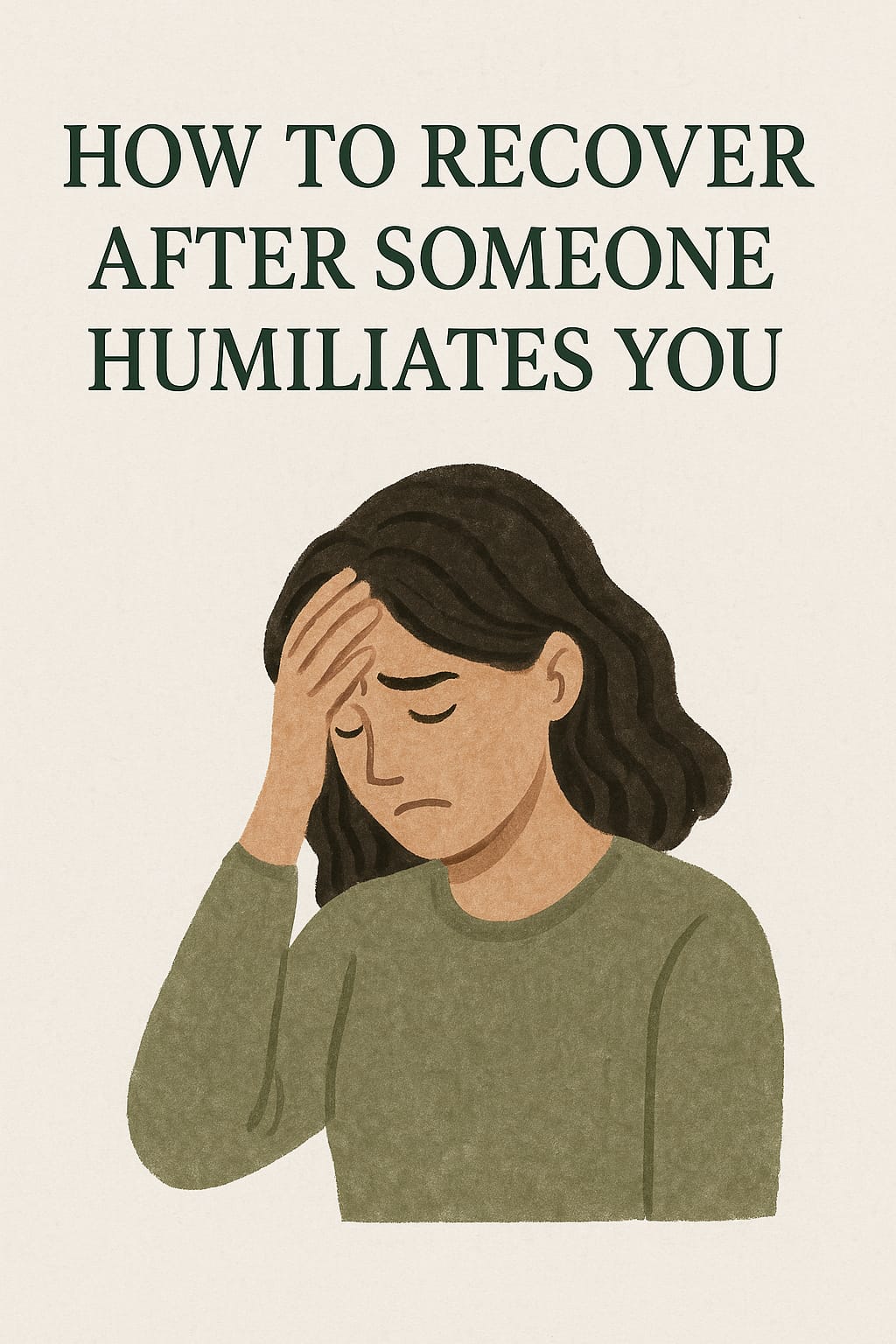
How to Recover After Someone Humiliates You

If something happened that left you shaky, ashamed, exposed, or suddenly doubting yourself, I want you to know this:

What youโ€™re feeling is real. And it makes sense.

Most people have no idea what humiliation actually does to a person. They think itโ€™s โ€œjust embarrassment.โ€ They think you should shrug it off. But humiliation is a psychological wound. It hits the same part of your brain that reacts to physical pain. It knocks your confidence, your voice, and sometimes your sense of self out from under you.

And if no one ever taught you how to deal with this kind of emotional blow, you might be blaming yourself for a wound you never deserved.

Letโ€™s walk through this slowly, in a way that makes space for your pain and gives you a way forward.


1. Something painful happened โ€” you didnโ€™t imagine it

Someone cut you down.
Someone used their words, tone, or power to make you feel small.
Someone spoke to you in a way that pierced straight through your dignity.

You werenโ€™t โ€œoverreacting.โ€
You werenโ€™t โ€œtoo sensitive.โ€

You were caught off guard by a moment that should not have happened.

Humiliation exposes the person who delivered it โ€” not the person who received it.


> โ€œA painful moment happened to me. It does not define me.โ€


2. Your body responded because humiliation is a body-level injury

Most people donโ€™t talk about this part, but humiliation hits the body first:

Your throat closes.
Your stomach flips.
Your face gets hot.
Your mind blanks out.
Your chest tightens.

This is your nervous system trying to protect you.

It doesnโ€™t mean youโ€™re weak.
It means youโ€™re human.

Before you try to make sense of anything, let your body settle.

Try this:

Drop your shoulders

Loosen your jaw

Place your hand on your chest

Slow your exhale

Whisper, โ€œIโ€™m safe enough right now.โ€


You cannot think clearly in a body that feels attacked.


3. The wound came from the story your mind created afterward

Thereโ€™s the event itselfโ€ฆ
and then thereโ€™s the meaning your mind wrapped around it.

Humiliation tries to whisper things like:

โ€œEveryone saw.โ€

โ€œYou looked foolish.โ€

โ€œYou shouldโ€™ve known better.โ€

โ€œThey were right about you.โ€


But those thoughts arenโ€™t truth.
Theyโ€™re the bruise talking.

Say this gently: โ€œThe story I told myself wasโ€ฆโ€

Name it so it stops running the show in the dark.


4. Humiliation makes you want to hide โ€” but hiding keeps the wound open

After you’re hurt like this, the instinct to disappear is strong.
You avoid eye contact, replay the moment, pull your energy inward.
You shrink as if shrinking will protect you.

But hiding is exactly what keeps the wound tender.

You donโ€™t have to tell the whole story.
Just start with one simple sentence:

โ€œSomething happened that made me feel small.โ€

Speaking it breaks the isolation humiliation depends on.


5. Reclaim your authority over what the moment meant

When someone cuts you down, their voice can become louder in your head than your own.

But your dignity is still yours.

Say: โ€œI get to decide what this means.โ€

Not them.
Not the moment.
Not the fear that followed.

You.

Every time you say it, something inside you stands a little straighter.


6. Give yourself what you needed in that moment

Ask yourself: โ€œWhat did I need right then?โ€

Respect?
Understanding?
Protection?
Someone to step in?
Someone to say, โ€œThat wasnโ€™t okayโ€?

Now ask: โ€œHow can I give even a small piece of that to myself now?โ€

This is what begins to repair the psychological wound.


Hereโ€™s the truth I want you to carry with you

You are not the smallness someone tried to put on you.
You are not the version of yourself their words tried to create.
You are not the moment that knocked your voice out of your chest.

You were wounded.
And wounded people donโ€™t need shame โ€” they need understanding, space, and a way back to themselves.

This is that way back.

๐Ÿ‘‰ Download the Humiliation Recovery Guide

Leave a Comment

Why Happiness Makes You Nervous

For the girl who thinks the tightness in her chest is normal

Good times make you nervous, donโ€™t they?

You donโ€™t call it fearโ€”you call it โ€œbeing cautious,โ€ or โ€œnot getting your hopes up.โ€ But the truth is quieter: youโ€™re not used to peace. For so long, love has felt like tension, panic, apologizing, overthinking, and walking around someone elseโ€™s moods like theyโ€™re landmines.

So when something finally goes rightโ€ฆ Your whole body glitches.

You look around, waiting for the explosion.
You wait for the tone in his voice to shift.
You wait for the moment he decides youโ€™re โ€œtoo sensitive,โ€ โ€œtoo emotional,โ€ or โ€œtoo much.โ€

And if nothing happens right away, your brain fills the silence with dread: Is this the part where it all turns again?
You donโ€™t trust happinessโ€”not because youโ€™re broken, but because youโ€™ve survived too long without it.

Girls like us learn early that peace feels like a trap.
A setup.
A calm before the next storm.

No one told you that real love isnโ€™t supposed to feel like bracing for impact.
No one told you that safety isnโ€™t the same thing as โ€œkeeping the peace.โ€
No one told you that if your body relaxes only when he isnโ€™t homeโ€ฆ thatโ€™s not comfort. Thatโ€™s survival.

Listen, sweetheartโ€”if happiness feels foreign, itโ€™s not because youโ€™re incapable of it.
Itโ€™s because someone taught you to expect pain.

And hereโ€™s the part I wish someone had whispered to me sooner:
You donโ€™t have to keep living in the story where fear feels like love. You donโ€™t have to keep shrinking yourself just to fit into a relationship that was never safe to begin with.

Real peace doesnโ€™t make you nervous.
Real love doesnโ€™t make you flinch.
And real happiness doesnโ€™t feel like a setupโ€”it feels like finally coming home to yourself.

You deserve that kind of happiness.
And I promiseโ€ฆ it wonโ€™t explode.

When someone ties despair to God Himself, it buries you in a deeper kind of fear. You stop dreaming. You stop believing in the better. And every time life gets quiet, you brace yourself, because you know the calm never lasts.

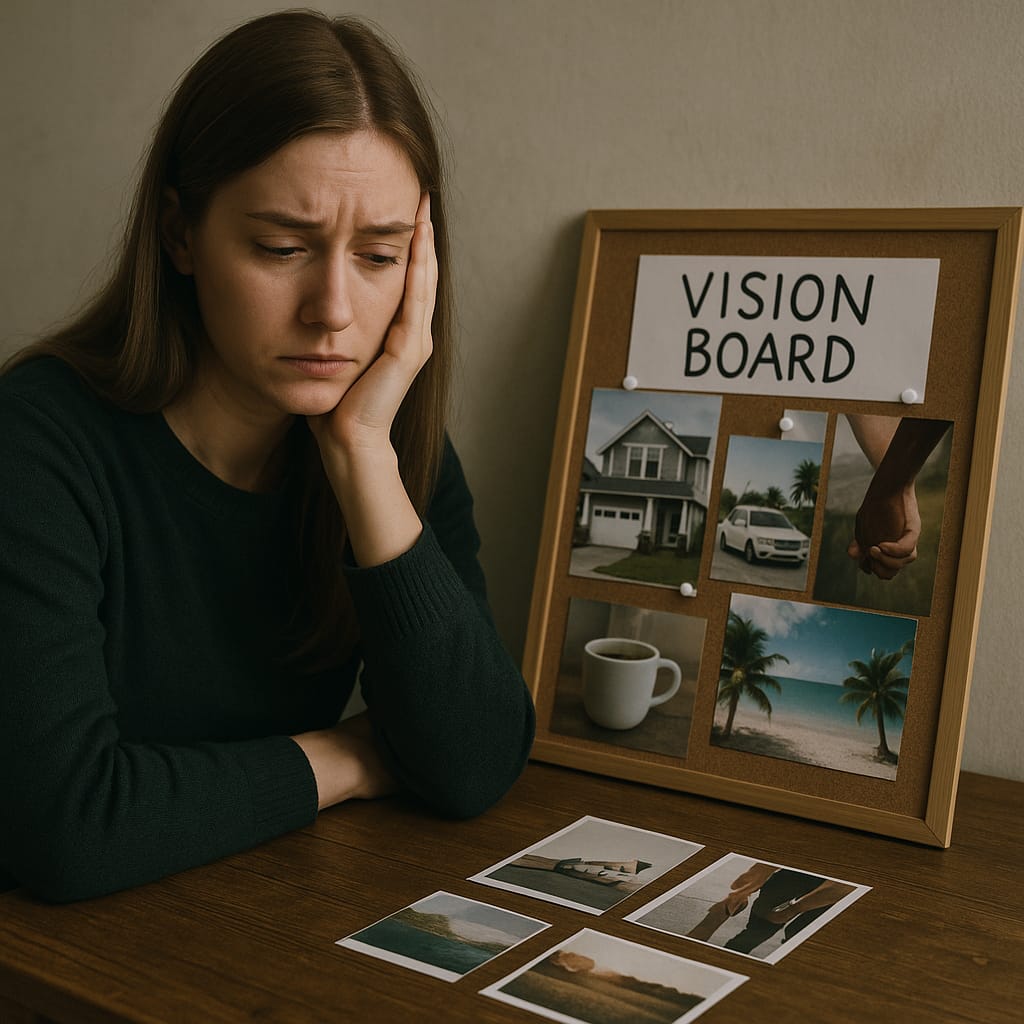
I remember once, after one of our rare calm seasons, we tried to dream again. We made a little vision board together โ€” nothing extravagant, just things a normal couple would hope for. A peaceful home. A reliable car. A future that didnโ€™t feel like walking through broken glass.

But his face went dark, the way it always did when anything felt too good.

He looked at me and said,

โ€œGod hates me. We will never get any of this.โ€

And just like that, the air changed.
The hope drained out of the room.
My body learned โ€” again โ€” that peace wasnโ€™t safe, and happiness wasnโ€™t to be trusted.

Leave a Comment

When You Take the Blame That Wasnโ€™t Yours to Begin With

To Every Woman Still Carrying the Weight That Was Never Hers

I used to believe that everything was my fault.

The slammed doors, the silence, the yelling that followed the silence, the fists that followed the yellingโ€”I took the blame for all of it. If dinner was cold, it was my fault. If he had a bad day, somehow I caused it. If he lost his temper, I shouldโ€™ve known better. I shouldโ€™ve stayed quiet. I shouldโ€™ve smiled more. I shouldโ€™ve been less.

When you live under the same roof as someone who thrives off control, you learn quickly that survival means shrinking yourself. It means bending until you barely resemble a person. It means learning the art of swallowing blame for things that never had anything to do with youโ€”because arguing only brings pain, and agreeing brings temporary peace.

But what they donโ€™t tell you is that even when you get outโ€”when you finally pack the bags, find the courage, or flee in the middle of the night with nothing but your breath in your chestโ€”that voice follows you.

Even in freedom, I found myself taking the blame for things that werenโ€™t mine.

If a friend was upset, Iโ€™d replay our last ten conversations, convinced I did something wrong. If my boss looked stressed, Iโ€™d take on extra work, hoping it would ease a tension I didnโ€™t cause. Iโ€™d apologize for everything. For asking questions. For not asking enough. For existing, sometimes. I was hunting for ways to feel terrible, and life kept handing me proof that I was rightโ€ฆ because thatโ€™s what trauma does. It warps the lens.

But hereโ€™s the truth Iโ€™ve learnedโ€”he was wrong.

I was not the problem. I was not too sensitive. I was not too loud or too quiet or too emotional or too needy. I was not weak for staying. I was not selfish for leaving.

Healing isnโ€™t linear, and it sure as hell isnโ€™t clean. Some days, the guilt creeps back in like fog through a cracked window. But I catch it now. I see it for what it is: a ghost of the past, trying to convince me that Iโ€™m still that powerless woman I used to be.

Iโ€™m not her anymore.

I donโ€™t carry blame that isnโ€™t mine. I lay it down and walk away from it.

Now, I advocate. I speak. I write. I sit with other survivors and tell them: you are not crazy. You are not broken. And you are not to blame.

If youโ€™re reading this and youโ€™ve ever felt like the villain in your own storyโ€”take a breath. Hand back what was never yours to carry.

You deserve peace. You deserve love. And most of all, you deserve to be free from blame that was never yours to begin with.

You survived.

Now itโ€™s time to thrive.

Leave a Comment

Why You Always Zero In on What Hurts

When trauma teaches you to fear the good, trusting peace can feel like betrayal

Have you ever noticed how fast your mind finds the crack in the glass?

Something good happensโ€”and before it even settles, youโ€™ve already ruined it in your head.
You pass the test, then tell yourself youโ€™ll probably fail the next one.
Someone says theyโ€™re proud of you, and you immediately wonder what they really meant.
You finally get a moment of peace, and instead of resting in it, youโ€™re holding your breath waiting for it to explode.

Thatโ€™s not you being dramatic.
Thatโ€™s trauma.
Thatโ€™s conditioning.

When youโ€™ve lived in survival mode long enoughโ€”when love came with punishment, when silence meant danger, when even your joy got twisted into a weaponโ€”you stop trusting anything that feels too good.

Your brain starts treating calm like a trap.
It looks for warning signs even when there arenโ€™t any.
Because in your experience, the good things never came without a price.

So, of course, your mind zeroes in on what hurts.
That was your safety plan. Thatโ€™s how you kept yourself alive.

You learned to listen for footsteps. You studied his moods like they were gospel. You walked on eggshells because they were safer than landmines.

So when someone tells you to โ€œjust think positiveโ€ or โ€œcelebrate the good,โ€ it doesnโ€™t land. It feels fake. It feels dangerous. Because in your world, hope always came back with bruises.

I remember the day I reached for help.

I wasnโ€™t even expecting a miracleโ€”just someone to see me. I told the truth. I admitted I was scared, confused, and unraveling. I laid it all out there: how small I felt, how broken I had become, how the God I was clinging to didnโ€™t feel like He was anywhere near me anymore.

And the answer I got?

โ€œJust go home and be a good wife.โ€

No rescue. No comfort. Just a command.
That broke something in me.
I learned right then: honesty doesnโ€™t guarantee help. Hope can backfire.
So I stopped reaching. I started bracing harder. I got quieter.
Because at least silence couldnโ€™t slap me in the face like that again.

That moment shaped me. And not in a holy way.

But hereโ€™s what I want to tell youโ€”what someone should have told me:

Youโ€™re not negative.
Youโ€™re not broken.
You are conditioned. And you can unlearn it.

But not by pretending. Not by slapping affirmations over your scars.

It starts small. Like this:
When the voice comes up that says, โ€œThis wonโ€™t last,โ€ or โ€œYou donโ€™t deserve this,โ€
just pause.
Donโ€™t fight it. Donโ€™t obey it. Just notice it.

That voice isnโ€™t your truth.
Itโ€™s your trauma.

And slowly, you can start choosing differently.

Not because youโ€™re suddenly healed. But because for once, youโ€™re finally allowed to be aware of how deep the damage goesโ€”and how much more you were made for.

Youโ€™re allowed to want peace without fear.
Youโ€™re allowed to hold joy without bracing for pain.
Youโ€™re allowed to believe something goodโ€ฆ might actually be good.

Even if your brainโ€™s not there yet, you are.

Leave a Comment