Skip to content

Category: Essays and Reflections

Stop Looking For Your Old Self

She’s no longer there

I left an abusive marriage in 2014. And thus began my healing journey, too. For the longest time, I searched for the woman I left behind, but I could never find her. I was beginning to wonder if she was lost forever. Then I heard an excerpt from one of Carl Jung’s writings. He said, “Healing does not restore the former personality. It creates a new one.”

When we’ve been silenced or minimized, we often strive to return to the person we once were. Or how life was before it made us feel small.
But that isn’t how true healing works.

It is like the caterpillar and the butterfly: we don’t return to our old form; we transform into something altogether new.

Something more beautiful.

Stop searching for your old self, looking for who you used to be; before the break-up, before the death, before the trauma
Instead, watch the unfolding.
Wait, and witness the beautiful soul you are becoming.

Luna moth, not a butterfly, but equally beautiful

Leave a Comment

NOT BLOOMING WHERE YOU’VE BEEN PLANTED

Why Sometimes You Need to Uproot Yourself

When I was married to my abusive husband, who was also my pastor, I read my Bible daily and worked through countless self-help books on marriage and becoming a better wife. I applied everything I learned. Yet nothing changed — at least not in the way I hoped. I wanted to see a man who valued me enough to stop his abuse. I didn’t understand then that I had to love myself first.

When I finally did start loving myself, transformation began. But it wasn’t him who changed — it was everything else. I saw my own worth. I recognized that I deserved better. I realized I didn’t have to endure the yelling, screaming, and berating anymore.

He never changed, but I did. And something else happened, too: I threw out those self-help books. I got rid of them and refused to read them again. I was angry. They hadn’t worked, and I blamed them for keeping me trapped in that marriage.

For a while, I even rejected anything religious, including the Bible. But one morning, I woke up and realized that none of it was God’s fault. I had made my own choices — that free will we all have. Though I felt forced to stay, I wasn’t literally in bonds or shackles.

When I began writing my memoir, Not What God Promised, I returned to those books to understand myself better and why I’d stayed so long. Reading them made me physically ill, thinking, puke, I can’t believe I tried this.

Now, over 11 years after my divorce, those books still sit on my shelf. I kept them as a reminder of who I was. And I’m about to celebrate the 8-year anniversary of my marriage to my best friend — the one who loves me regardless of how prickly perimenopause or menopause has made me.

This man has walked with me through the worst times of my life: learning to parent a child who was harmed while parenting the child who caused harm, losing my son to suicide, and going through menopause more than once — yes, that’s actually a thing. If you use Hormone Replacement Therapy and those hormones wear off, you experience peri and meno all over again. Not fun for anyone around you.

Today, when I open those same books, I think, “This is actually good stuff.” I read them with a completely different mindset now. Before, I believed that if I changed or became perfect, my narcissistic abuser would change too.

Now I read them, knowing that anyone can benefit from self-help, but I don’t do it to change my husband. Instead, I want to implement things I’d forgotten or taken for granted — like reminding him how much I appreciate and respect him. I do it because I love him and genuinely want him to know how much he means to me.

A plant can have strong roots, healthy leaves, and all the potential in the world, but if it’s planted in toxic soil, denied sunlight, or constantly trampled, it won’t thrive. No amount of watering or fertilizing can overcome a fundamentally hostile environment. The plant doesn’t fail because it’s weak — it fails because it’s in the wrong place.

But take that same plant and move it to healthy soil with light, space, and protection. When you fertilize it, it flourishes. Nothing about the plant changed. The difference was the conditions surrounding it.

You and I are the plant. These books are the fertilizer. This explains why so many Christian people turn to atheism and similar paths. Those books weren’t useless. They were simply being applied in an environment where growth was impossible.

I was trying to nurture something in soil poisoned by abuse. My brain associated those books with pain and trauma.

They tell you to “bloom where you’re planted.” That’s a lie designed to keep you stuck.

Now, in healthy soil — with a partner who waters rather than withers me — those same books finally make sense. I no longer keep them on my shelf as monuments to my pain. They’re proof that the right tools in toxic conditions can’t save you. The bravest thing I ever did wasn’t trying harder to bloom in poison. It was ripping myself out by the roots and replanting somewhere I could actually thrive.

I was never the problem. The soil was. And no amount of positive thinking, prayer, or self-improvement books couldchange that.

Sometimes you don’t need better fertilizer. You just need to get the hell out.


NOT BLOOMING WHERE YOU’VE BEEN PLANTED was originally published in Reaching Hearts on Medium, where people are continuing the conversation by highlighting and responding to this story.

Leave a Comment

Calling it What it Was

His last day home was volatile and violent. I knew when he threw my son up against the fridge, holding him there by the neck, that I was done. I did not want to continue like this for another 24 years, not even one more day.

Not only was I done, but my kids were too. The ones old enough to recognize human frailty had lost all respect for their father.

Anger is a choice we can unmake,
But it won’t be forgotten by others.

All things can be forgiven,
Not all things can be forgotten.

Leave a Comment

HEALING WITHOUT RESOLUTION: Accepting Your Unfinished Self

Healing does not require closure or resolution. It begins with accepting who you are today, even if you feel unchanged, fractured, or unfinished. Growth does not have to be visible. Healing often happens quietly, alongside uncertainty and setbacks.

The idea that healing requires resolution feels almost heretical in a culture that insists healing must end in understanding, apologies, or neat conclusions. We are taught that peace comes after explanation, justice, or when the other person finally says, “I’m sorry.” But sometimes healing can begin much earlier. It is a willingness to accept who we are today.

Healing happens underground, in the places where confusion and pain still live. It can exist alongside fear, anger, and unanswered questions, even when the body remembers what the mind wishes it could forget.

I know this because I have lived it.

In 2005, a moment suspended in my memory, I am 37 and pregnant. He is 37 and a Pastor. I am standing in a bedroom, confused. Sunlight spills through the curtains. The carpet is cool beneath my feet. The room looks ordinary, unchanged, which makes the cruelty harder to understand. How can someone do something so violent and act as though nothing happened? How can the world remain intact when something inside me has shattered?

My body holds the truth even when words fail. The truth: his actions triggered a miscarriage. There is tension everywhere: my tight chest, my knotted gut, a heaviness that presses me toward the ground. I feel dry, depleted, unable to cry. I can’t even empty the pain. I want to scream, run, disappear into sleep. My soul feels suppressed, distant, unreachable. In my desperation, I wish for divine intervention, punishment done to him, not because I want violence, but because I want acknowledgment. I want the harm to be seen, named, made real.

The wish for an apology is not about reconciliation. It is about validation. If the one who caused the harm were to seek forgiveness, it would mean admitting the harm existed. It would allow me to acknowledge it too, to stop wondering whether I imagined it, whether it counted. Without that acknowledgment, I am left alone with the knowing, carrying both the wound and the responsibility of believing myself.

Today, 20 years later, through the inner work of healing, when I return to that memory of the bed, something or someone else appears: a protector, an ally, a voice that says, “Fuck you,” to the bed, not to destroy it, but to defend me. A hand reaches out to help me sit up, to wipe my tears. Although I am still afraid to face the bed, I am willing to peek around my protector’s shoulder. This, too, is healing. Not the absence of fear, but the presence of support.

The bed itself has not changed. It is an inanimate object, made as always. And yet it holds meaning. The comforter had light teal squares, abstractly arranged, some solid, some floral, hints of pink scattered throughout the pattern. Calm existing in chaos. I want to burn that bed, to erase the sight of the pain. But I also want to save the comforter, folding it carefully, rather than destroying it. Because I am allowed to carry reminders without being consumed by them.

This is not closure; it is not resolution. It is acceptance of where I am now and how far I have come.

Healing, in this sense, is not happiness or forgiveness. It is a quiet decision to stand with yourself, even in uncertainty. It is the recognition that healing can happen while questions remain unanswered, while anger still flickers, while the past refuses to stay neatly behind you. It is the understanding that being unfinished does not mean being broken.

Healing begins the moment you stop waiting for someone else to give you permission to believe your own experience. Healing does not require closure, because closure depends on other people behaving in ways they often never will.

Leave a Comment

CPTSD Tool-kit

Moving past trauma does not come from fixing the past or controlling emotions. It happens slowly by how we take care of ourselves in the present.

What we think about, how we talk to ourselves, and whether we choose to honor our exhaustion rather than punish our perceived failures.

People who appear more resilient are not untouched by hardship; they have learned ways to carry it without being consumed by it.

Four Things I do When I am Triggered:

  1. Breathe
  2. Check in
  3. Let it out
  4. Remind

Breathe

The first thing I do when I’m consumed with the past is breathe. Not the shallow, panicked breathing that comes naturally when you’re triggered, but intentional breathing. Deep inhales that fill my lungs completely. Slow exhales signal to my body that I’m not in danger right now.

This has to come first. It’s not optional. When my nervous system is activated, nothing else works. I can’t think clearly, and I can’t access the rational part of my brain. I can’t connect with the parts of me that need attention.

Breathing calms the nervous system down. It tells my body: I’m safe, and I can handle this.

Check In

Once I can breathe, I check in with the different parts of me that got triggered.

The parts of me that are still the little girl who survived trauma,  and the ex-wife in me who learned that abuse meant something, were fundamentally wrong with me. The old version of me, the mom, who feels guilty for everything. For the past, for staying in an abusive marriage for 24 years, and for things I can’t control. There are parts of me that are exhausted from trying so hard to be different, to break cycles, to heal.

I’ve learned in therapy that these parts all have something to say. They all need to be heard. And when I get triggered, it’s usually because one of them is scared or hurting and trying to protect me the only way they know how.

So I check in. I ask: which part of me is feeling this right now? What does she need? What is she afraid of?

Let It Out

After I’ve breathed and checked in, I need to let it out. The feelings can’t stay inside my body. They need somewhere to go.

Sometimes I journal. I write without editing, without trying to make it make sense. I let the fear, the guilt, and the helplessness spill onto the page.  I write about the abuse I survived and how it still haunts me. And I write about whatever might have triggered me that day. Even if it was only the dog getting into the trash.

Sometimes I talk to someone who understands, like my therapist or my husband. I say the things out loud that feel too big to carry alone. I let someone else witness my pain without trying to fix it or minimize it.

Just: I see you. I hear you.

Getting the feelings out doesn’t make them disappear. But it makes them manageable. It takes them from this overwhelming internal storm and gives them form, language, and a place to exist outside of me.

Remind

The last tool is the one I need most: remind.

When the old shame tries to convince me I should have healed enough by now to not get triggered, I remind myself:

I did the best I could with the tools and knowledge I had. And I’m doing the best I can now.

When I feel like I’m failing because I got derailed again, I remind myself that a brief moment of being consumed isn’t failure. It’s part of being human. It’s part of having a nervous system that remembers trauma. What matters is what I do after.

I also remind myself that I’m safe now. And I am loved.

Healing comes in waves, just like grief does. Sometimes the waves are higher and harder, like when an anniversary of trauma comes around, when my nervous system gets activated by something I didn’t see coming. Sometimes the waves are just ebbing, gentle reminders that I’ve been through hard things, but I’m okay now.

Self-help culture promises a permanent better. It sells the idea that if you do the work, use the right tools, and heal properly, you’ll reach a destination where you’re fixed. Where you don’t get triggered anymore. Where you’ve moved past it all.

That’s a lie. The truth is that healing isn’t reaching the shore. It has the tools to stay afloat. And it is the repetition of returning to these practices, not because you failed the first time, but because this is what healing actually

Leave a Comment

THREE STEPS TO PEACE

You can have peace can even when you have been through trauma or if you are grieving. This doesn’t mean you have to force happiness or pretend that the loss didn’t happen. It simply acknowledges that alongside suffering, there can also be moments of steadiness, breath, and relief. These moments are not a denial of what happened. They are learning to live alongside what happened.

A Three-Step Approach to Peace :

  1. Create brief moments of physical safety through slow breathing, grounding, or gentle movement. This calms the nervous system without denying pain.

One time, I put on some Black Sabbath and started moving my body to War Pigs. Never before had it moved me like it did this day. But as I moved my body to its tune, the tears started flowing. I had emotions built up inside me that had been begging to be released, but I kept ignoring them. So my body said, “Well, now we’re going to cry while you dance to War Pig, a very unlikely match.” I felt so much better after that!

2. Practice holding two truths at once. You can acknowledge your pain while also noticing that you are safe.

3. Redefine peace as steadiness rather than happiness. Peace can mean staying anchored for a few minutes, even when you’re not feeling joyful.

I’ve lived this. I’ve known what it’s like to carry a grief that reshapes everything, to sit in the aftermath of trauma and wonder how to keep moving. The words I’ve written here come from experience, from finding small moments of steadiness in the middle of inner storms. I’ve learned, often the hard way, that peace doesn’t mean forgetting or feeling happy. It means allowing space for both the ache and the breath.

Leave a Comment

WHEN CHRISTMAS CHANGED

I don’t know when Christmas turned from magic and lights to misery and blight. I only know that one day the lights didn’t sparkle as much anymore. Shopping feels like a waste of time and a drain on life savings. I don’t see why we spend four weeks preparing for something that lasts a day and two more weeks taking it apart.

For me, Christmas starts at Thanksgiving, when our family combines the holidays. The tree goes up a week or so beforehand and stays for the long haul, like an unwanted guest. Or a fly trapped in a car. Some years, I play Christmas music. Most years, I keep playing my usual, Ozzy and the like. This year has been an Ozzy year (RIP).

I don’t know exactly when I started to hate Christmas. Maybe it was when my former husband threw a fit because I wasn’t decorating the tree the way he thought I should, or in the colors he preferred. I remember standing in the living room, feeling crushed. It was Thanksgiving night or the evening after. I had cooked all day, and the meal was devoured in about fifteen minutes. Then came the cleanup, too much for three young children to help with, while he lay on the couch and napped.

After a few years of begging to do it myself, I learned it was easier to stand by and hand him the ornaments. There was rarely a time when I was alone. He took up most of that space unless I woke earlier than him, something I trained myself to do after a few years of marriage.

.I was excited to put up the tree so the kids could feel the same anticipation we had as we grew up. We finished hanging the cursed lights you pray will still work from the year before. The last thing was the topper. No matter how hard you try, tree toppers never want to stay straight. It didn’t help that he was obsessive about details. Somehow, it became my fault that the angel leaned and refused to stay lit.

Then there was the money. I had no idea how we were going to buy presents with what little we had. He was in Bible college and believed he should not work. If God wanted him there, God would provide.

It was then that I started questioning the sacrifices we were making. We gave money we didn’t have to a church and to missionaries who earned more than we did. We decided things like toilet paper and electricity were luxuries, not needs.

How do you reconnect to Christmas after that?

When I was a child, my parents had a tradition that I could open one present on Christmas Eve. Sometimes I choose it. Sometimes they did. Now that my youngest is still at home, I understand why they sometimes chose it, because there was that one gift they dreaded wrapping.

The oversized gift hidden in my closet this year will be opened the same way, because it is simply too big to wrap.

I remember the year I received a Nintendo with a Smurf game. I stayed up all night playing. When my parents woke up, I was still sitting on the floor in front of our wood-encased television, controller in hand.

My mother asked if I had slept at all and warned that I would be too tired to open presents later. I told her I would be fine. I was twelve. Of course I was.

Every Christmas Eve, we went to my grandmother’s house for dinner and gifts. No one ever knew what to buy for my uncle, a grown man still living at home who owned every comic book printed. He usually received socks or an ugly sweater. I hated getting gifts from him because they were never helpful.

Then, one year, he bought me the entire Wizard of Oz book set. He was a reader. Once he learned I loved books, buying gifts for me became easy. That year, he earned my respect.

My grandmother made many of my gifts by hand. Stuffed animals. Dolls. Raggedy Ann and Andy. A panda bear. Characters from The Wizard of Oz, except the witch. Around that time, rumors circulated about possessed dolls. I wasn’t afraid of Raggedy Ann or Andy, but the Oz dolls terrified me. I stored them in my mother’s closet.

I was fifty-six years old when I learned the infamous Annabelle doll was a Raggedy Ann, identical to the one my grandmother had sewn for me.

Every year, she stitched us matching Christmas dresses or skirts. Mine always brushed the floor. By the time I was thirteen or fourteen, I decided that kind of outfit no longer served my image.

One year, she made me a stocking more than five feet tall. My mother filled it. Stockings were always my favorite part of Christmas. Candy and small surprises, one after another.

We used to cover the tree in silver tinsel so it looked like snow. It didn’t look like snow, but it looked like Christmas. The cats loved it too and walked around for days with tinsel trailing behind them. No one wanted to deal with that, so we didn’t.

As a child, I loved Christmas. The lights. The colors. The music. My earliest memory is of a tree in the front room and presents underneath it. Our dog unwrapped a gift I had made for my parents, and I was furious.

That same year, I wanted a necklace so severely that I couldn’t stand not knowing. I unwrapped a present early, saw it was the necklace, and wrapped it back up. When they asked, I blamed the dog. But they didn’t believe me.

Christmas stopped being simple over time; loss layered itself onto the season. One of my children is gone. A serious family rupture surfaced during the holidays. My former husband despised Christmas and made it miserable. Putting up the tree was always a fight. There was never enough money.

One year we threw the tree away, calling it an idol. I had the scripture to support it. He declared the sin we were committing and the consequences. I enforced them. Out went the tree. Out went the decorations.

Minimalism became our way of life before it had a name.

This is why my adult self does not love Christmas.

My inner teenager can take it or leave it. She once begged relatives to give her gift certificates so she could choose her own clothes. Instead, they bought things she wore once and never again. She loved shopping with her mother because she got to choose, except for the extra-tight parachute pants.

I don’t know exactly where I stopped enjoying Christmas, maybe when I got married, maybe when it became my responsibility to make it happen with people who made it difficult.

My current husband shares a similar background and the same ambivalence about the holiday. We try. We are doing fine. But Christmas is no longer all about lights. Not like when our mothers made it special.

Recently, I did something I hadn’t done in several years. I play instrumental Christmas music and turned it up. Then I baked.

Banana bread. Apple bread. Pumpkin. Gingerbread. Peanut butter cookies. Most of it adjusted to be Paleo.

All day I measured, mixed, and baked. Timers went off. Batter waited for its turn. I tasted everything.

My favorite was the banana bread sweetened only with bananas. Not overly sweet. Just enough.

The final loaf was made from leftovers. Extra pumpkin. Extra applesauce. I still don’t understand why recipes don’t simply use the whole can.

Halfway through, I remembered dinner. I pulled out the Instant Pot, added frozen meat and seasoning, and thirty minutes later, we ate.

The kitchen felt chaotic and magical at the same time, warm, messy, and smelling like Christmas.

I don’t enjoy Christmas as much as I’d like, but I am learning to find ways to make it more enjoyable.


3 Comments

Life After Suicide Loss Is Lived in the Present Moment

Lessons From the Tufted Titmouse

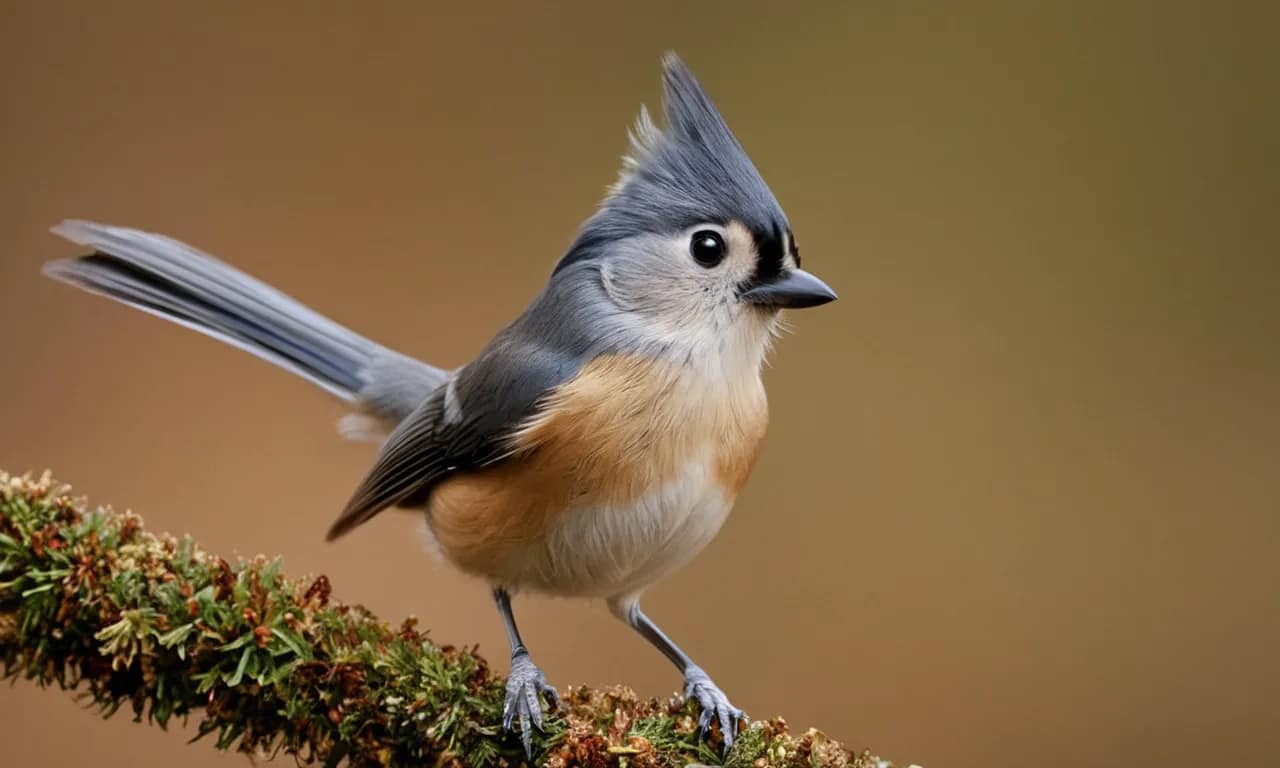
This morning, I was noticing the Tufted Titmouse at my feeders. It is a small, alert bird with a soft voice and a steady presence. A symbol of healing, but not in the way people often think. It is not promising closure or answers. It tells us to keep going even when life has permanently changed.

After losing a child, life stops making sense, and grief collapses time. The future feels unreachable, and the past feels too heavy to carry. Most days are not about hope or meaning; they are about surviving the stage you are in. The Tufted Titmouse reminds us to stay present, do what the moment requires, nothing more. It isn’t suggesting that we “move on.” It invites us to survive this moment, then the next.

The bird’s small, persistent movements mirror how we, as bereaved parents, can continue living through each season. Maybe you are just surviving, fragment by fragment. But getting up and feeding yourself is showing up. Saying their name and breathing through waves that come without warning does not weaken us; it is an endurance that strengthens us.

The titmouse is also known for its song, reminding us how important it is to speak our child’s name, tell their story, and to allow our grief to have a voice. Silence can isolate us. Sharing does not mean we are stuck; it means our love did not end. It does not mean “everything happened for a reason.”  But it does imply that life still has purpose, even while we carry this permanent loss.

Some days, noticing something simple in nature may feel like the only thing that can ground us. It’s a Tufted Titmouse at the feeder, a windchimes melody, a foggy morning of calm. These moments do not minimize our loss; they remind us that we are still here, even when our hearts are broken. The Titmouse teaches us to live with grief rather than resolve it. Strength is not the absence of sorrow; it is learning how to carry it.

3 Comments

Why Happiness Makes You Nervous

For the girl who thinks the tightness in her chest is normal

Good times make you nervous, don’t they?

You don’t call it fear—you call it “being cautious,” or “not getting your hopes up.” But the truth is quieter: you’re not used to peace. For so long, love has felt like tension, panic, apologizing, overthinking, and walking around someone else’s moods like they’re landmines.

So when something finally goes right… Your whole body glitches.

You look around, waiting for the explosion.
You wait for the tone in his voice to shift.
You wait for the moment he decides you’re “too sensitive,” “too emotional,” or “too much.”

And if nothing happens right away, your brain fills the silence with dread: Is this the part where it all turns again?
You don’t trust happiness—not because you’re broken, but because you’ve survived too long without it.

Girls like us learn early that peace feels like a trap.
A setup.
A calm before the next storm.

No one told you that real love isn’t supposed to feel like bracing for impact.
No one told you that safety isn’t the same thing as “keeping the peace.”
No one told you that if your body relaxes only when he isn’t home… that’s not comfort. That’s survival.

Listen, sweetheart—if happiness feels foreign, it’s not because you’re incapable of it.
It’s because someone taught you to expect pain.

And here’s the part I wish someone had whispered to me sooner:
You don’t have to keep living in the story where fear feels like love. You don’t have to keep shrinking yourself just to fit into a relationship that was never safe to begin with.

Real peace doesn’t make you nervous.
Real love doesn’t make you flinch.
And real happiness doesn’t feel like a setup—it feels like finally coming home to yourself.

You deserve that kind of happiness.
And I promise… it won’t explode.

When someone ties despair to God Himself, it buries you in a deeper kind of fear. You stop dreaming. You stop believing in the better. And every time life gets quiet, you brace yourself, because you know the calm never lasts.

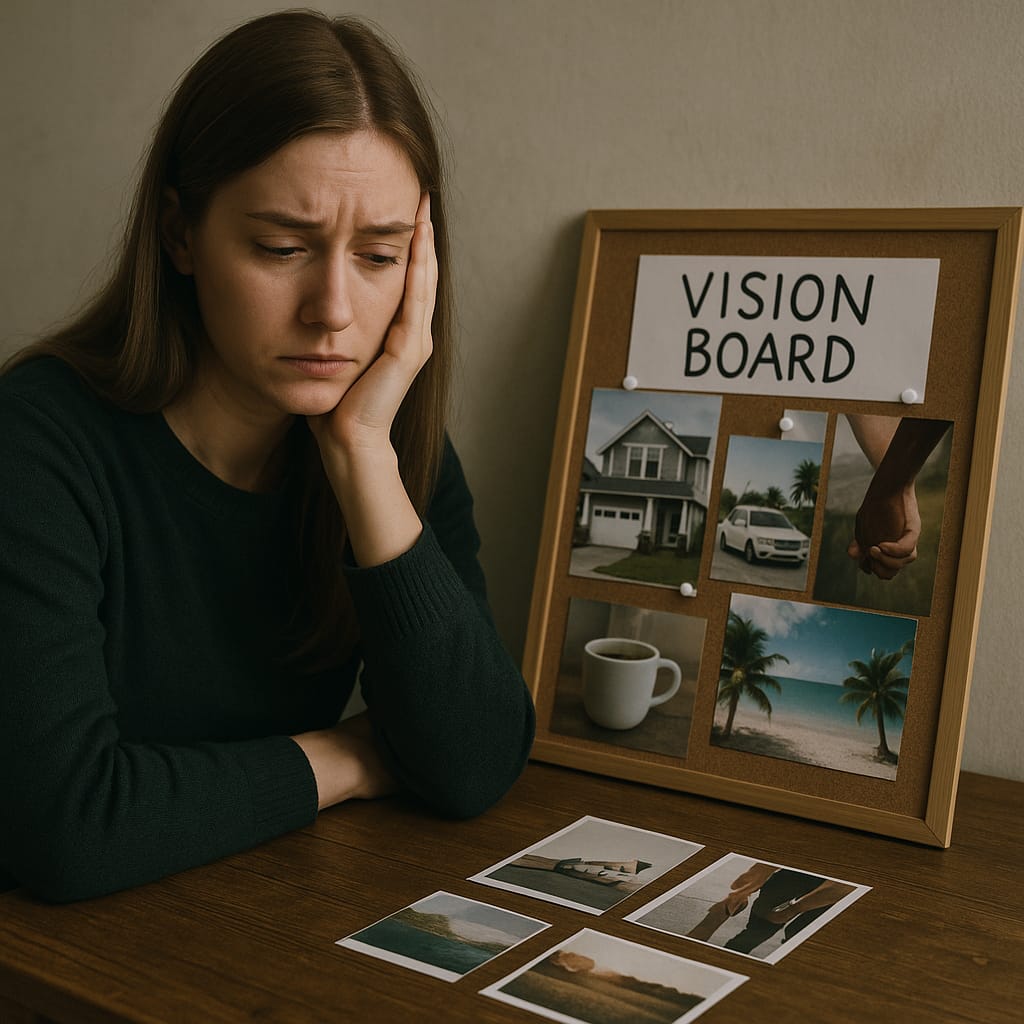
I remember once, after one of our rare calm seasons, we tried to dream again. We made a little vision board together — nothing extravagant, just things a normal couple would hope for. A peaceful home. A reliable car. A future that didn’t feel like walking through broken glass.

But his face went dark, the way it always did when anything felt too good.

He looked at me and said,

“God hates me. We will never get any of this.”

And just like that, the air changed.
The hope drained out of the room.
My body learned — again — that peace wasn’t safe, and happiness wasn’t to be trusted.

Leave a Comment

When You Take the Blame That Wasn’t Yours to Begin With

To Every Woman Still Carrying the Weight That Was Never Hers

I used to believe that everything was my fault.

The slammed doors, the silence, the yelling that followed the silence, the fists that followed the yelling—I took the blame for all of it. If dinner was cold, it was my fault. If he had a bad day, somehow I caused it. If he lost his temper, I should’ve known better. I should’ve stayed quiet. I should’ve smiled more. I should’ve been less.

When you live under the same roof as someone who thrives off control, you learn quickly that survival means shrinking yourself. It means bending until you barely resemble a person. It means learning the art of swallowing blame for things that never had anything to do with you—because arguing only brings pain, and agreeing brings temporary peace.

But what they don’t tell you is that even when you get out—when you finally pack the bags, find the courage, or flee in the middle of the night with nothing but your breath in your chest—that voice follows you.

Even in freedom, I found myself taking the blame for things that weren’t mine.

If a friend was upset, I’d replay our last ten conversations, convinced I did something wrong. If my boss looked stressed, I’d take on extra work, hoping it would ease a tension I didn’t cause. I’d apologize for everything. For asking questions. For not asking enough. For existing, sometimes. I was hunting for ways to feel terrible, and life kept handing me proof that I was right… because that’s what trauma does. It warps the lens.

But here’s the truth I’ve learned—he was wrong.

I was not the problem. I was not too sensitive. I was not too loud or too quiet or too emotional or too needy. I was not weak for staying. I was not selfish for leaving.

Healing isn’t linear, and it sure as hell isn’t clean. Some days, the guilt creeps back in like fog through a cracked window. But I catch it now. I see it for what it is: a ghost of the past, trying to convince me that I’m still that powerless woman I used to be.

I’m not her anymore.

I don’t carry blame that isn’t mine. I lay it down and walk away from it.

Now, I advocate. I speak. I write. I sit with other survivors and tell them: you are not crazy. You are not broken. And you are not to blame.

If you’re reading this and you’ve ever felt like the villain in your own story—take a breath. Hand back what was never yours to carry.

You deserve peace. You deserve love. And most of all, you deserve to be free from blame that was never yours to begin with.

You survived.

Now it’s time to thrive.

Leave a Comment