
Skip to content

Tag: emotional helaing

Living in 15% of the Cup: How Fawning Makes Us Small in Abusive Relationships

A powerful metaphor from Ingrid Clayton’s book helped me finally understand the quiet erosion of my identity—and begin to reclaim space for myself.

Many of us have learned to shrink ourselves just to survive—especially in relationships where love is conditional or controlling. In reading Ingrid Clayton’s book on fawning, I found language for experiences I never knew how to describe. One metaphor in particular—the “cup”—helped me understand just how imbalanced things had become.

“Nobody wants to make themselves small, minimize their feelings, or tolerate abuse. We do it out of necessity, to preserve our relationships or survive our environments.”
—Ingrid Clayton, Fawning: Why the Need to Please Makes Us Lose Ourselves—and How to Find Our Way Back

“Fawning is proportional. The relationship is a cup.”
—Ingrid Clayton

Imagine the relationship as a cup. In a healthy dynamic, both people have space to be seen, heard, and take up emotional room. But in abusive or codependent relationships, one person swells to fill most of that space, leaving the other compressed into whatever’s left.

A glass filled with layers of dark liquid on top and a creamy white layer at the bottom, placed on a light surface.

In abusive relationships, the abuser takes up most of the space—85/15—and we learn to live in what’s left. We minimize reality. We have toxic hope, thinking that if he would just do this, then it would be different. For me, I held on to the hope that if he just got a job, we would no longer be in poverty.

But when he got a job, it didn’t change his spending habits.

I held on to the hope that if he could control his anger, then everything would be better and we would get along. But when he stopped using his voice to yell, he still used it to diminish me. His anger looked “controlled,” but it was still there—in his eyes, his tone.

He no longer had to yell to get me to do what he wanted; I was already trained and conditioned to be his little submissive, fawning wife.

His “controlled” anger didn’t change the dynamics of the relationship.

I was little. He was big. And he had no intention of giving up any of his space in our relationship cup.

We can’t change someone else’s need to control, but we can start to question why we believe we must shrink to survive. Realizing this dynamic was painful, but it gave me language to begin reclaiming space in my own life.

Have you ever felt like you were living in just 15% of the relationship cup—shrinking yourself to fit someone else’s world? If so, you’re not alone. I’d love to hear your story.

If this resonates, I recommend checking out Clayton’s book, Fawning: Why the Need to Please Makes Us Lose Ourselves—and How to Find Our Way Back—it’s been a lifeline for me.

Leave a Comment
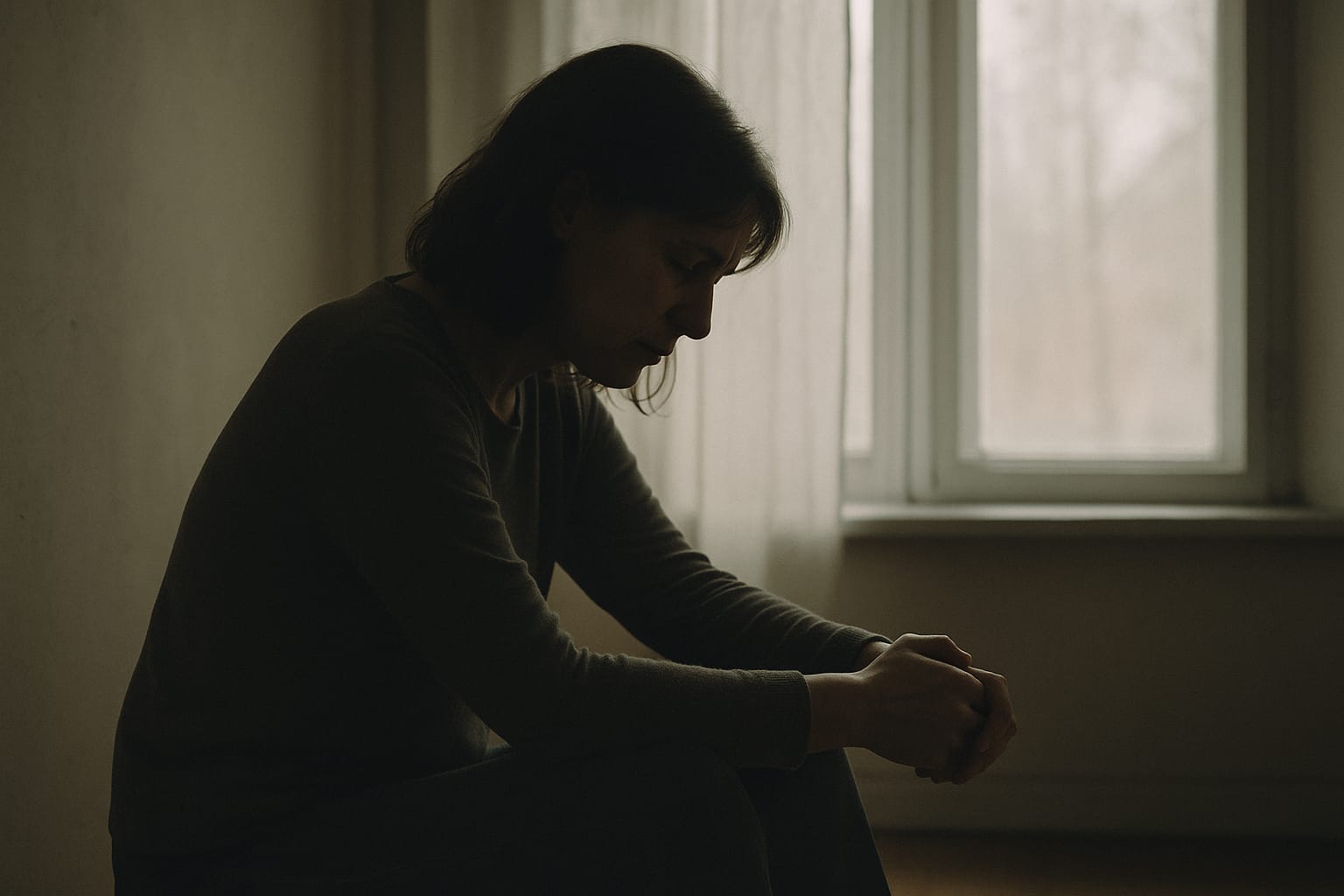
Why Gratitude Feels So Hard When You Are Hurting

And why the practice of gratitude cuts deeper for survivors

Gratitude feels impossible when you are still bleeding inside.
People tell you to practice gratitude as if it were a magic cure. They do not understand that when you have lived with someone who tore you down, gratitude is not a natural instinct. Survival is because you learned to scan for danger, not beauty. You learned to brace for the next blow instead of celebrating the wins.

So when someone says, “What are you grateful for?” your mind goes silent. You think you have nothing because, for so long, everything good has come with a price. Gratitude does not bloom in a war zone.

·  Misery becomes familiar, even when it hurts.
There is a strange comfort in what you already know, even if it’s toxic. Misery becomes a routine; you wake up with it every day. You sleep with it, you breathe it in, and it becomes the lens through which you see. Anything that contradicts your story feels wrong.

When people ask you to be grateful, it feels like they are asking you to betray your own truth.

For someone who lives in abuse, admitting there is still good in the world feels contradictory. It feels like letting your guard down.

·  Gratitude exposes the grief you have been avoiding
Finding even one small thing to be grateful for forces you to slow down, breathe, and feel. And feeling is terrifying when you’ve spent years shutting down your own emotions just to survive.

Gratitude is not fake; it’s risky. The moment you acknowledge something good, it feels like you’re ignoring everything you lost, everything you tolerated, and everything that broke you. Gratitude brings the grief to the surface, and most days, you are already carrying more than anyone sees.

·  But the smallest piece of gratitude can crack the prison walls
You do not have to write a list, and you do not have to be grateful for your trauma, the lessons, or the strength it gave you.

Forget all that.

Begin with one tiny thing, one moment where you felt safe or seen. Maybe a time you felt free to breathe. Was it a quiet morning? Or is it the fact that you left?. Maybe it is the way you no longer flinch at sudden movements.

Gratitude is not about pretending everything is fine. It is about recognizing the small signs that you are no longer living under someone else’s control.

One point of light in the dark, just one thing that reminds you that you survived. Something that proves your life is not finished, and once you find that one thing, even if it is small, you are no longer stuck in the same old story.

1 Comment