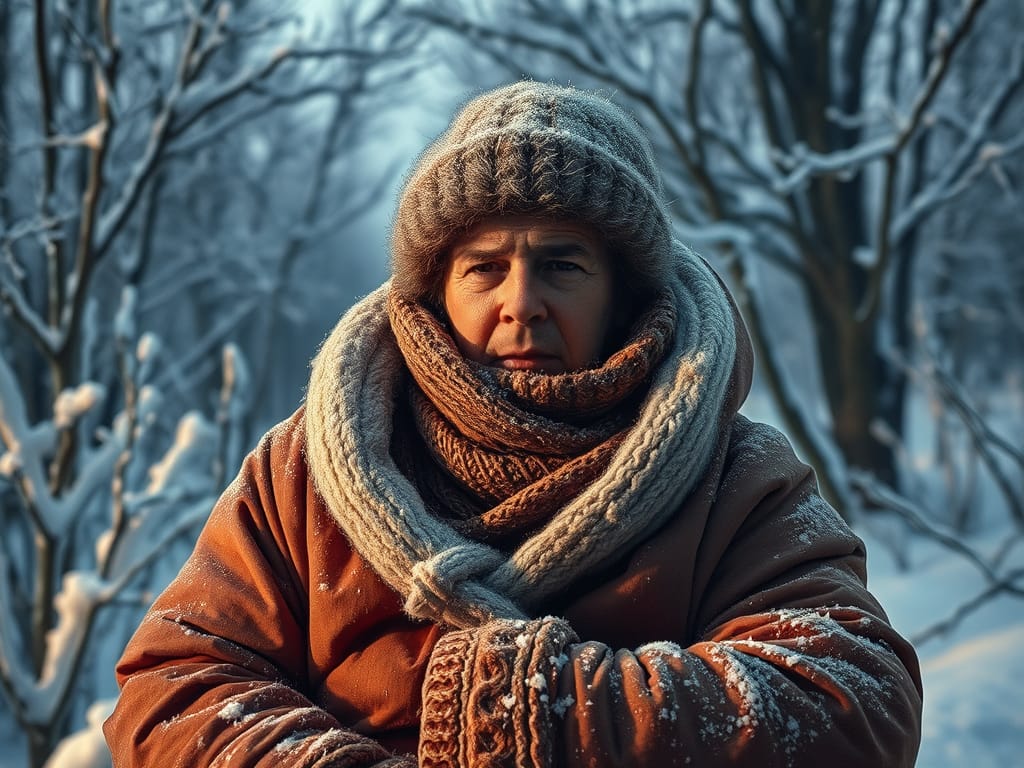
The thing I complain about the most is being cold. I hate to be cold. There aren’t enough articles of clothing I could put on to keep me warm in the dead of winter. And if I could put enough on to keep me warm, I would not be able to walk, move, or breathe.
“Move somewhere warmer.” You say.
Well, that would mean sacrificing some of the wonderful things I love about my hometown in the beautiful Natural State. In reality, our winters are mild until they aren’t. And when we have a “bad winter”, it usually lasts the duration of an entire week, and on rare occassions, two. And we are having one of those rare ones. The kind where the ice is refusing to vacate the premises.
What I Thought Abuse Looked Like and How I Missed the Warning Signs Right in Front of Me.
For a long time, I believed abusive relationships were obvious.
I thought they were violent. Easy to recognize.
I had seen that kind of abuse before.
When I was eighteen, I went to a family function with a boyfriend. While we were there, his uncle beat the crap out of his aunt right in front of everyone.
She had black eyes. Swollen lips. A bloody nose.
I will never forget it.
That moment shaped my understanding of abuse. In my mind, that was what “real” abuse looked like. That image became my reference point.
So if there were no bruises, no blood, no broken bones, I did not see danger.
Comparing Pain Instead of Listening to It
Later, when my ex-husband yelled and screamed, I compared it to that memory.
He was angry, but he did not hit me. He was loud, but I was not bleeding. He was very intimidating, but I did not have bruises.
So I told myself it was not abuse.
He told me I was overreacting. And I believed him.
I told myself other people had it worse.
That comparison kept me stuck.
Instead of asking, “Is this healthy?” I asked, “Is this as bad as what I saw before?”
And because it was not, I stayed.
What No One Taught Me About Abuse
No one ever taught me what abuse really looked like.
It looks like:
Being afraid to speak. Walking on eggshells. Managing someone else’s moods. Apologizing for things that were not wrong. Feeling smaller over time.
No one told me that fear without bruises is still fear.
And you should never fear your partner.
When Faith Becomes a Trap
On top of everything else, my faith taught me to endure.
To be patient. To forgive. To stay.
So when something felt wrong, I assumed the problem was me.
Not him. Not the situation.
Me.
I thought I needed to pray harder. Try harder. Be better.
I never stopped to ask whether I was being harmed.
What I Understand Now
Looking back now, I understand something I did not then.
Abuse is not defined by how much damage you can see.
It is defined by the amount of damage caused.
Damage to your peace. To your confidence. To your sense of safety. To your sanity and mental health.
I was being harmed long before I was ever hit.
Long before anyone else could see it.
Why I Am Sharing This
I am sharing this because so many people stay in unhealthy relationships for the same reason I did.
They do not recognize the danger.
They think abuse has to look a certain way to count.
It does not.
If you are constantly afraid, shrinking, doubting yourself, or walking on eggshells, something is wrong.
If you are reading this and thinking, “This sounds like me,” I want you to know….
You are not alone. You are not being dramatic. You are not overly sensitive. You are not weak.
You are starting to pay attention.
And that matters.
You matter.
You deserve better.
This post is part of my “Red Flags” series, where I share the warning signs I ignored and the lessons I learned along the way. In the next post, I will talk about the first red flag I should have paid attention to and how I convinced myself it did not matter.
I was sitting in a booth across the table from my oldest daughter, in our favorite Coffee Shop. The high-backed seats provided privacy and a perfect setting for catching up on life events. The aroma of her Dirty Chai made me wish I had ordered coffee instead of my tart Kombucha. Her voice mingled with the background murmurs of other conversations around us as she told me about my grandson’s first day of kindergarten. I was studying her face as she talked. I cherished these moments, admiring how her long eyelashes accentuated her chocolate eyes. They sat under perfectly manicured eyebrows so as not to resemble the unibrow she inherited from her Father. The tiny scar on her cheek was barely visible; a reminder of the time her sister threw an old metal hanger at her in an attempt to win an argument. Her perfectly heart-shaped lips reminded me of her Dad.
Suddenly, out of nowhere, I gasped when I felt someone grab me by my hair, wincing as my head and neck jerked from the force. My heart sank to my stomach, beating hard and fast. The attacker behind me growled, “You’d better get out of this place. Get back home!”
I did not need to look up to know who it was. I began screaming, “Help! Somebody, please help me!”
He pulled me out of the booth and dragged me toward the front door of the cafe.
My hands went to my head, trying to free myself from his grip. As always, he was much bigger and stronger. She sat motionless, shaken, not knowing what to do. Her mouth hung open, her eyes wide and glassy with tears.
I was trying so hard to have a different life, a better life. I did not want my children to experience this violence anymore. I wanted them to know that this is not OK and that life can be peaceful.
The harder I fought to break free of his grip, the tighter he held on. There was no way I was leaving without a fight. Part of me wanted to give in, to stop the pain in my scalp, but I couldn’t let him win. Not this time. I tried to plant my feet on the floor, but they slid effortlessly across the tile. What if he overpowers me? What if I can’t get away?
I stopped screaming for help, and I started yelling at him. “Stop! Get away from me! Leave me alone! You can’t control me!”
2014 marked the end of my 24 year marraige. I used to call him an angry man. Now I call it what it truly was, emotional abuse.
His last day home was volatile and violent. I knew when he threw my son up against the fridge, holding him there by the neck, that I was done. I did not want to continue like this for another 24 years, not even one more day.
Not only was I done, but my kids were too. The ones old enough to recognize human frailty had lost all respect for their father.
Anger is a choice we can unmake, But it won’t be forgotten by others.
All things can be forgiven, Not all things can be forgotten.
Healing does not require closure or resolution. It begins with accepting who you are today, even if you feel unchanged, fractured, or unfinished. Growth does not have to be visible. Healing often happens quietly, alongside uncertainty and setbacks.
The idea that healing requires resolution feels almost heretical in a culture that insists healing must end in understanding, apologies, or neat conclusions. We are taught that peace comes after explanation, justice, or when the other person finally says, “I’m sorry.” But sometimes healing can begin much earlier. It is a willingness to accept who we are today.
Healing happens underground, in the places where confusion and pain still live. It can exist alongside fear, anger, and unanswered questions, even when the body remembers what the mind wishes it could forget.
I know this because I have lived it.
In 2005, a moment suspended in my memory, I am 37 and pregnant. He is 37 and a Pastor. I am standing in a bedroom, confused. Sunlight spills through the curtains. The carpet is cool beneath my feet. The room looks ordinary, unchanged, which makes the cruelty harder to understand. How can someone do something so violent and act as though nothing happened? How can the world remain intact when something inside me has shattered?
My body holds the truth even when words fail. The truth: his actions triggered a miscarriage. There is tension everywhere: my tight chest, my knotted gut, a heaviness that presses me toward the ground. I feel dry, depleted, unable to cry. I can’t even empty the pain. I want to scream, run, disappear into sleep. My soul feels suppressed, distant, unreachable. In my desperation, I wish for divine intervention, punishment done to him, not because I want violence, but because I want acknowledgment. I want the harm to be seen, named, made real.
The wish for an apology is not about reconciliation. It is about validation. If the one who caused the harm were to seek forgiveness, it would mean admitting the harm existed. It would allow me to acknowledge it too, to stop wondering whether I imagined it, whether it counted. Without that acknowledgment, I am left alone with the knowing, carrying both the wound and the responsibility of believing myself.
Today, 20 years later, through the inner work of healing, when I return to that memory of the bed, something or someone else appears: a protector, an ally, a voice that says, “Fuck you,” to the bed, not to destroy it, but to defend me. A hand reaches out to help me sit up, to wipe my tears. Although I am still afraid to face the bed, I am willing to peek around my protector’s shoulder. This, too, is healing. Not the absence of fear, but the presence of support.
The bed itself has not changed. It is an inanimate object, made as always. And yet it holds meaning. The comforter had light teal squares, abstractly arranged, some solid, some floral, hints of pink scattered throughout the pattern. Calm existing in chaos. I want to burn that bed, to erase the sight of the pain. But I also want to save the comforter, folding it carefully, rather than destroying it. Because I am allowed to carry reminders without being consumed by them.
This is not closure; it is not resolution. It is acceptance of where I am now and how far I have come.
Healing, in this sense, is not happiness or forgiveness. It is a quiet decision to stand with yourself, even in uncertainty. It is the recognition that healing can happen while questions remain unanswered, while anger still flickers, while the past refuses to stay neatly behind you. It is the understanding that being unfinished does not mean being broken.
Healing begins the moment you stop waiting for someone else to give you permission to believe your own experience. Healing does not require closure, because closure depends on other people behaving in ways they often never will.
Moving past trauma does not come from fixing the past or controlling emotions. It happens slowly by how we take care of ourselves in the present.
What we think about, how we talk to ourselves, and whether we choose to honor our exhaustion rather than punish our perceived failures.
People who appear more resilient are not untouched by hardship; they have learned ways to carry it without being consumed by it.
Four Things I do When I am Triggered:
Breathe
Check in
Let it out
Remind
Breathe
The first thing I do when I’m consumed with the past is breathe. Not the shallow, panicked breathing that comes naturally when you’re triggered, but intentional breathing. Deep inhales that fill my lungs completely. Slow exhales signal to my body that I’m not in danger right now.
This has to come first. It’s not optional. When my nervous system is activated, nothing else works. I can’t think clearly, and I can’t access the rational part of my brain. I can’t connect with the parts of me that need attention.
Breathing calms the nervous system down. It tells my body: I’m safe, and I can handle this.
Check In
Once I can breathe, I check in with the different parts of me that got triggered.
The parts of me that are still the little girl who survived trauma, and the ex-wife in me who learned that abuse meant something, were fundamentally wrong with me. The old version of me, the mom, who feels guilty for everything. For the past, for staying in an abusive marriage for 24 years, and for things I can’t control. There are parts of me that are exhausted from trying so hard to be different, to break cycles, to heal.
I’ve learned in therapy that these parts all have something to say. They all need to be heard. And when I get triggered, it’s usually because one of them is scared or hurting and trying to protect me the only way they know how.
So I check in. I ask: which part of me is feeling this right now? What does she need? What is she afraid of?
Let It Out
After I’ve breathed and checked in, I need to let it out. The feelings can’t stay inside my body. They need somewhere to go.
Sometimes I journal. I write without editing, without trying to make it make sense. I let the fear, the guilt, and the helplessness spill onto the page. I write about the abuse I survived and how it still haunts me. And I write about whatever might have triggered me that day. Even if it was only the dog getting into the trash.
Sometimes I talk to someone who understands, like my therapist or my husband. I say the things out loud that feel too big to carry alone. I let someone else witness my pain without trying to fix it or minimize it.
Just: I see you. I hear you.
Getting the feelings out doesn’t make them disappear. But it makes them manageable. It takes them from this overwhelming internal storm and gives them form, language, and a place to exist outside of me.
Remind
The last tool is the one I need most: remind.
When the old shame tries to convince me I should have healed enough by now to not get triggered, I remind myself:
I did the best I could with the tools and knowledge I had. And I’m doing the best I can now.
When I feel like I’m failing because I got derailed again, I remind myself that a brief moment of being consumed isn’t failure. It’s part of being human. It’s part of having a nervous system that remembers trauma. What matters is what I do after.
I also remind myself that I’m safe now. And I am loved.
Healing comes in waves, just like grief does. Sometimes the waves are higher and harder, like when an anniversary of trauma comes around, when my nervous system gets activated by something I didn’t see coming. Sometimes the waves are just ebbing, gentle reminders that I’ve been through hard things, but I’m okay now.
Self-help culture promises a permanent better. It sells the idea that if you do the work, use the right tools, and heal properly, you’ll reach a destination where you’re fixed. Where you don’t get triggered anymore. Where you’ve moved past it all.
That’s a lie. The truth is that healing isn’t reaching the shore. It has the tools to stay afloat. And it is the repetition of returning to these practices, not because you failed the first time, but because this is what healing actually
There was a time when I hated to be alone. The prospect of eating in a restaurant alone scared me. The idea of living alone terrified me. I was scared of being alone, so I surrounded myself with boyfriends, then eventually with children. Never again to be alone. I was an only child. I was alone a lot. I was alone in my room, alone after school. Alone. I was alone with my own choices, alone to whatever and whoever tried to hurt me. Alone. I was used to being alone, and I hated it.
Of course, my parents loved me. My parents did not learn how to love an only child. They did the best they could with the tools and knowledge passed down to them. They didn’t know about attachment styles. They did not know they were prone to denial and avoidance. They had no idea how lonely that would make their only child feel.
I tried to fix my loneliness by going to parties, hanging out with friends, getting married twice, and once again. I noticed that although I was married and not alone, I still felt alone, so I had a child. And it filled a hole. So I had another child, felt fulfilled, and then had nine more. Each time, feeling complete and whole at the birth of each. Because no one feels more loved than when that newborn babe suckles your breast for the first time. But they outgrow that, and the loneliness always creeps back in.
I was in the midst of a house full of people whom I loved, and they (except one) loved me. Then why did I feel so alone? Why was I so lonely? I was looking for these people to fill me. My validation came from these people: my husband and my children. I was dependent on them for my self-worth. And since no one can validate you better than yourself, and no one can love you better than yourself, and no one can know your worth better than yourself, it did not work.
It took me years to figure out how to fill that void. Now I understand what I was doing wrong and what actually works. Until you stop looking at the people beside you to fill your lonely hole and start looking in front of you in the mirror at yourself, nothing else will work. Nothing else will satisfy.
Ask yourself what the void is. What is it that you need that you are not receiving? Is it love? Is it validation? Is it understanding? What do you need? I needed to be heard and seen. I needed to feel loved.
Here’s to stop loneliness:
Stop reaching out to other people to fill the void. I’m not saying you shouldn’t have friends. Having friends is good. Often refreshing. But it is not healthy to depend on them for your fulfillment and happiness.
Start looking in the mirror and say. “You are loved.” Say it five times, pointing to yourself. Then put your hand on your heart and say, “I am loved.” Say it again. Again. Say it again. Louder. Say it like you mean it. And say it with a smile. At first, you might not feel it, but as you practice this, it will become easier, feel lighter, and have more meaning.
Lonely people just want to be loved, feel loved. That is all I ever wanted, to feel loved. And I was looking for love in all the wrong places, when it was right in front of me, staring at me in the mirror the whole time.
You can have peace can even when you have been through trauma or if you are grieving. This doesn’t mean you have to force happiness or pretend that the loss didn’t happen. It simply acknowledges that alongside suffering, there can also be moments of steadiness, breath, and relief. These moments are not a denial of what happened. They are learning to live alongside what happened.
A Three-Step Approach to Peace :
Create brief moments of physical safety through slow breathing, grounding, or gentle movement. This calms the nervous system without denying pain.
One time, I put on some Black Sabbath and started moving my body to War Pigs. Never before had it moved me like it did this day. But as I moved my body to its tune, the tears started flowing. I had emotions built up inside me that had been begging to be released, but I kept ignoring them. So my body said, “Well, now we’re going to cry while you dance to War Pig, a very unlikely match.” I felt so much better after that!
2. Practice holding two truths at once. You can acknowledge your pain while also noticing that you are safe.
3. Redefine peace as steadiness rather than happiness. Peace can mean staying anchored for a few minutes, even when you’re not feeling joyful.
I’ve lived this. I’ve known what it’s like to carry a grief that reshapes everything, to sit in the aftermath of trauma and wonder how to keep moving. The words I’ve written here come from experience, from finding small moments of steadiness in the middle of inner storms. I’ve learned, often the hard way, that peace doesn’t mean forgetting or feeling happy. It means allowing space for both the ache and the breath.
Grief and trauma don’t vanish just because we decide it’s time to be happy. Healing isn’t about pretending the pain is gone or forcing ourselves to move on. It’s slower than that, quieter. It asks to make room for what hurts, instead of pushing it away.
But even when loss has taken more than we ever thought we could survive, we still have something left. We still have a choice. Not always in the big ways, but in the gentle, daily ones. We can choose how we care for ourselves in this moment. We can choose rest and compassion instead of self-blame and sorrow.
Breathe. Pause. Allow yourself to be grounded instead of letting the overwhelm take over.
Happiness after grief doesn’t mean forgetting who or what you lost. It doesn’t mean the pain has vanished or that what you lost no longer matters. It means hope is making space beside the sorrow. Not replacing it, just sitting next to it.
Choosing joy is not a betrayal of your pain. It’s an act of survival.
The nuthatch teaches this well. A bird that doesn’t soar or flee, but stays close to the trunk. It climbs downward, upside down, navigating the world in ways that feel strange but steady. When everything is tilted, when nothing feels safe, it continues anyway. The nuthatch holds tight. Its strength isn’t in beauty or speed, but in holding on.
It doesn’t rush. It circles back, rechecks, and returns.
And that is how grief moves. It isn’t in a straight path, with clarity or closure. It returns, pauses, then returns again.
The Nuthatch teaches us to stop reaching for an escape. Stay connected to the present moment, even when life feels upside down, and return to the things that support us.
Where the hummingbird says, “I am still here despite the cost.”
Where the mourning dove says, “Peace can exist with sorrow.”
The nuthatch says, “I will stay with what steadies me, even when the world feels upside down.”
Sounds of a creaking door… As I write about the sounds Of water hitting bedrock below A crescendo from thirteen feet above.
More than a trickle, Less than a roar. Yet still a fall. A lazy stream’s descent.
Laughter behind a glass door. Nude. The house has finally warmed To a temperature that’s Birthday-suit worthy.
The buzz of a yellow jacket In search of food for winter. My fingers and nose tell me, It’s too cold for this creature To be flying about. Yet it defies logic, Buzzing close to my ear.
Wasp stings are a powerful, A Solid blow. I remember the time Three tagged me on the back.
BOOM! I felt it. BOOM! again. BOOM! a third time.
It was between the second and third I realized what was happening. Then I ran Yelling, crying, Screaming. A third of each.
The pain was immense. It did not stop. Not a throb,
A Stab. As if it were stinging me Again and again.
For over an hour.
So now, As this cold-weather fiend Flies near, I watch.
“What do you have to say?” I ask.
I listen. I observe.
All I can gather is… It is in no hurry.
It finds a grease stain On the patio chair arm, And begins lapping it up In the manner yellow jackets do, Until the spot is no longer visible.
Cleaned its mess. No Cleaned a mess. Not its own.
Like we as parents So often do.
I swing my hair Back and forth, Hoping it will leave me alone, Not lap any oil From my body.
Memories rise Panic follows.
I feel it there, On top of my head.
I swing my curls again, Trying to send a message: Go. Elsewhere.
But it is here. It was here before me. And unless I smush it, It will be here after me.
For now Gone. Or out of hearing reach. Out of sight.
The soothing sounds of nature… Not made by man.
Water falls onto rocks. Into a pond-like puddle Knee-deep, perhaps, Or at least it was last year.
From the top of the stairs I can see the bottom.
This place, carved by nature You can’t help but wonder What was on the Divine’s mind When it shaped it.
I want a place like this. All to myself.
But would I share it?
Places like this deserve to be shared.
Yet I want to hoard it. Keep it for myself. Unfettered access At all times.
And I suppose With a tweak in scheduling That’s always possible.
Cold water cascades Slaps, Claps, Splashes, Sings.
It continues its journey.
Boldly it goes Down, winding, trailing, Lulling. Its journey never ends.
Can you see the wind? No But you see the evidence.