Skip to content

Tag: Domestic Abuse

Abuse Without Bruises: My Story

The Red Flags I Didnโ€™t See Until It Was Too Late

What I Thought Abuse Looked Like and How I Missed the Warning Signs Right in Front of Me.

For a long time, I believed abusive relationships were obvious.

I thought they were violent. Easy to recognize.

I had seen that kind of abuse before.

When I was eighteen, I went to a family function with a boyfriend. While we were there, his uncle beat the crap out of his aunt right in front of everyone.

She had black eyes.
Swollen lips.
A bloody nose.

I will never forget it.

That moment shaped my understanding of abuse. In my mind, that was what โ€œrealโ€ abuse looked like. That image became my reference point.

So if there were no bruises, no blood, no broken bones, I did not see danger.

Comparing Pain Instead of Listening to It

Later, when my ex-husband yelled and screamed, I compared it to that memory.

He was angry, but he did not hit me.
He was loud, but I was not bleeding.
He was very intimidating, but I did not have bruises.

So I told myself it was not abuse.

He told me I was overreacting.
And I believed him.

I told myself other people had it worse.

That comparison kept me stuck.

Instead of asking, โ€œIs this healthy?โ€
I asked, โ€œIs this as bad as what I saw before?โ€

And because it was not, I stayed.

What No One Taught Me About Abuse

No one ever taught me what abuse really looked like.

It looks like:

Being afraid to speak.
Walking on eggshells.
Managing someone elseโ€™s moods.
Apologizing for things that were not wrong.
Feeling smaller over time.

No one told me that fear without bruises is still fear.

And you should never fear your partner.

When Faith Becomes a Trap

On top of everything else, my faith taught me to endure.

To be patient.
To forgive.
To stay.

So when something felt wrong, I assumed the problem was me.

Not him.
Not the situation.

Me.

I thought I needed to pray harder. Try harder. Be better.

I never stopped to ask whether I was being harmed.

What I Understand Now

Looking back now, I understand something I did not then.

Abuse is not defined by how much damage you can see.

It is defined by the amount of damage caused.

Damage to your peace.
To your confidence.
To your sense of safety.
To your sanity and mental health.

I was being harmed long before I was ever hit.

Long before anyone else could see it.

Why I Am Sharing This

I am sharing this because so many people stay in unhealthy relationships for the same reason I did.

They do not recognize the danger.

They think abuse has to look a certain way to count.

It does not.

If you are constantly afraid, shrinking, doubting yourself, or walking on eggshells, something is wrong.

Even if there are no bruises.

Free Red Flags Guide

If This Sounds Like You

If you are reading this and thinking, โ€œThis sounds like me,โ€ I want you to knowโ€ฆ.

You are not alone.
You are not being dramatic.
You are not overly sensitive.
You are not weak.

You are starting to pay attention.

And that matters.

You matter.

You deserve better.


This post is part of my โ€œRed Flagsโ€ series, where I share the warning signs I ignored and the lessons I learned along the way. In the next post, I will talk about the first red flag I should have paid attention to and how I convinced myself it did not matter.

3 Comments

You Can’t Control Me

I was sitting in a booth across the table from my oldest daughter, in our favorite Coffee Shop. The high-backed seats provided privacy and a perfect setting for catching up on life events. The aroma of her Dirty Chai made me wish I had ordered coffee instead of my tart Kombucha. Her voice mingled with the background murmurs of other conversations around us as she told me about my grandsonโ€™s first day of kindergarten. I was studying her face as she talked. I cherished these moments, admiring how her long eyelashes accentuated her chocolate eyes. They sat under perfectly manicured eyebrows so as not to resemble the unibrow she inherited from her Father. The tiny scar on her cheek was barely visible; a reminder of the time her sister threw an old metal hanger at her in an attempt to win an argument. Her perfectly heart-shaped lips reminded me of her Dad.

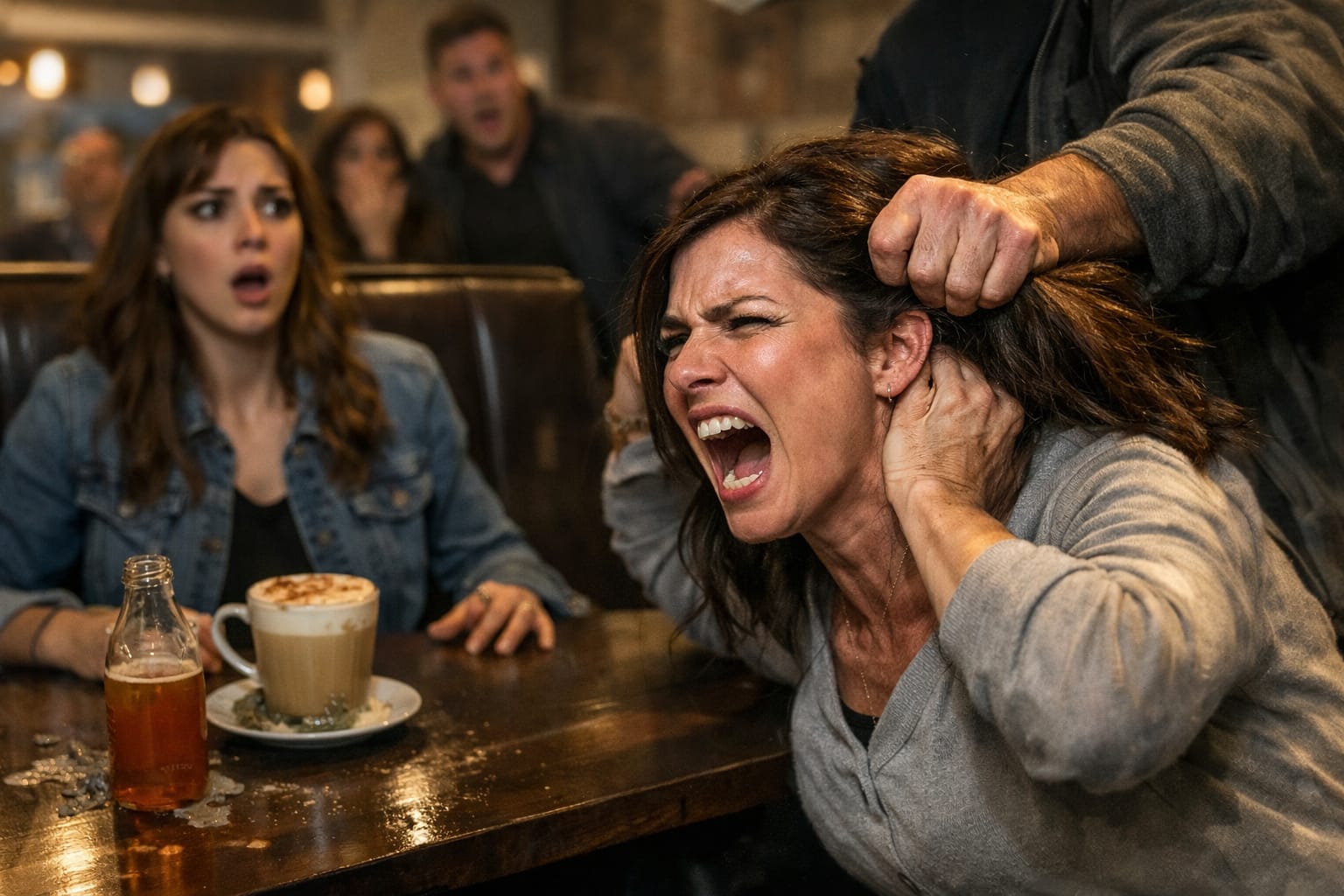
Suddenly, out of nowhere, I gasped when I felt someone grab me by my hair, wincing as my head and neck jerked from the force. My heart sank to my stomach, beating hard and fast. The attacker behind me growled,
“You’d better get out of this place. Get back home!”

I did not need to look up to know who it was. I began screaming,
“Help! Somebody, please help me!”

He pulled me out of the booth and dragged me toward the front door of the cafe.

My hands went to my head, trying to free myself from his grip. As always, he was much bigger and stronger. She sat motionless, shaken, not knowing what to do. Her mouth hung open, her eyes wide and glassy with tears.

I was trying so hard to have a different life, a better life. I did not want my children to experience this violence anymore. I wanted them to know that this is not OK and that life can be peaceful.

The harder I fought to break free of his grip, the tighter he held on. There was no way I was leaving without a fight. Part of me wanted to give in, to stop the pain in my scalp, but I couldn’t let him win. Not this time. I tried to plant my feet on the floor, but they slid effortlessly across the tile. What if he overpowers me? What if I can’t get away?

I stopped screaming for help, and I started yelling at him.
“Stop! Get away from me! Leave me alone! You can’t control me!”

(To Be Continued)


Leave a Comment

Calling it What it Was

His last day home was volatile and violent. I knew when he threw my son up against the fridge, holding him there by the neck, that I was done. I did not want to continue like this for another 24 years, not even one more day.

Not only was I done, but my kids were too. The ones old enough to recognize human frailty had lost all respect for their father.

Anger is a choice we can unmake,
But it won’t be forgotten by others.

All things can be forgiven,
Not all things can be forgotten.

Leave a Comment

What I Remember About My Mom…

What I remember about my mother isโ€ฆ

October 14, 2025

With a title like that, it makes me feel like it should go under the title of โ€œwhat I canโ€™t write aboutโ€. What I remember about my mother is how emotionally unstable she was when I was a teenager. But should I stay focused on that? I feel guilty even putting that on paper. Shouldnโ€™t I be looking for the happy moments to remember about my mom? Like the time she took me to Disneyland? Or the time we simultaneously fell on the beach? Or the time we drove, what felt like across country, to visit family in Texas. Those were some fun times. And I suppose, if I allow myself, I can recall those and focus on them instead, but it feels like my mind wants to dwell on the events that scarred me or caused the most unrest.

Once, I remember in particular. She came home from church crying, sobbing, actually. Staring at her hands, hands that were starting to wither and constrict from years as a red cross nurse. When my 15-year-old-self asked her why she was crying.

She said, โ€œBecause Gayle wouldnโ€™t talk to me . She wouldnโ€™t even shake my handโ€.

Gayle and my mom were best friends for a long time, then all of a sudden they werenโ€™t. Some issue went down between my mom and Gayle’s son, Dave, the same one who molested me. And Gayle no longer wanted to be friends with my mom. I could not understand why she was allowing another human to cause her such distress. This woman controlled my mom’s every emotion. As a teenager, I wished my mom had been stronger. I knew that I was not able to go to my mom if I was in distress. She wouldnโ€™t be able to handle it. I needed her to be emotionally available. I needed her to protect me. But instead, I had to be strong for herโ€”a fifteen-year-old girl holding up a grown woman who couldnโ€™t carry her own grief. She leaned on me like I was her anchor, her therapist.

What she wantedโ€”what she demandedโ€”was my undying devotion, my complete loyalty, maybe even my worship. But her constant victimhood repulsed me. The way she wallowed in it, wrapped herself in it like a favorite robe. She didnโ€™t just live in that identityโ€”she tried to pass it on to me. Now that I am an adult, she looks at me like I am broken. Like I am stuck in suffering, too fragile to stand on my own. But Iโ€™m not. I have already learned how to carry pain quietly. She doesnโ€™t see that. She only sees what she wants toโ€”someone who needs saving, so she can be the savior. But I don’t need her to rescue me. I need her to show up, like I needed when I was a teenager.

I remember my mom would go places on the weekends with her friends, and I would feel abandoned and neglected, wondering why she never took me. I suppose that is the life of a lonely only child. You get used to them keeping themselves occupied that you forget to invite them to places. Or maybe they stop asking because they always say no, like my last and only child at home.

I remember my mother being capitulating, emotionally distraught, and neglectful. Itโ€™s hard to put into words how exhausting it was to carry the emotional weight she dropped. I didnโ€™t just have a motherโ€”I had a fragile force of chaos that needed managing. I was the one steadying the ship, reading her moods like weather, preparing for storms. She needed me to be her anchor, her audience, her child-lover and devotee. But I needed her just to be a mother. I needed someone who could tell me everything was going to be okay. Instead, I spent most of my youth making her feel okay.

I also remember how she was so spiritual and sanctimonious until her family came around. She didnโ€™t drink unless they were there. Now bear with me, I detect I am being a bit judgmental here, because I was raised in church and taught that drinking was sinful. So to see her drink when family came around seemed like a double standard. My adult self sees it a little differently now. I donโ€™t know how to put it on paper. But good for her for choosing not to drink daily. Only allowing herself to let go of her inhibitions when the family was around.

I remember when I threw them a 25th anniversary party, I was a staunch Christian at the time, and I made sure EVERYONE knew that there was no alcohol allowed. So, they brought it in their ice chests, in the back of their cars. They would step outside to chug their beloved beer. I attempted to create orderโ€”purityโ€”something untangled and clean. I wanted to make her proud, but I also wanted to undo the parts of her that embarrassed me, shamed me, weakened me. I wanted her to see me as strong, in control, untouched by the mess she seemed to bathe in. But the truth is, even then, I was still craving her approval, still hoping sheโ€™d finally see meโ€”see what I was building to survive what she gave me.

Drinking is and was a thing my family does, has done, and still does. I did a genetic test, and it showed that specific genes inhibit my ability to produce dopamine. I canโ€™t help but wonder if this is an inherited thing and why drinking and drugs are the go-to for dopamine hits in our family. Then I think about my mom and her pain pill addiction.  Sheโ€™s not like the ones you would think of who take them to be high; she’s what we call functioning. She waits until a specific time of day. Then mixes it with a beer for the best effect. But cannot go a day without the pill. To do so would cause excruciating pain.

What I remember about my mom is how she wanted to file for grandparent rights because we were not letting her see the grandkids, because she wasnโ€™t in church, or because she was drinking. Honestly, I do not remember the actual reason why we did that.  Again, it was self-righteousness on my part, but I remember that about my mom.

What I remember about my mom is how, when I turned my 22-year-old son in for molesting his sister, Mom was willing to stand by his side to testify on his behalf instead of standing by my daughter. THAT is what I remember about my mom. How she allows him to call her every week, how she gives him money, and how she accepts his letters. I know that is her grandson. It is my son. It hurts. It stings. But everyone assumes that โ€œthat is memaw,โ€ and she can be weird like that. What devastates me isnโ€™t just her loyalty to him. Itโ€™s what her loyalty costs. Her silence toward my daughter. Her refusal to draw a line. Her willingness to let me fracture. Itโ€™s like she needed to prove she could still be someoneโ€™s everythingโ€”and he gave her that opportunity. That kind of loyalty looks like love, but it isnโ€™t love. Itโ€™s desperation. Sheโ€™s always needed someone to cling to, to believe in, to fight for. I just never understood why it couldnโ€™t be me.

What I remember is when she left my dad because she was so sure he was filming child pornography in their home. (He wasnโ€™t) She still believes that to this day. Mom is delusional. Currently struggling with thinking someone has hacked her Facebook. Yes, it’s possible, but after looking at it multiple times, her FB is not being hacked. She has forgotten how to navigate it, and if FB upgrades, she will be even more confused and, with absolute certainty, think she is being hacked by someone else. Thereโ€™s something hollow about watching your parent decline into paranoia. Thereโ€™s grief in it, but also resentment. She still calls me like Iโ€™m her tech support, her lifeline, her handler. But Iโ€™ve been handling her my whole life. Thereโ€™s no space to say, โ€œI canโ€™t do this anymore.โ€ She wouldnโ€™t hear it. She would only feel betrayed. Every time I try to step away, I feel like the bad daughter. But being her daughter has always felt like an assignment I didnโ€™t ask for.

Reminding myself that I donโ€™t have to decide right away whether to focus only on the โ€œhappy momentsโ€ or only on the painful ones. Memory is not tidy. It rarely divides neatly between joy and hurt. Often, the most actual writing comes when both are allowed to sit side by side.

I remember how, when she laughs, it is crackly, raspy. She has COPD from years of smoking. Laughter will send her into a coughing fit. Although the cough sounds congested, it is never productive; the phlegm persists.

I remember how mom goes silent when she is angry or feels wronged. Mom often feels like she has been wronged. She views life through a victim’s eyes.

When mom looks at me, she looks at me with pity, as if I am experiencing some horrible event. Yes, many times I have. But my daily life as a mom, wife, and office manager is not horrific, and I am not a victim because I go to work every day (well, technically not every day). Itโ€™s like she wants me to be wounded. Like she needs me to be just as broken as she is so she can understand meโ€”or maybe justify herself. She calls it concern. But it feels like a projection. Iโ€™m not fragile. Iโ€™m tired. Iโ€™m functioning, flawed, healingโ€”but Iโ€™m not living in a wound like she does. And every time she looks at me with those sad eyes, itโ€™s like sheโ€™s trying to pull me back into her story, her suffering. I wonโ€™t go.

But stillโ€”I remember her. All of it. The good, the unbearable, the beautiful, the warped. I remember her as she was, not as I wish she had been. Maybe thatโ€™s the most honest kind of remembering there is. Not choosing sides between pain and peace, but letting them live together and letting them both be true. What I canโ€™t write about is exactly what needs to be written. And maybe, somehow, thatโ€™s enough.

Leave a Comment

Tax Season Reflections: Life Beyond Expectations

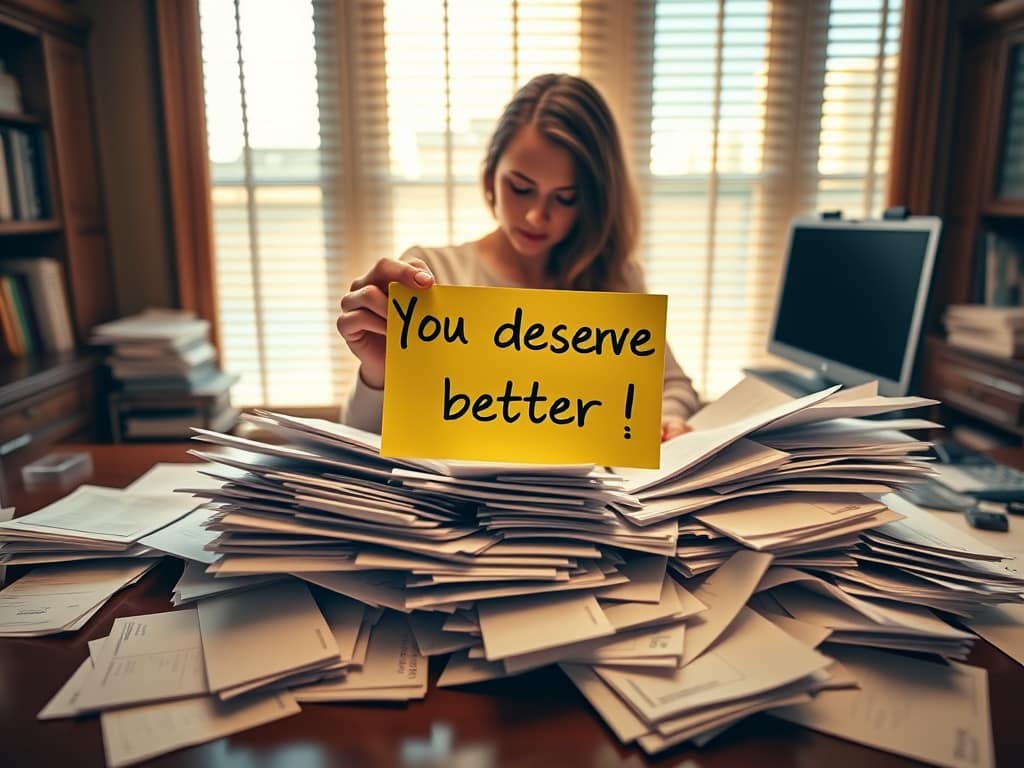
Sitting at the giant mahogany desk, I stared at the stack of papers in front of me. I reached up and twisted the plastic stick on the blinds, narrowing the slats until the sunlight no longer glared off the computer screen. It was that time of year again: tax season. The task ahead was daunting, and my lack of proper filing over the year left me with quite a challenge.

We had started our own cleaning business last year in a small, dying town. Surprisingly, it did pretty well. We were the only business in the city offering house cleaning, and people appreciated the idea of hiring professionals rather than a friend of a friend. They especially liked our attention to detail, a trait I had perfected after years of living with an OCD narcissist.
Our motto was: “We don’t cut corners, we clean them!” That’s precisely what I did. I reached behind toilets, dusted ceiling fans, and even cleaned the baseboards every time. It was honest work, and I was damn good at it.

I’d learned that level of perfection the hard way. Once, I’d spent all day cleaning, and Albert came home to find a tiny smudge in the corner of a mirror. He asked me what the hell I’d done all day and why I didn’t get off my fat, lazy ass and clean.

I began separating receipts and invoices into different piles, sorting through them with the half-confidence of someone who grew up watching a CPA at work. A musty smell drifted from the papers, dust rising with every movement.

“Achoo! Achoo!โ€ I clamped my nose shut to block the third sneeze.

As I wiped my eyes, a small yellow slip of paper drifted into my lap. Curious, I picked it up. Scribbled in uneven handwriting were three words:

โ€œYou deserve better.โ€

It wasnโ€™t my handwriting. I did not recognize it at all. Still, it was there, staring up at me.

Where had it come from? Who wrote it? Had it been hiding among the receipts all this time?
Had one of the kids slipped it in without me knowing? A friend who’d finally had enough of watching me disappear? Or had I written it myself in some moment of clarity I’d since forgotten, some late night when the house was quiet and I let myself think the unthinkable?

My mind wandered back to just a few weeks ago when Albert had asked me, “Do you even like me?”

The truth was, I couldn’t stand him. I didn’t respect him, didn’t trust him, didn’t even like being in the same room as him. But we had almost twenty-five years together, and I figured if I’d made it that far, I might as well ride it out to the end.

He’d asked me that question dozens of times over the years. My answer was always the same: “No, but I love you.” It was the truth, or at least the version of truth I could live with. I didn’t like him, but I loved him the way you love family. Out of obligation. Out of history.

That was the lie I told myself. That if we stuck it out, maybe something would change. Maybe he’d stop being angry at everything. Maybe he’d leave me a note, bring me flowers. Stop telling me I’m fat or that he hates me.

Maybe. But deep down, I knew better.

โ€œI deserve better,โ€ I whispered. Then the fear crept in.

How? How would I support myself and the kids? How could I possibly make it on my own? There were mouths to feed and kids to clothe. I stared at the slip of paper, running my thumb over the pen marks as if that could somehow transfer strength into my bones. Then, slowly, I slid the note into the drawer beside the paperclips.

I didnโ€™t know it at the time, but that was the moment everything quietly began to shift. Subtly and undeniably.

A month or so later, we were cleaning a client’s house. I was polishing their glass dining room table when Albert looked at me and asked, “Do you even want to be with me anymore?”

I stopped what I was doing and looked up. I looked straight into his eyes, shook my head, shrugged my shoulders, and said, โ€œI donโ€™t know.โ€

This was the first time in our marriage that I did not care how my words made him feel. I spoke my truth. It was the truth. But I didnโ€™t know how to live without him. I didnโ€™t know how to carry the full weight of our family on my shoulders alone. I didnโ€™t know if I could. I didnโ€™t know if I loved him anymore. I certainly didnโ€™t like him. That was very clear.

I saw the panic in his eyes as his face grimaced and he whimpered like a child.

Two weeks later, I decided to stick it out. Because I had six kids still at home. Six mouths to feed, six futures that depended on me not falling apart. So I tried. I tried to be the best version of myself. A better wife. A better mother. I smiled more. I was nicer to him, more understanding, and more complimentary. I even bought new lingerie.

But when you know you deserve better, something changes. You stop settling. You stop hoping that toxic patterns will heal on their own.

And you start looking, not for another man, but for a better life.


AUTHOR’S NOTE: The events in this story are true. Some names have been changed, for the sake of privacy and peace.

Leave a Comment