It Is What It Is

It Is What It Is

“It is what it is.”

I told my assistant, after spilling everything about why I had been absent,

“Hey, that’s a dismissive statement. You can’t dismiss this. It is not your fault.” He said.

Yesterday I stopped by my parents’ house to help Mom with her Facebook. After about an hour of scrolling through her activity history, and Dad complaining about how three of their specialist doctors were leaving our town for a bigger one, they ended with,

“She owes us an apology.”

I shook my head no.
They didn’t like that.

They insisted they had been wrongly accused. They brushed past the fact that they are still, even after everything, keeping contact with her abuser. Instead, they turned the extra pictures on Facebook into their own story. A story where they were the victims. A story where she had attacked them.

Dad with his angry, silent face.
Mom had her lip pulled in, as if she were bracing for battle.


“Yes, she does,” they sneered.
“Wouldn’t you want an apology if you were accused of something you didn’t do?”

I let out one of those airy laughs. The kind you do when you remember something painful. In my case, it was Dad’s accusatory text. I brushed it off again by saying,


“You have to understand how scared she is.”
And then the conversation was over.

I left feeling like I had failed her and myself.

I have never been good at ‘thinking on my toes’ when I get backed into a corner. And for some reason, my parents have always had the power to back me in that corner. Even as an adult. Even after therapy. Even after years of growth.

I think I have been dismissive of them for years without realizing it. Not because I didn’t care, but because I didn’t want to face the fear I carried of them. A fear I only recently learned to name.

Therapy has helped me draw cleaner lines. It showed me that my anxieties did not begin with my ex-husband. He added to the damage, but he did not build the foundation. My parents did. Their dismissiveness shaped me long before adulthood, long before marriage, long before the trauma that came later.

My dad does not know how to love without control. His love has limits, and those limits end where his control ends.
My mom has always believed the world is against her. So it makes sense she sees her own granddaughter as just one more person out to hurt her.

And for years, I’ve repeated the exact phrase like a mantra.

“It is what it is.”

But now I know that phrase was never peace. It was resignation.
It was the sound of folding into silence.
It was the armor I wore when I didn’t yet have the language to name the wounds.

But I do now.

So no, it’s not “what it is.”

It’s what it was.
When Doing the Right Thing Still Makes You Feel Like the Villain

When Doing the Right Thing Still Makes You Feel Like the Villain

A story about family, guilt, and the cost of choosing someone’s peace and safety

This year, I set a boundary with my parents.

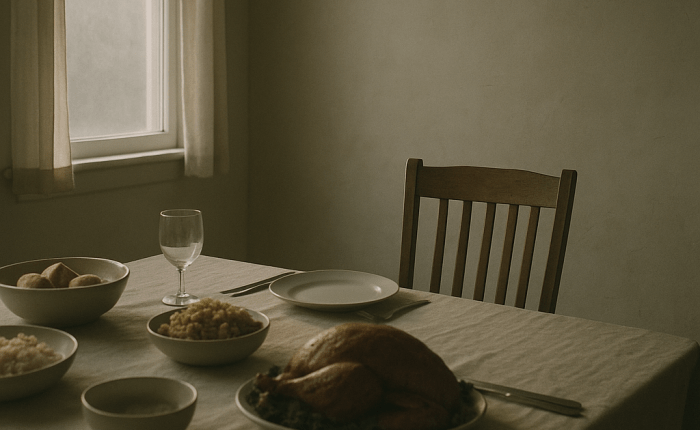
We didn’t go to their house for Thanksgiving. We had it at ours instead. That might sound small to someone outside the situation, but it wasn’t. It carried years of pain, silence, and choices that should never have been mine to carry.

It wasn’t even about me this time. It was about my daughter.

There’s a story I’m not going into here, but I’ll say this much. My daughter was violated by a family member, their grandson, my son. He’s in prison now for what he did to her. But my parents still choose to stay in contact with him.

She was the one who said she didn’t want to go. She didn’t want to sit in a place that still protects the person who hurt her. And I decided to support her, choose her, and stand on her side.

It was the right thing. I know that. But it didn’t stop the fallout.

My mom didn’t speak to me for a whole week. My dad turned on the guilt, the blame, and the disappointment. Like I was the one punishing them. All I did was protect my daughter from the people who made her feel betrayed.

And still, I spiraled. I second-guessed myself. I wondered if I was being dramatic, if I had taken it too far, if I was being cruel by drawing a line.

That’s how deep the conditioning goes. That’s how beating yourself up becomes your favorite hobby.

You protect your child. You do what you know is right. And then you punish yourself for it.

Here’s how that cycle works. Here’s how the guilt gets under your skin and stays there, even when it shouldn’t.

1. You confuse guilt with being good.
You grew up thinking that if it hurts, it must mean you care. If you carry the guilt long enough, maybe it proves you’re the better person. Perhaps it means you’re nothing like the ones who hurt you. So you hold it. You nurse it. You call it empathy, but it’s not. It’s grief. It’s fear. It’s survival mode, you never got the chance to grow out of.

2. You turn on yourself before anyone else can.
It’s safer that way. You blame yourself first. You get ahead of the punishment. You run the worst-case scenario before it even happens. That way, if someone does get mad, you’re already halfway into self-destruction. You don’t have to be blindsided. You’re already bleeding. You call it control, but it’s fear disguised as preparation.

3. You were trained to carry the weight for everyone.
Keeping the peace was your job. Making things easier and smoothing things over. So when you finally make a decision that protects someone else, someone innocent, someone hurt, it still feels like betrayal. It feels like you’re letting everyone down, even when you’re the only one standing up for what’s right.

4. You think beating yourself up makes you accountable.
You think that if you suffer enough, it proves you’re not careless. That you’re not cold. That you understand the impact. But accountability is not self-punishment. It’s not turning your own heart into a punching bag. Accountability means standing in your truth and owning your choices, even when they hurt, even when you’re alone in them.

You can know something is right and still feel crushed by the guilt of doing it. That’s the part people don’t talk about.

The pain of healing is that it often makes you look like the villain to the people who benefited from your silence. And the reflex to beat yourself up is strong. It feels like the only way to keep the peace with yourself when everyone else is pulling away. But beating yourself up is not the same as being good. It’s just the story they taught you to believe. And you don’t have to keep telling it.

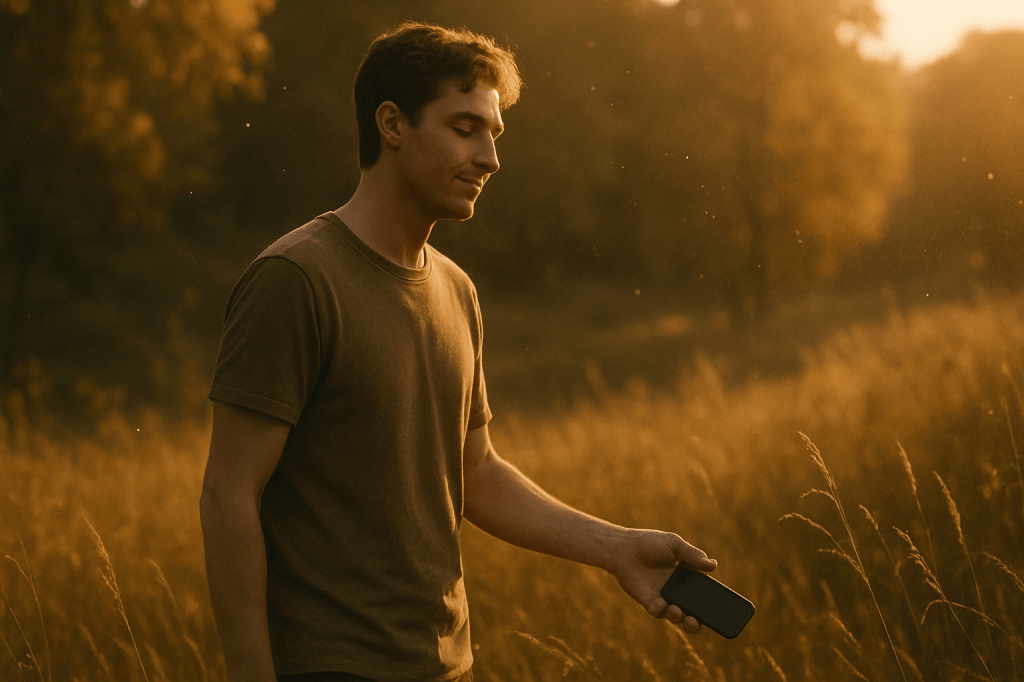
Cell Phones

What technology would you be better off without, why?

The little rectangles that own us
more than we’d ever admit.
We cling to them like lifelines,
but they drain more than they give.

Take them away
and maybe people would finally remember
what boundaries are.
No more entitlement to instant replies,
no more “?” as a guilt trip,
no more being punished
for daring to exist offline.

Life wouldn’t get twisted
into misread texts and passive-aggressive punctuation.
We’d have to speak.
Out loud, with real voices.
Exposing those hiding behind screens.
Transparency terrifying them, because they might really be seen.

And let’s not ignore the anxiety tax:
We’re fed a constant drip of news
we were never meant to carry.
Tragedies across the globe
delivered before breakfast,
opinions we didn’t ask for,
chaos we can’t fix.
Without a cell phone,
half the things we stress over
wouldn’t even reach us.

We might actually look up, too.
Notice the world
With its brutality and its beauty.
Its everything we scroll past
because we’re too addicted
to the glowing distraction.

And the money we pour into these things…
the pointless upgrades,
the cases, the cables,
the repairs, and replacements.
All for a piece of tech
that clearly stresses us out.

Take away the cell phone
and life wouldn’t be as harsh.
It would be quieter,
more spacious,
more ours.
Less noise, less pressure,
less manufactured urgency.
More peace in the places
we forgot peace could exist.

We might finally notice
our own thoughts again.
Hear the world around us
instead of the notifications.
And live instead of react.

ODE TO PETE

ODE TO PETE

Ode to Pete

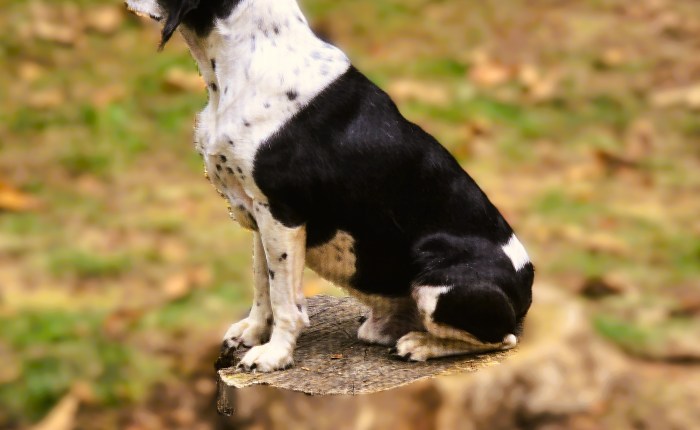
You can see the age in the white fur around his face.
Even old dogs get gray hair.

He’s stood watch over this home for so many years—
steady, loyal, patient.
He’s kept it safe while they were away,
and when they were home, he still kept watch.

He knows this is his family.
They belong to him.

Through the noise of the house—
the laughter, the shouting,
the running of little feet—
he knows his job.
He doesn’t need to be told.

He finds his spot on the old tree stump in the yard,
his throne, his lookout, his comfort.
The wind carries the world to him—
the familiar scents, the faintest hints of change.
He knows every smell, every sound.

His eyesight isn’t what it used to be,
but he doesn’t let that stop him.
Where sight fades,
his nose and his heart make up for it.

He’s heard it all over the years.
Every conversation.
Every disagreement.
Every whispered apology made after the house quieted down.

He’s been there through the sicknesses and the scares—
waiting at closed doors,
lying close when someone needed warmth.

He’s seen the birthdays,
the holidays,
the tables full of food,
the laughter spilling out into the room.
He’s been part of all of it—
quiet, steady, always there.

He sits and he watches.
He makes sure everything is safe.
Everyone is safe—
because Pete is on duty,
just like always.

And when the day quiets,
and everyone goes inside,
he waits.

He waits to be called in,
to hear a kind voice,
to be told he’s done well.
But humans forget sometimes.

They take it for granted,
thinking, “He’s just a dog. My dog.”

But that’s not really true.

We are his.

We’re more than just the people who fill his days—
we are his purpose.
His reason.

Every breath,
every watchful moment,
has been for us.
He has given his whole life
to our safety,
our laughter,
our love.

We belong to him.

And now—
when I see him resting in the soft light of evening,
his muzzle dusted white,
his eyes still following every sound—
I understand.

He’s not just watching anymore.
He’s remembering.

Every argument.
Every joy.
Every moment he’s kept for us.
Every growing child,
every season passed,
every quiet night he stood guard.

And as I watch him now,
I realize—
I’m the one still being kept safe,
just by knowing he’s here.

Question Everything

Question Everything

“Learn from yesterday, live for today, hope for tomorrow.  The important thing is not to stop questioning.” – Albert Einstein

Have you ever asked God, “Why?”

Have you ever questioned His existence?

Have you ever screamed out in agony, wondering why YOU even exist?

Have you ever wondered how a “loving God” could allow such pain and suffering?

Have you ever sat in a puddle of your own tears and felt you couldn’t go on?

Have you ever felt the hatred burning in your bones?

Have you ever tried to wake up, hoping it was just a nightmare?

Have you ever sought answers but found none?

Have you ever wondered, “Why me?”

Have you ever put on a fake smile so that you didn’t have to talk about it?

Have you ever wanted to start all over?

Have you ever wanted to give up? Everyday?

Have you ever wondered why you couldn’t get on the good side of life?

Have you ever felt cursed?

Have you ever felt depressed and regretted so much of your life?

I have.

“The power to question is the basis of all human progress.” – Indira Gandhi

How many times have you been told that you should never question God? I lost count of the times I was told that.  But guess what? He understands.  We were born questioning everything around us.  That is how we learn and grow.  The only ignorant question is the one that is never asked.  Asking questions clears confusion, gives us a better understanding of any given situation, and helps us find answers.  Questions help solve problems.  It is absolutely fine to question our life; it shows that we do not accept our current position or status and that we are willing to improve.

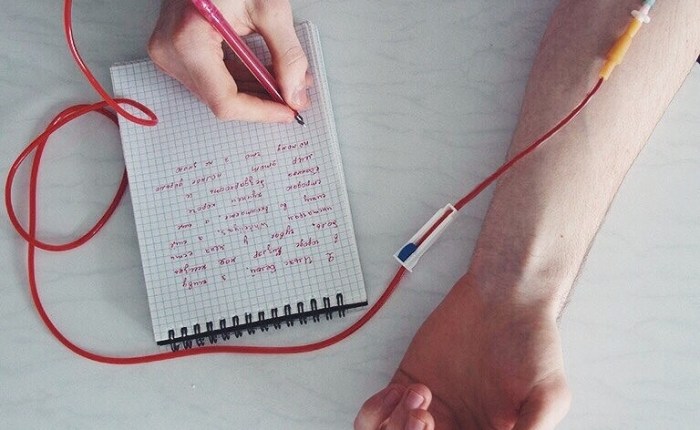
A Quiet Voice Echoes

A Quiet Voice Echoes

Dear Me,


I hear you.
I see what you endured.
I believe every word you wrote.

You were a victim—not because you were weak, but because others chose to harm you, control you, silence you.
It was not your fault. Not then, not ever.
You were not to blame for the loneliness, the violence, the brainwashing, the betrayal.
You were doing your best to survive inside a world that kept telling you to disappear.

And still, you are here.
You are speaking.
You are remembering.
You are healing.

I honor your pain. I honor your courage.
You don’t have to carry this alone anymore.
You are allowed to rest.
You are allowed to feel angry, sad, and confused.
You are allowed to feel everything.

There is no right pace. No deadline.
Only this: you are not silent anymore.
And that is everything.

I love you.
I am with you.
You are not alone.

Me

I’m better now, since you left….

I’m better now, since you left….

I used to cry for you everyday

but now I only cry in January

Knowing I start a New Year without you.

I used to cry for you everyday

But now I only cry in February when I

remember the love I have for you and how sweet you were

I used to cry for you everyday

But now I only cry in March

when the earth renews, and the grass starts

to grow of how you loved to take care of the yards

I used to cry for you everyday

Now I only cry in June

Especially on Father’s day, you would wish me happy father’s day.

I used to cry for you everyday

But now I only cry in July

You were born on the 4th; I will never view fireworks and BBQs the same.

I used to cry for you everyday

Now I only cry in August

But only on 31 of those days

And only 24 hours of the 28th day

the day you left us

I used to cry for you everyday

Now I only cry in September

We sifted your remains in your favorite place

I used to cry for you everyday

Now I only cry in October

You were supposed to be here for you first nieces’ day of birth, you even bought her gifts

I used to cry for you everyday

But now I only cry in November

There is an empty seat at our Thanksgiving table

I used to cry for you everyday

Now I only cry for you in December

One less player for dirty Santa

I used to cry for you everyday

Now I only cry on Fridays

it was a Friday that day you left us

I don’t cry for you everyday

Only on the days I when I’m thinking about you

And I think about you everyday

My First Memory Is…

My First Memory Is…

My first memory is of corn.
Chunks, golden and whole, floating in a sour puddle.
My first memory is three concrete steps and a landing, slick with dew.
A door that opened. A mother’s voice, sharp.
Not my mother—someone else’s.
Disappointment.
I wanted to play. I wanted to laugh.
Instead:
A swing, alone.
Then my mother’s face, storming through the park.
Hands pulling.
The walk home.
Do I remember the spanking?
No.
Do I remember the corn?
Always.

I hope

I hope

As I sit upon the witness chair
At the judge I’m supposed to stare
Give my story, my heart I’ll bare
Beg for a sentence long and fair

Explain how hard it’s been to cope
May confess how I’ve turned to dope
Through words of emotion I will grope
Hold myself together, is my hope

I’ll tell of memories I hold dear
Then tell of what I now most fear
All his charges I dread to hear
When it’s over I’ll seek a beer.

I walk in numbness, dread and pain
The thought of seeing him again
Is nothing more than a mental strain
My love for him I need to explain

I just want to hold him one last time
Regardless of the type of his crime
My soul and heart aches and pines
knowing he may be away for a lifetime

Will they let me see him?
I hope
Will they let me hug him?
I hope.
Will he want to see me?
I hope.
I hope.
I hope.