Skip to content

Tag: relationships

HEALING WITHOUT RESOLUTION: Accepting Your Unfinished Self

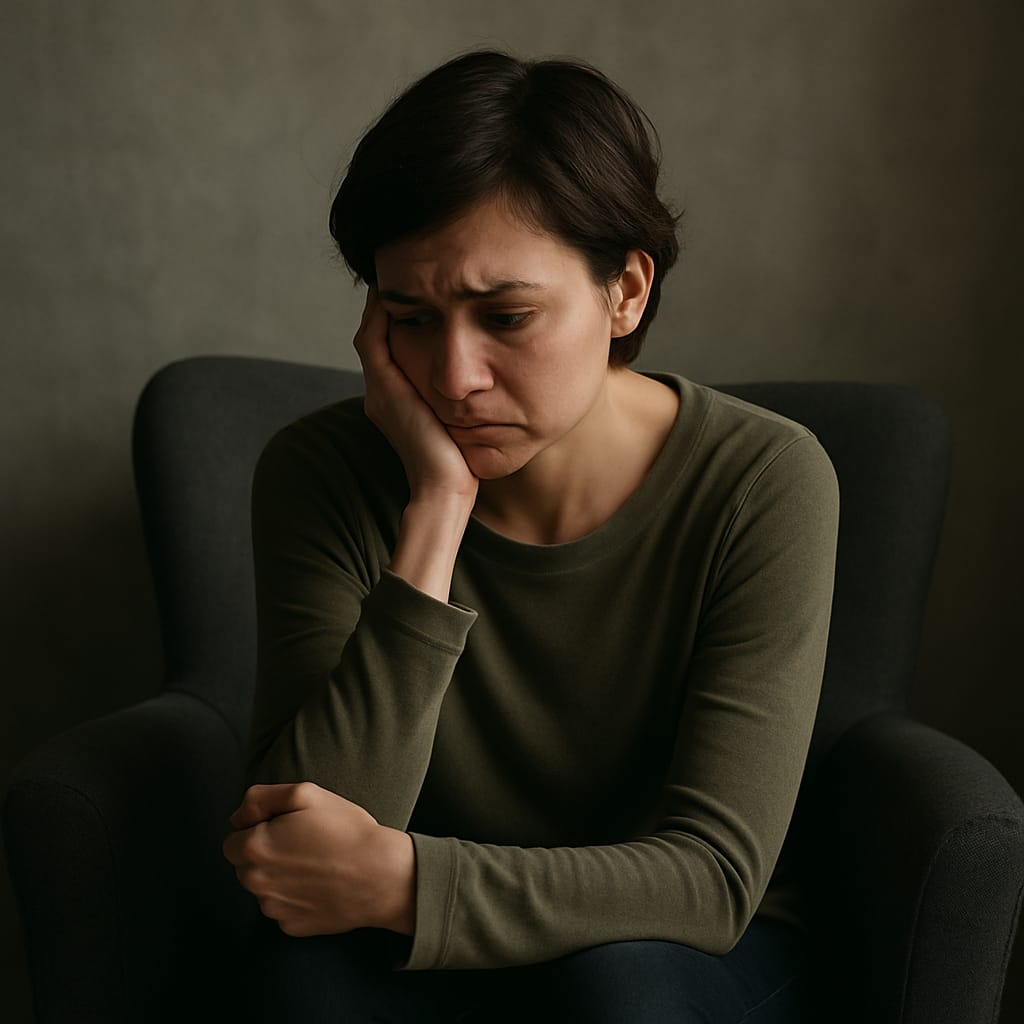
Healing does not require closure or resolution. It begins with accepting who you are today, even if you feel unchanged, fractured, or unfinished. Growth does not have to be visible. Healing often happens quietly, alongside uncertainty and setbacks.

The idea that healing requires resolution feels almost heretical in a culture that insists healing must end in understanding, apologies, or neat conclusions. We are taught that peace comes after explanation, justice, or when the other person finally says, โ€œIโ€™m sorry.โ€ But sometimes healing can begin much earlier. It is a willingness to accept who we are today.

Healing happens underground, in the places where confusion and pain still live. It can exist alongside fear, anger, and unanswered questions, even when the body remembers what the mind wishes it could forget.

I know this because I have lived it.

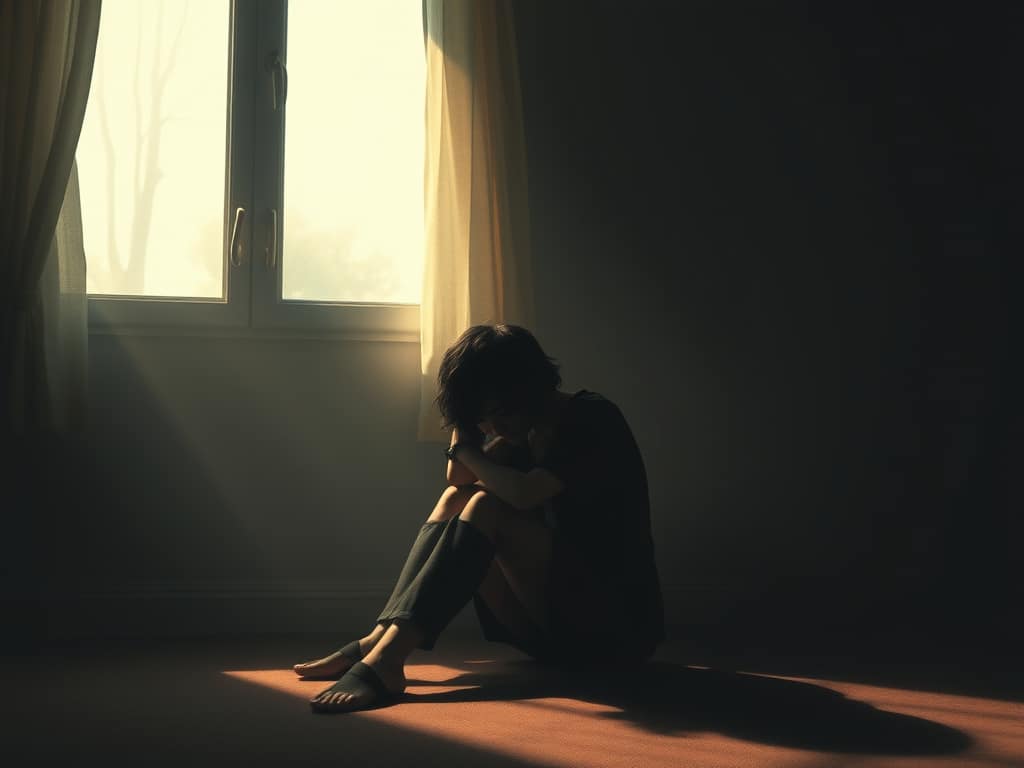
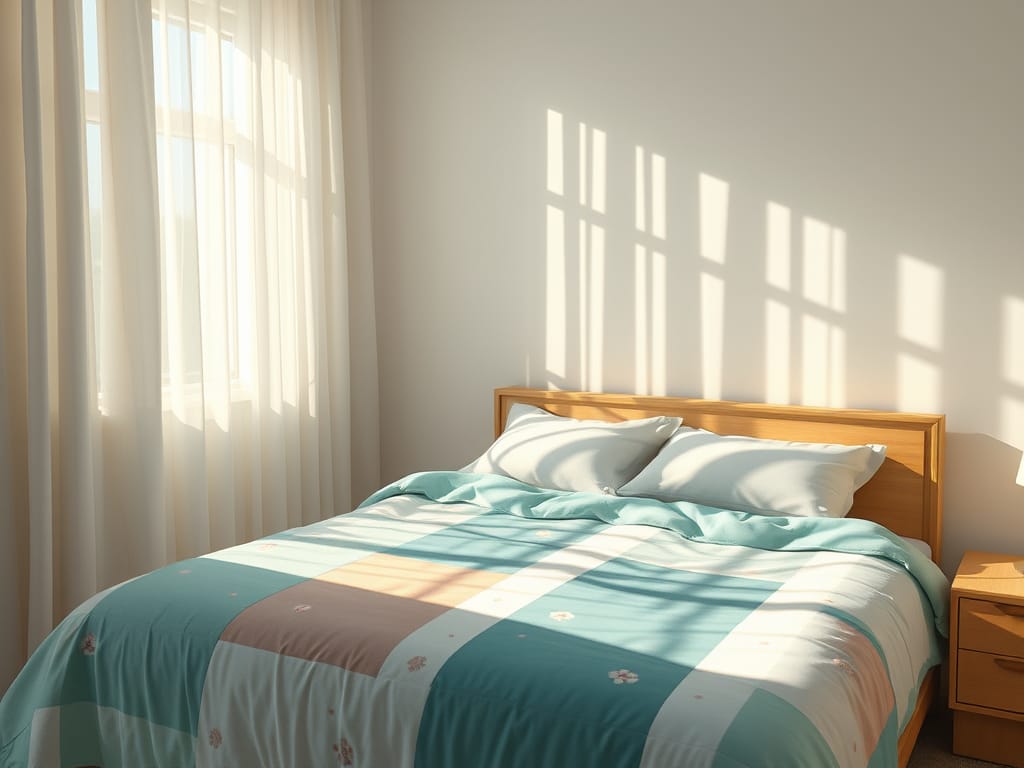
In 2005, a moment suspended in my memory, I am 37 and pregnant. He is 37 and a Pastor. I am standing in a bedroom, confused. Sunlight spills through the curtains. The carpet is cool beneath my feet. The room looks ordinary, unchanged, which makes the cruelty harder to understand. How can someone do something so violent and act as though nothing happened? How can the world remain intact when something inside me has shattered?

My body holds the truth even when words fail. The truth: his actions triggered a miscarriage. There is tension everywhere: my tight chest, my knotted gut, a heaviness that presses me toward the ground. I feel dry, depleted, unable to cry. I can’t even empty the pain. I want to scream, run, disappear into sleep. My soul feels suppressed, distant, unreachable. In my desperation, I wish for divine intervention, punishment done to him, not because I want violence, but because I want acknowledgment. I want the harm to be seen, named, made real.

The wish for an apology is not about reconciliation. It is about validation. If the one who caused the harm were to seek forgiveness, it would mean admitting the harm existed. It would allow me to acknowledge it too, to stop wondering whether I imagined it, whether it counted. Without that acknowledgment, I am left alone with the knowing, carrying both the wound and the responsibility of believing myself.

Today, 20 years later, through the inner work of healing, when I return to that memory of the bed, something or someone else appears: a protector, an ally, a voice that says, “Fuck you,” to the bed, not to destroy it, but to defend me. A hand reaches out to help me sit up, to wipe my tears. Although I am still afraid to face the bed, I am willing to peek around my protector’s shoulder. This, too, is healing. Not the absence of fear, but the presence of support.

The bed itself has not changed. It is an inanimate object, made as always. And yet it holds meaning. The comforter had light teal squares, abstractly arranged, some solid, some floral, hints of pink scattered throughout the pattern. Calm existing in chaos. I want to burn that bed, to erase the sight of the pain. But I also want to save the comforter, folding it carefully, rather than destroying it. Because I am allowed to carry reminders without being consumed by them.

This is not closure; it is not resolution. It is acceptance of where I am now and how far I have come.

Healing, in this sense, is not happiness or forgiveness. It is a quiet decision to stand with yourself, even in uncertainty. It is the recognition that healing can happen while questions remain unanswered, while anger still flickers, while the past refuses to stay neatly behind you. It is the understanding that being unfinished does not mean being broken.

Healing begins the moment you stop waiting for someone else to give you permission to believe your own experience. Healing does not require closure, because closure depends on other people behaving in ways they often never will.

Leave a Comment

Are You Addicted to Suffering and Struggle?

A Letter from One Survivor to Another

Let me take you on a journey through my own cycle of pain, one that might mirror your own.

For over 24 years, I stayed stuck in a cycle of pain. Not only because I didnโ€™t know how to escape, but also because I had no idea that part of me had become used to it. That pain was my comfort zone; I needed it. That is not easy to admit, but maybe that is precisely what you need to hear.

I was addicted to pain and suffering. And maybe you are too.

Consider if your life feels like a constant storm, with relationships that break rather than build you, where chaos feels more familiar than peace.

Then I want you to consider that you might be emotionally addicted to your struggle. In the same way, someone is addicted to alcohol, cigarettes, or drugs.

You donโ€™t choose to be this way on purpose, but you can choose to stop feeding it.

How Does Someone Get Addicted to Suffering?

It might seem strange, but when survival mode becomes your norm, your body adapts to a constant state of fear, anger, and panic, as if these emotions are essential for survival. The body doesnโ€™t know good adrenaline from bad. It just feels familiar. So if pain becomes what youโ€™re used to, your brain will start chasing it like a drug.

Iโ€™ll be honest with you: After I left my abusive husband, I thought Iโ€™d be free. But instead, I felt lost, restless, and empty. And one day I caught myself missing the drama, missing the feeling of being needed, even if it came with cruelty.

Thatโ€™s when I realized I wasnโ€™t just healing from abuse. I was detoxing from it.

Understanding the Chemistry of Emotion

Hereโ€™s whatโ€™s really going on under the surface. Every emotion you feel, love, sadness, rage, guilt, and fear, comes with a chemical mix your body gets used to. When you feel anger or shame over and over, your body floods itself with stress hormones like cortisol and adrenaline.

And your nervous system thinks,

 โ€œAh, yes. This is normal. Letโ€™s keep doing that.โ€

It doesnโ€™t care if itโ€™s killing you emotionally.  It only cares that itโ€™s predictable. Thatโ€™s why breaking the cycle is more than leaving them. Itโ€™s also about rewiring your system and healing your brain. You have to teach your body that peace isnโ€™t dull, itโ€™s safe.

Why You Keep Ending Up With the Same Kind of Person

If youโ€™ve ever escaped one toxic relationship only to fall into another… and another…

Youโ€™re not weak or broken.  Youโ€™re still addicted to the feelings that chaos brings.

And your brain will unconsciously lead you straight to people who can give you the fix.

It’s not because you want to be hurt, but itโ€™s because deep down, you donโ€™t yet believe you deserve anything else.

The Good News: You Can Break Free

I wonโ€™t lie to you. Healing is hard, but so is staying stuck. The difference is that one of them leads somewhere beautiful.

Hereโ€™s how I started the process, and you can too:

1. Tell yourself the truth.

Not the story youโ€™ve been told or the lie that โ€œthis is just who you are.โ€

Say the truth, you are addicted to survival mode, and you were made for so much more.

2. Decide that it ends with you.

Not tomorrow, not when it gets easier. Right now.

You donโ€™t need to hit another rock bottom to be done.

3. Catch yourself.

When the negative self-talk kicks in or when you feel that familiar urge to sabotage yourself, tell yourself, โ€œI deserve better.

Then, breathe, even if you donโ€™t believe it yet.

4. Let peace feel weird for a while.

Because it will, trust me. Quiet will feel loud, and safety will feel foreign.

Thatโ€™s okay. Stay there anyway. Let yourself get used to calm.

5. Give it time. Give yourself grace.

This isnโ€™t about perfection; itโ€™s about persistence.

Youโ€™re teaching your nervous system a new language. That love doesnโ€™t hurt, and peace doesnโ€™t mean danger.

One More Thing,

Youโ€™re not broken. Youโ€™re not stupid for staying too long.  You were surviving.

And now? Youโ€™re waking up.

Your addiction to struggle isnโ€™t your fault, but healing is your responsibility.

You deserve a life that doesnโ€™t hurt. And it’s waiting for you, whenever you’re ready.

Leave a Comment

DON’T TAKE IT PERSONAL

Why You Take Everything Personally (And What No One Told You About It)

Letโ€™s be real. You donโ€™t just โ€œhearโ€ what someone saysโ€”you absorb it.
A sigh? You feel it like a slap.
A short text? Your stomach drops.
If they are quiet? You spiral.

Taking things personally isnโ€™t a flawโ€”itโ€™s a reaction to what youโ€™ve been throughโ€ฆ

Someone trained you to feel this way.

Maybe you were in a relationship like mineโ€”one where your partner, or parents, made sure you were never really safe. Where you had to study their mood the way a sailor studies the sky.
Because one wrong word, one wrong look, could start a storm.

I know what that feels like.
To live in a home that felt more like a test.
To love someone who used your love against you.
To be blamed for everythingโ€”their anger, their silence, their outbursts, their boredom.

When you’re with an abuser, especially for years, you don’t just fear themโ€”you become them in your own head.
You start criticizing yourself before they can.
You start shrinking your needs because it’s safer that way.
You start interpreting everything around you as a threat.

Thatโ€™s why you take things personally.
Because you were trained to see danger in the subtlest shifts.

You were taught that mistakes mean punishment.
That emotions are weapons.
That love means walking on eggshells while setting yourself on fire to keep someone else warm.

So now, when someone gives you feedback, you feel attacked.
When someone pulls away, you assume itโ€™s your fault.
When someoneโ€™s upset, you blame yourself.

But hereโ€™s the part you need to hear:
Itโ€™s not your fault.

You were conditioned to believe that your survival depended on reading people perfectly.
You werenโ€™t being sensitiveโ€”you were being smart.
You were protecting yourself.
But now?
Now you donโ€™t have to live like that anymore.

That voice in your head telling you โ€œyou messed up,โ€ โ€œthey hate you,โ€ โ€œyou ruined everythingโ€โ€”
Thatโ€™s not your voice.
Thatโ€™s theirs.
Thatโ€™s the voice of the person who broke you down, not the one who gets to build you back up.

And youโ€™re allowed to question it.
Youโ€™re allowed to replace it.
Youโ€™re allowed to healโ€”even if they never apologize.

So if youโ€™re sitting there wondering why you take things so personally, let me say this:

Youโ€™re not crazy.
Youโ€™re not broken.
Youโ€™re carrying a survival instinct that once kept you safeโ€”but it doesnโ€™t have to run your life anymore.

You can learn to breathe again.
To trust again.
To love without fear.
To hear someoneโ€™s words without turning them into wounds.

Youโ€™re allowed to take your power back.

One truth at a time.

Leave a Comment

Why Happiness Makes You Nervous

For the girl who thinks the tightness in her chest is normal

Good times make you nervous, donโ€™t they?

You donโ€™t call it fearโ€”you call it โ€œbeing cautious,โ€ or โ€œnot getting your hopes up.โ€ But the truth is quieter: youโ€™re not used to peace. For so long, love has felt like tension, panic, apologizing, overthinking, and walking around someone elseโ€™s moods like theyโ€™re landmines.

So when something finally goes rightโ€ฆ Your whole body glitches.

You look around, waiting for the explosion.
You wait for the tone in his voice to shift.
You wait for the moment he decides youโ€™re โ€œtoo sensitive,โ€ โ€œtoo emotional,โ€ or โ€œtoo much.โ€

And if nothing happens right away, your brain fills the silence with dread: Is this the part where it all turns again?
You donโ€™t trust happinessโ€”not because youโ€™re broken, but because youโ€™ve survived too long without it.

Girls like us learn early that peace feels like a trap.
A setup.
A calm before the next storm.

No one told you that real love isnโ€™t supposed to feel like bracing for impact.
No one told you that safety isnโ€™t the same thing as โ€œkeeping the peace.โ€
No one told you that if your body relaxes only when he isnโ€™t homeโ€ฆ thatโ€™s not comfort. Thatโ€™s survival.

Listen, sweetheartโ€”if happiness feels foreign, itโ€™s not because youโ€™re incapable of it.
Itโ€™s because someone taught you to expect pain.

And hereโ€™s the part I wish someone had whispered to me sooner:
You donโ€™t have to keep living in the story where fear feels like love. You donโ€™t have to keep shrinking yourself just to fit into a relationship that was never safe to begin with.

Real peace doesnโ€™t make you nervous.
Real love doesnโ€™t make you flinch.
And real happiness doesnโ€™t feel like a setupโ€”it feels like finally coming home to yourself.

You deserve that kind of happiness.
And I promiseโ€ฆ it wonโ€™t explode.

When someone ties despair to God Himself, it buries you in a deeper kind of fear. You stop dreaming. You stop believing in the better. And every time life gets quiet, you brace yourself, because you know the calm never lasts.

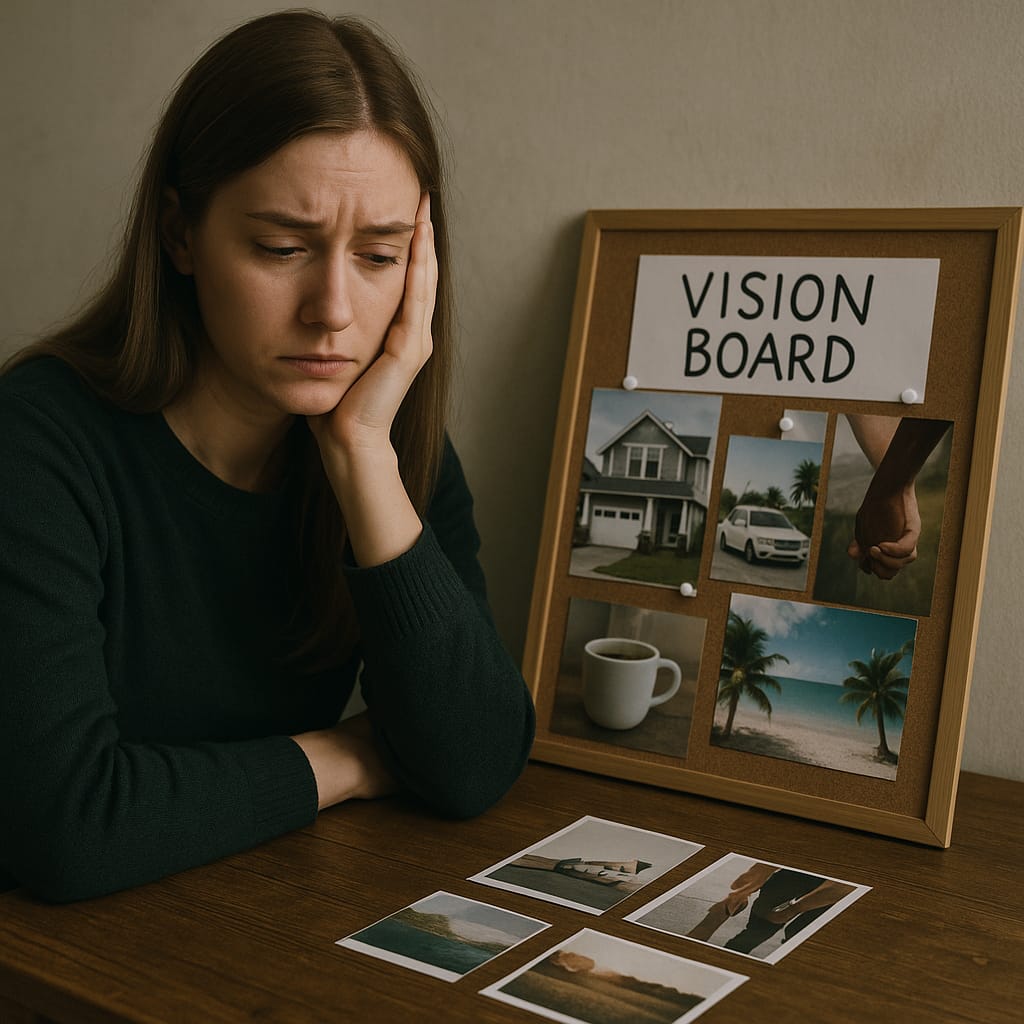
I remember once, after one of our rare calm seasons, we tried to dream again. We made a little vision board together โ€” nothing extravagant, just things a normal couple would hope for. A peaceful home. A reliable car. A future that didnโ€™t feel like walking through broken glass.

But his face went dark, the way it always did when anything felt too good.

He looked at me and said,

โ€œGod hates me. We will never get any of this.โ€

And just like that, the air changed.
The hope drained out of the room.
My body learned โ€” again โ€” that peace wasnโ€™t safe, and happiness wasnโ€™t to be trusted.

Leave a Comment

When Pain Feels Familiar, And Peace Feels Like ARisk

Itโ€™s not your fault you feel this way. But you donโ€™t have to stay there.

Sometimes it feels like emotions happen to us, like the weather.
โ€œI guess Iโ€™m just sad today.โ€
โ€œIt is what it is.โ€

But hereโ€™s the part no one tells you:

You might not get to choose the feeling that shows up. But you do have a say in how long it stays there.

When weโ€™ve been through trauma or long-term hurt, sadness, or pain can start to feel familiar. Itโ€™s almost comforting in a strange way. We stop trying to feel better because part of us doesnโ€™t trust that โ€œfeeling betterโ€ is even possible. So we sit in the sadness like itโ€™s the only place we belong.

Sometimes, without realizing it, we even let the pain in like a guest who shows up uninvitedโ€ฆ. and we donโ€™t ask it to leave. Not because we want to suffer, but because suffering is what we know. It feels predictable. Safe. Normal.

But hereโ€™s the truth:

Youโ€™re allowed to feel your feelings, and youโ€™re allowed to move through them.

Pain doesnโ€™t have to be your home anymore. You deserve moments of peace, even if they feel unfamiliar at first, because you deserve better.

It took me over 20 years to realize that I deserved better. I sat in my pain day after dayโ€”wishing it would go away, wanting it to stopโ€”but doing nothing about it because it had become my comfort zone. I was stuck in a rut and had no idea how to pull myself out.

But once I finally recognized that I did deserve better, the answers started coming to me โ€” sometimes slowly, and sometimes all at once.

I spent 24 years in an abusive marriage. Today, I can say I made it out. And so can you.

Leave a Comment

Why No One Can Cheer You Up (And Why You Donโ€™t Want Them To)

Itโ€™s not that you canโ€™t feel betterโ€ฆitโ€™s that you donโ€™t trust better.

When youโ€™re upset, it feels like nothing can touch you. Friends try to cheer you up, but their words bounce right off. You shut it down with,

โ€œYou donโ€™t understand,โ€ or โ€œI canโ€™t help the way I feel.โ€

Hereโ€™s the thing: youโ€™re not wrong for wanting to sit in your feelings. Pain can feel safer than pretending everythingโ€™s okay. But sometimes, without realizing it, you hold on to that pain like proof. Proof that you were hurt, evidence that your feelings are real, proof that youโ€™re not invisible.

And letting it go? That feels scary. Because misery, as heavy as it is, can start to feel familiar. Almost like home.

Youโ€™re not broken for feeling this way. Youโ€™ve just learned to live with despair for so long that happiness feels foreign. But hereโ€™s the truth: you deserve more than the familiar depression. You deserve peace, even if it feels uncomfortable at first.

Such was I. I lived in an abusive marriage for 24 years. When I finally dared to leave, I started reflecting and asked myself,

“Why had I stayed so long?”

In the future, I knew I didnโ€™t want to make the same mistake. I didnโ€™t want to end up in another abusive marriage. So I looked back at my past relationships, and they were all the same. Abusive.

Wow. Who am I? And why am I choosing this path?

Thatโ€™s when I realized I had an addiction problem. I was addicted to painโ€”the pain and the drama of the chaos. I was stuck in a cycle, like a revolving door. So I constantly had to remind myself why I was leaving. I had to remind myself that I deserved better and that I should look for someone who was the complete opposite.

And thatโ€™s precisely what I did. Today, I stand on the other side of abuse. Stronger, freer, and committed to helping others find their own path out.

Need help?
If you or someone you know is struggling with addiction, emotional distress, or abuse, support is available 24/7:

  • Addiction Recovery: Call 866-606-0182 or visit our treatment center directory
  • Suicide & Crisis Lifeline: Dial 988 (free, confidential, 24/7)
  • Domestic Violence Hotline: Call 800-799-7233 or text START to 88788
  • Sexual Assault Hotline (RAINN): Call 800-656-4673 or visit online.rainn.org

You are not alone. There is help. There is hope. And you are worth the healing.

Leave a Comment

Tax Season Reflections: Life Beyond Expectations

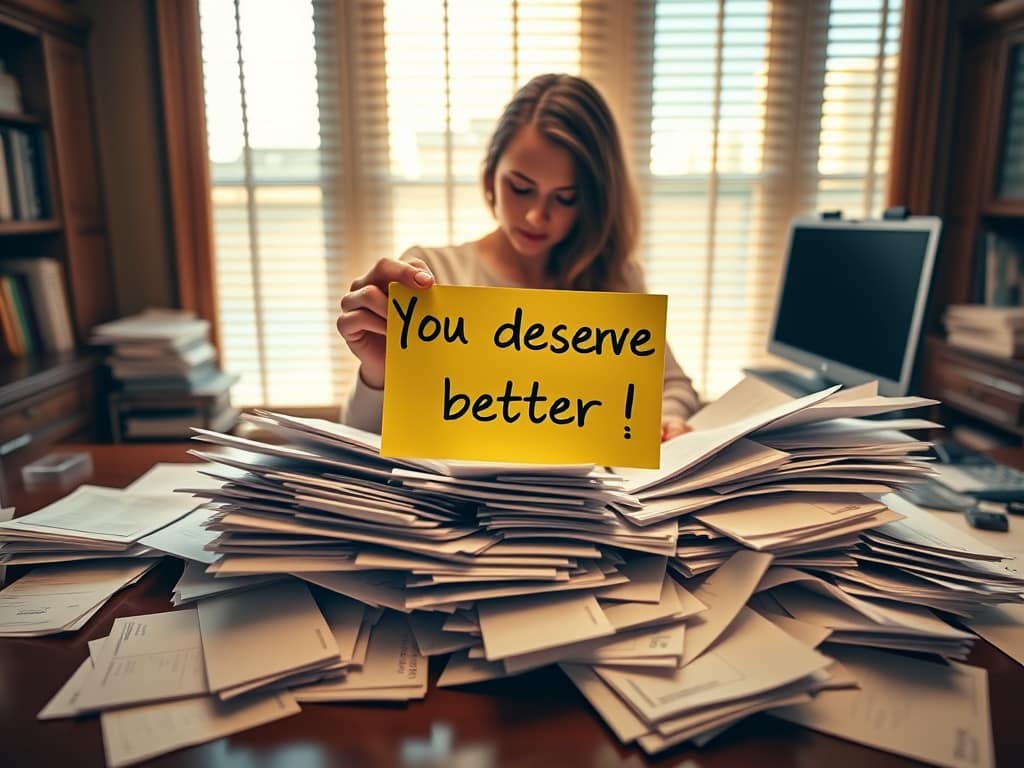
Sitting at the giant mahogany desk, I stared at the stack of papers in front of me. I reached up and twisted the plastic stick on the blinds, narrowing the slats until the sunlight no longer glared off the computer screen. It was that time of year again: tax season. The task ahead was daunting, and my lack of proper filing over the year left me with quite a challenge.

We had started our own cleaning business last year in a small, dying town. Surprisingly, it did pretty well. We were the only business in the city offering house cleaning, and people appreciated the idea of hiring professionals rather than a friend of a friend. They especially liked our attention to detail, a trait I had perfected after years of living with an OCD narcissist.
Our motto was: “We don’t cut corners, we clean them!” That’s precisely what I did. I reached behind toilets, dusted ceiling fans, and even cleaned the baseboards every time. It was honest work, and I was damn good at it.

I’d learned that level of perfection the hard way. Once, I’d spent all day cleaning, and Albert came home to find a tiny smudge in the corner of a mirror. He asked me what the hell I’d done all day and why I didn’t get off my fat, lazy ass and clean.

I began separating receipts and invoices into different piles, sorting through them with the half-confidence of someone who grew up watching a CPA at work. A musty smell drifted from the papers, dust rising with every movement.

“Achoo! Achoo!โ€ I clamped my nose shut to block the third sneeze.

As I wiped my eyes, a small yellow slip of paper drifted into my lap. Curious, I picked it up. Scribbled in uneven handwriting were three words:

โ€œYou deserve better.โ€

It wasnโ€™t my handwriting. I did not recognize it at all. Still, it was there, staring up at me.

Where had it come from? Who wrote it? Had it been hiding among the receipts all this time?
Had one of the kids slipped it in without me knowing? A friend who’d finally had enough of watching me disappear? Or had I written it myself in some moment of clarity I’d since forgotten, some late night when the house was quiet and I let myself think the unthinkable?

My mind wandered back to just a few weeks ago when Albert had asked me, “Do you even like me?”

The truth was, I couldn’t stand him. I didn’t respect him, didn’t trust him, didn’t even like being in the same room as him. But we had almost twenty-five years together, and I figured if I’d made it that far, I might as well ride it out to the end.

He’d asked me that question dozens of times over the years. My answer was always the same: “No, but I love you.” It was the truth, or at least the version of truth I could live with. I didn’t like him, but I loved him the way you love family. Out of obligation. Out of history.

That was the lie I told myself. That if we stuck it out, maybe something would change. Maybe he’d stop being angry at everything. Maybe he’d leave me a note, bring me flowers. Stop telling me I’m fat or that he hates me.

Maybe. But deep down, I knew better.

โ€œI deserve better,โ€ I whispered. Then the fear crept in.

How? How would I support myself and the kids? How could I possibly make it on my own? There were mouths to feed and kids to clothe. I stared at the slip of paper, running my thumb over the pen marks as if that could somehow transfer strength into my bones. Then, slowly, I slid the note into the drawer beside the paperclips.

I didnโ€™t know it at the time, but that was the moment everything quietly began to shift. Subtly and undeniably.

A month or so later, we were cleaning a client’s house. I was polishing their glass dining room table when Albert looked at me and asked, “Do you even want to be with me anymore?”

I stopped what I was doing and looked up. I looked straight into his eyes, shook my head, shrugged my shoulders, and said, โ€œI donโ€™t know.โ€

This was the first time in our marriage that I did not care how my words made him feel. I spoke my truth. It was the truth. But I didnโ€™t know how to live without him. I didnโ€™t know how to carry the full weight of our family on my shoulders alone. I didnโ€™t know if I could. I didnโ€™t know if I loved him anymore. I certainly didnโ€™t like him. That was very clear.

I saw the panic in his eyes as his face grimaced and he whimpered like a child.

Two weeks later, I decided to stick it out. Because I had six kids still at home. Six mouths to feed, six futures that depended on me not falling apart. So I tried. I tried to be the best version of myself. A better wife. A better mother. I smiled more. I was nicer to him, more understanding, and more complimentary. I even bought new lingerie.

But when you know you deserve better, something changes. You stop settling. You stop hoping that toxic patterns will heal on their own.

And you start looking, not for another man, but for a better life.


AUTHOR’S NOTE: The events in this story are true. Some names have been changed, for the sake of privacy and peace.

Leave a Comment