
It has been more than 10 years since my divorce. It is wonderful to stand on this side of things and see how far I have come. Here is something I wrote regarding his anger and how stupid it made him look.
Category: Trauma & Recovery
CPTSD Tool-kit

Moving past trauma does not come from fixing the past or controlling emotions. It happens slowly by how we take care of ourselves in the present.
What we think about, how we talk to ourselves, and whether we choose to honor our exhaustion rather than punish our perceived failures.
People who appear more resilient are not untouched by hardship; they have learned ways to carry it without being consumed by it.
Four Things I do When I am Triggered:
- Breathe
- Check in
- Let it out
- Remind
Breathe
The first thing I do when I’m consumed with the past is breathe. Not the shallow, panicked breathing that comes naturally when you’re triggered, but intentional breathing. Deep inhales that fill my lungs completely. Slow exhales signal to my body that I’m not in danger right now.
This has to come first. It’s not optional. When my nervous system is activated, nothing else works. I can’t think clearly, and I can’t access the rational part of my brain. I can’t connect with the parts of me that need attention.
Breathing calms the nervous system down. It tells my body: I’m safe, and I can handle this.
Check In
Once I can breathe, I check in with the different parts of me that got triggered.
The parts of me that are still the little girl who survived trauma, and the ex-wife in me who learned that abuse meant something, were fundamentally wrong with me. The old version of me, the mom, who feels guilty for everything. For the past, for staying in an abusive marriage for 24 years, and for things I can’t control. There are parts of me that are exhausted from trying so hard to be different, to break cycles, to heal.
I’ve learned in therapy that these parts all have something to say. They all need to be heard. And when I get triggered, it’s usually because one of them is scared or hurting and trying to protect me the only way they know how.
So I check in. I ask: which part of me is feeling this right now? What does she need? What is she afraid of?
Let It Out
After I’ve breathed and checked in, I need to let it out. The feelings can’t stay inside my body. They need somewhere to go.
Sometimes I journal. I write without editing, without trying to make it make sense. I let the fear, the guilt, and the helplessness spill onto the page. I write about the abuse I survived and how it still haunts me. And I write about whatever might have triggered me that day. Even if it was only the dog getting into the trash.
Sometimes I talk to someone who understands, like my therapist or my husband. I say the things out loud that feel too big to carry alone. I let someone else witness my pain without trying to fix it or minimize it.
Just: I see you. I hear you.
Getting the feelings out doesn’t make them disappear. But it makes them manageable. It takes them from this overwhelming internal storm and gives them form, language, and a place to exist outside of me.
Remind
The last tool is the one I need most: remind.
When the old shame tries to convince me I should have healed enough by now to not get triggered, I remind myself:
I did the best I could with the tools and knowledge I had. And I’m doing the best I can now.
When I feel like I’m failing because I got derailed again, I remind myself that a brief moment of being consumed isn’t failure. It’s part of being human. It’s part of having a nervous system that remembers trauma. What matters is what I do after.
I also remind myself that I’m safe now. And I am loved.
Healing comes in waves, just like grief does. Sometimes the waves are higher and harder, like when an anniversary of trauma comes around, when my nervous system gets activated by something I didn’t see coming. Sometimes the waves are just ebbing, gentle reminders that I’ve been through hard things, but I’m okay now.
Self-help culture promises a permanent better. It sells the idea that if you do the work, use the right tools, and heal properly, you’ll reach a destination where you’re fixed. Where you don’t get triggered anymore. Where you’ve moved past it all.
That’s a lie. The truth is that healing isn’t reaching the shore. It has the tools to stay afloat. And it is the repetition of returning to these practices, not because you failed the first time, but because this is what healing actually
ALONE IN A HOUSE FULL OF PEOPLE
How To Stop Feeling Lonely
There was a time when I hated to be alone. The prospect of eating in a restaurant alone scared me. The idea of living alone terrified me. I was scared of being alone, so I surrounded myself with boyfriends, then eventually with children. Never again to be alone. I was an only child. I was alone a lot. I was alone in my room, alone after school. Alone. I was alone with my own choices, alone to whatever and whoever tried to hurt me. Alone. I was used to being alone, and I hated it.
Of course, my parents loved me. My parents did not learn how to love an only child. They did the best they could with the tools and knowledge passed down to them. They didn’t know about attachment styles. They did not know they were prone to denial and avoidance. They had no idea how lonely that would make their only child feel.
I tried to fix my loneliness by going to parties, hanging out with friends, getting married twice, and once again. I noticed that although I was married and not alone, I still felt alone, so I had a child. And it filled a hole. So I had another child, felt fulfilled, and then had nine more. Each time, feeling complete and whole at the birth of each. Because no one feels more loved than when that newborn babe suckles your breast for the first time. But they outgrow that, and the loneliness always creeps back in.
I was in the midst of a house full of people whom I loved, and they (except one) loved me. Then why did I feel so alone? Why was I so lonely? I was looking for these people to fill me. My validation came from these people: my husband and my children. I was dependent on them for my self-worth. And since no one can validate you better than yourself, and no one can love you better than yourself, and no one can know your worth better than yourself, it did not work.
It took me years to figure out how to fill that void. Now I understand what I was doing wrong and what actually works. Until you stop looking at the people beside you to fill your lonely hole and start looking in front of you in the mirror at yourself, nothing else will work. Nothing else will satisfy.
Ask yourself what the void is. What is it that you need that you are not receiving? Is it love? Is it validation? Is it understanding? What do you need? I needed to be heard and seen. I needed to feel loved.
Here’s to stop loneliness:
- Stop reaching out to other people to fill the void. I’m not saying you shouldn’t have friends. Having friends is good. Often refreshing. But it is not healthy to depend on them for your fulfillment and happiness.
- Start looking in the mirror and say. “You are loved.” Say it five times, pointing to yourself. Then put your hand on your heart and say, “I am loved.” Say it again. Again. Say it again. Louder. Say it like you mean it. And say it with a smile. At first, you might not feel it, but as you practice this, it will become easier, feel lighter, and have more meaning.
Lonely people just want to be loved, feel loved. That is all I ever wanted, to feel loved. And I was looking for love in all the wrong places, when it was right in front of me, staring at me in the mirror the whole time.

HAPPINESS OVER GRIEF
Reflections From The Nuthatch
Grief and trauma don’t vanish just because we decide it’s time to be happy. Healing isn’t about pretending the pain is gone or forcing ourselves to move on. It’s slower than that, quieter. It asks to make room for what hurts, instead of pushing it away.
But even when loss has taken more than we ever thought we could survive, we still have something left. We still have a choice. Not always in the big ways, but in the gentle, daily ones. We can choose how we care for ourselves in this moment. We can choose rest and compassion instead of self-blame and sorrow.
Breathe. Pause. Allow yourself to be grounded instead of letting the overwhelm take over.
Happiness after grief doesn’t mean forgetting who or what you lost. It doesn’t mean the pain has vanished or that what you lost no longer matters. It means hope is making space beside the sorrow. Not replacing it, just sitting next to it.
Choosing joy is not a betrayal of your pain. It’s an act of survival.
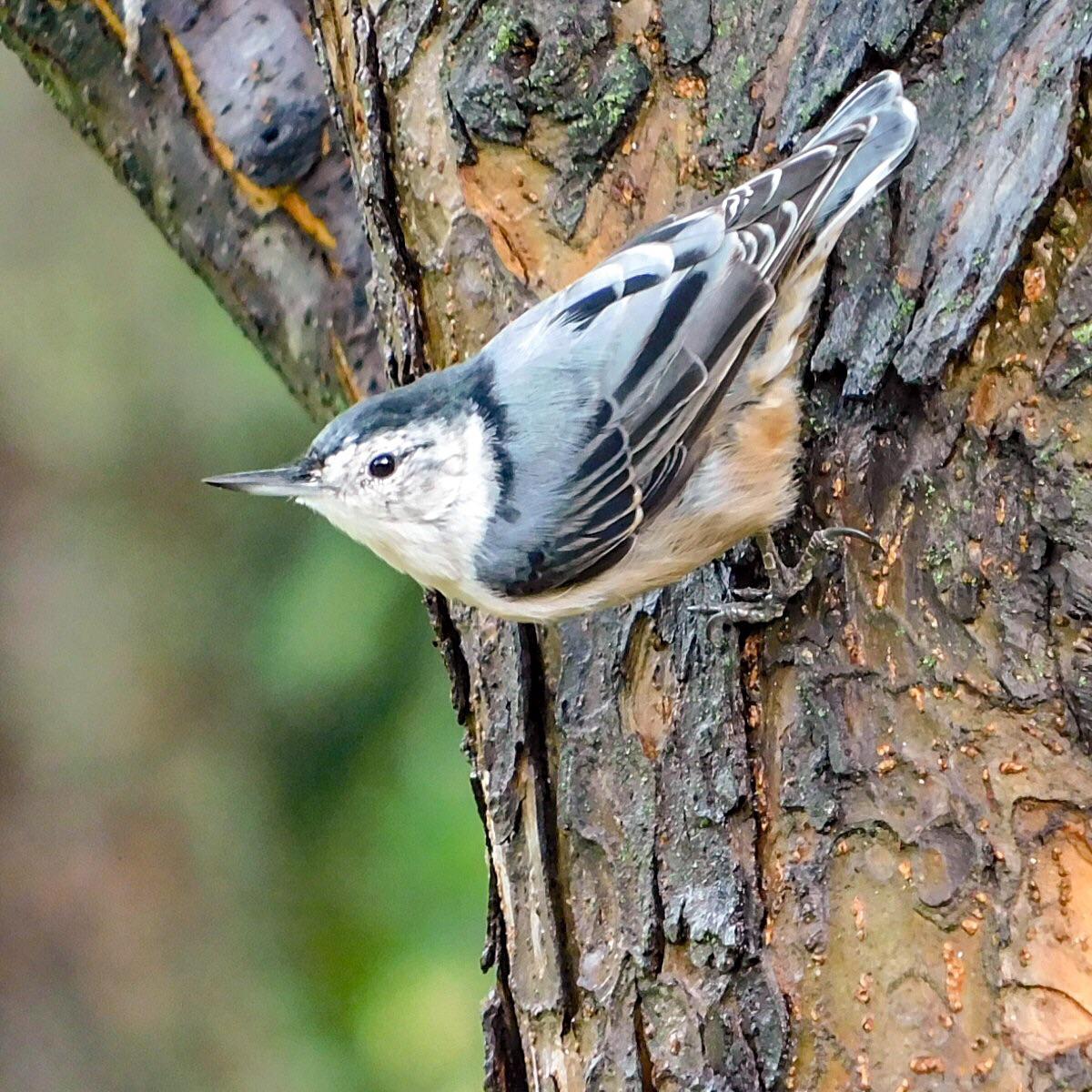
The nuthatch teaches this well. A bird that doesn’t soar or flee, but stays close to the trunk. It climbs downward, upside down, navigating the world in ways that feel strange but steady. When everything is tilted, when nothing feels safe, it continues anyway. The nuthatch holds tight. Its strength isn’t in beauty or speed, but in holding on.
It doesn’t rush. It circles back, rechecks, and returns.
And that is how grief moves. It isn’t in a straight path, with clarity or closure. It returns, pauses, then returns again.
The Nuthatch teaches us to stop reaching for an escape. Stay connected to the present moment, even when life feels upside down, and return to the things that support us.
Where the hummingbird says, “I am still here despite the cost.”
Where the mourning dove says, “Peace can exist with sorrow.”
The nuthatch says, “I will stay with what steadies me, even when the world feels upside down.”
ANNOUNCEMENT
The Write To Sanity is going through a change, similar to menopause.
You might see my blogs and stories show up as “Yoli’s Write To Sanity” or “Just Breathe And Write.”
It’s still me, with a different outfit.
Same attitude.
THX!
JUST A REMINDER…
YOU DESERVE BETTER


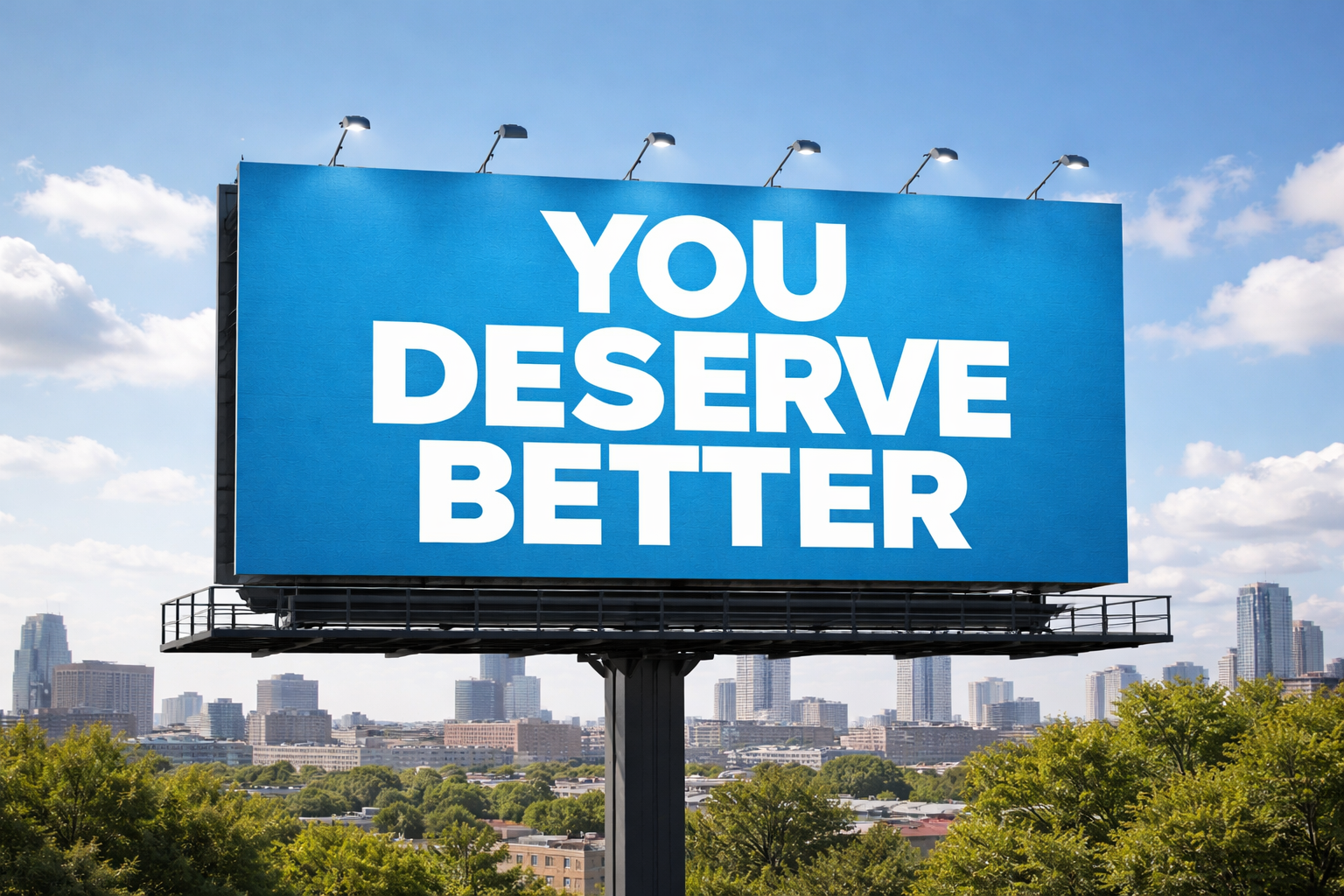
When I become a quadrillionaire, I will put up billboards all over the country with the 3 words: You Deserve Better.
YOU DESERVE BETTER.
This statement applies to anyone who reads it.
You, who just read that, can think of areas in your own life where you do indeed deserve better than what you are currently receiving.
Partners in abusive relationships, you deserve better.
“You dont get what you deserve, you get what you tolerate.” – Tony Robbins
Workers under a narcissistic boss, you deserve better.
Adults of emotionally immature parents, you deserve better.
Maybe it is simpler than that. Maybe you deserve a car that runs better, a better house, or better health, and we all could work on better thinking.
That was the statement I read when I realized I deserved better than what I was living in, and it changed my life.
“We cannot achieve more in life than what we believe in our heart of hearts we deserve to have.”
― James R. Ball
I am on the other side of abuse, trauma, suicide survivor, suicide loss, and religious abuse. All because I realized I deserved better.
“I will not try to convince you to love me, to respect me, to commit to me. I deserve better than that; I AM BETTER THAN THAT… Goodbye” by Steve Maraboli
The Chef’s Kiss
You get to build your perfect space for reading and writing. What’s it like?
The perfect space for reading and writing is an empty house. If the house can’t be empty then it has to be quiet. And if it cant be quiet then there should be cozy, coffee house, jazz music playing in the background with a crackly woodwick candle burning.
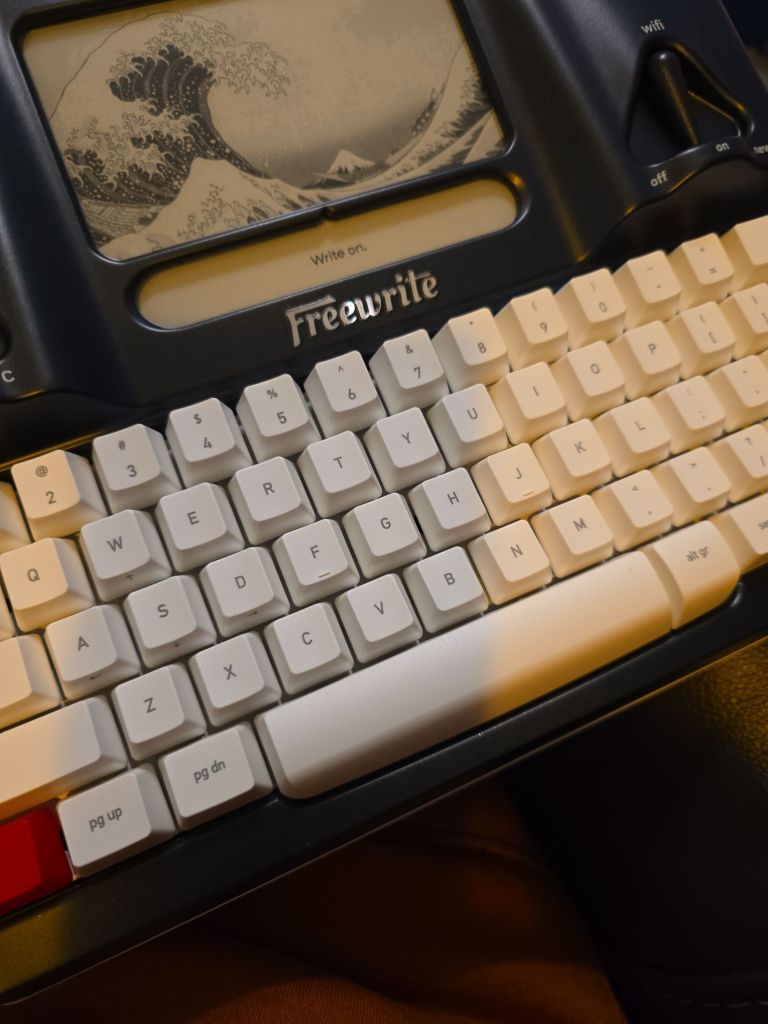
It includes a fuzzy, slightly weighted blanket – year round, with my FreeWrite type writer nearby for when inspiration hits.
For me, personally, I find it easier to write before the sun emerges. I feel less pressure to get on with the day. And now that my house has less people in it these days, creating that space is easier now.
BRAIN DUMP
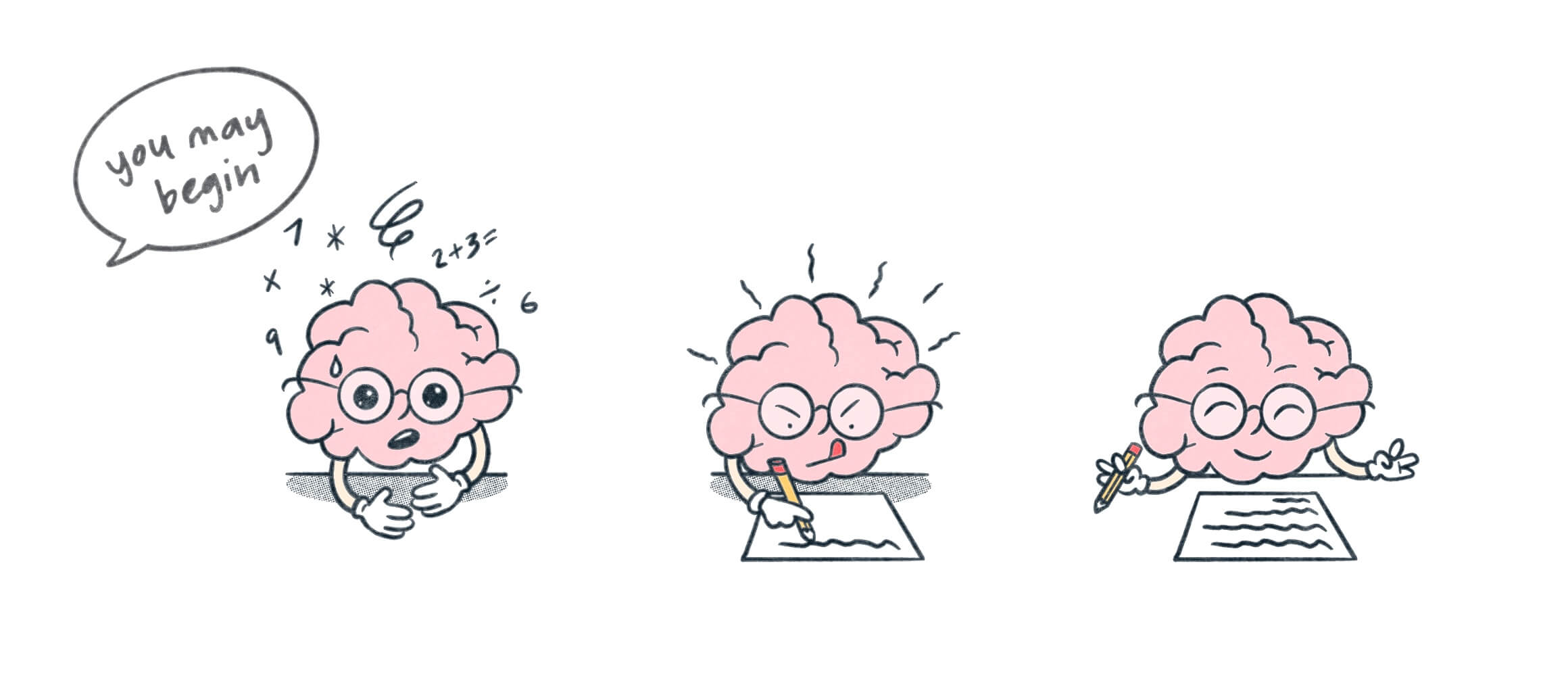
Sometimes I get writer’s block. Distracted and stuck on Facebook, Instagram, and TikTok. Experts say you get a dopamine hit from being on social media, and that is why they also say it is addictive. But when I am on social media, I most often feel it pulling me down instead of lifting me.
That is, until someone leaves a comment:
“Good one.”
“This.”
“Thanks, I needed that.”
Evidence that my post stood out to someone. And then I feel it; there it is, the dopamine “feel good” feeling I was searching for.
Why do I write? Why do I do anything? What can I do to get a dopamine boost without the weight of “doom scrolling”
Drinking is unhealthy, Facebook is harmful. Most of it is fake, and the drama is relenting. Too many people use it to vent.
Then there are the needy. Those who can’t think for themselves are always asking what to do. For Christ’s sake, Google it or use ChatGPT! You’ll get a better, safer response. There will be no one there to say anything that could potentially hurt your feelings or judge you.
Perhaps that is why some people, like my husband and me, are drawn to AI. There’s no real risk beyond entrusting your life to a bot. AI is intelligent; it draws from all the wisdom across the internet. But does it then give you a blended meshed version instead of the actual best version? Or is it mixing the bad answers with the good answers and giving you the mediocre? The average? I wonder.
I wonder why doctors are against AI. Is it because it challenges their thinking? Like one of my doctors, who is against genetic testing. But yet he will sit there and tell me that my high cholesterol is genetic. How funny. Too often, they think that it’s a one-size-fits-all.
But not all doctors. I don’t believe my current doctor is a one-size-fits-all kind of practitioner. He’s good at reducing medication when possible, primarily when a healthy diet supports it.
Sometimes people’s eating habits necessitate medication, such as my high cholesterol. I was eating vegan, and it did not improve. So Paleo and keto, and it still did not change. The only thing I haven’t done is add more grains due to insulin resistance or glucose spikes.
Surely there is a way to add grains without the spike. I believe they are healthy, and our bodies need them to function correctly. Not necessarily rice, but oats, etc.
Then there is the question of whether it is the way we were designed to eat, but if you genuinely want to get back to our design. How far do we go, and where do we go? Do we go to Adam and Eve, or do we go to our hunter-gatherer ice age?
What is the truth? Just as people have evolved and adapted, I think that applies to our eating habits too, as the food chain has changed. So have we; we have adapted. We have evolved.
So, what is the right way to eat? Is it a one-size-fits-all? I don’t think so. I believe it varies from person to person and is based on their lifestyle. So perhaps a sedentary person needs less protein than the bodybuilder. And the runner needs more carbs than the office manager who dreams of yoga flexibility.
This is your classic morning brain dump. I hope you enjoyed a ride in my mind.
Peace, love, and still trying to figure out my write way.
Baby Blue Convertible VW Bug With A Tan Top
What is your all time favorite automobile?
My all-time favorite vehicle does not exist. I have searched and searched and even have my search saved.
However….
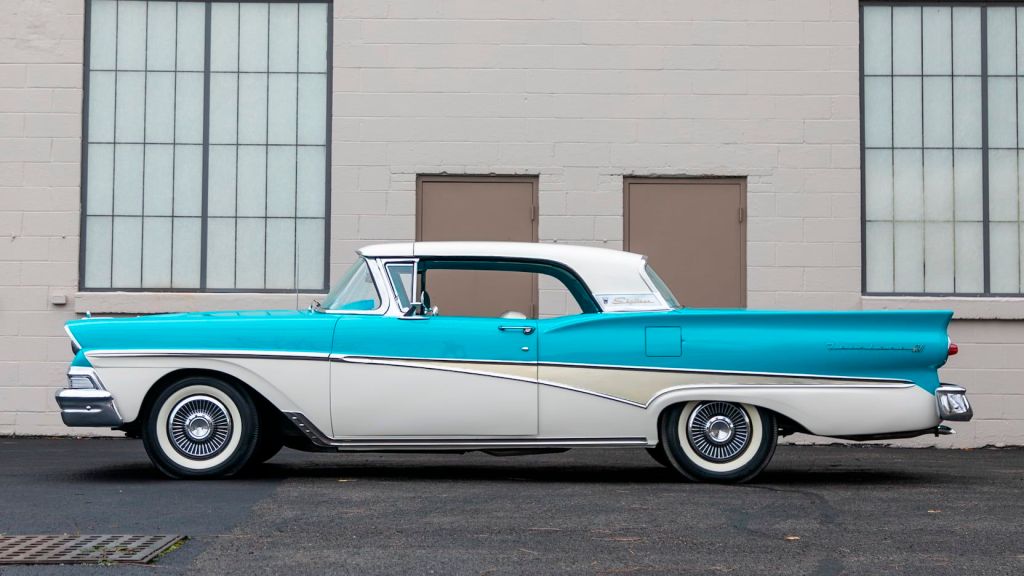
My all-time favorite automobile, that I owned, was a 1958 Ford Fairlane 500. It had a white top, blue body and tires with a wide white stripes, not the skinny white ones they have on tires nowadays. It didn’t have air conditioning, and the defrost didn’t work. The high beams came on by pushing a button on the floorboard with your left foot. It was a beauty. I didn’t appreciate it at the time, I was 16 years old, and ungrateful. But it’s the car I’m the most proud to say that I owned.
 Yoli's Write To Sanity