When Doing the Right Thing Still Makes You Feel Like the Villain

When Doing the Right Thing Still Makes You Feel Like the Villain

A story about family, guilt, and the cost of choosing someone’s peace and safety

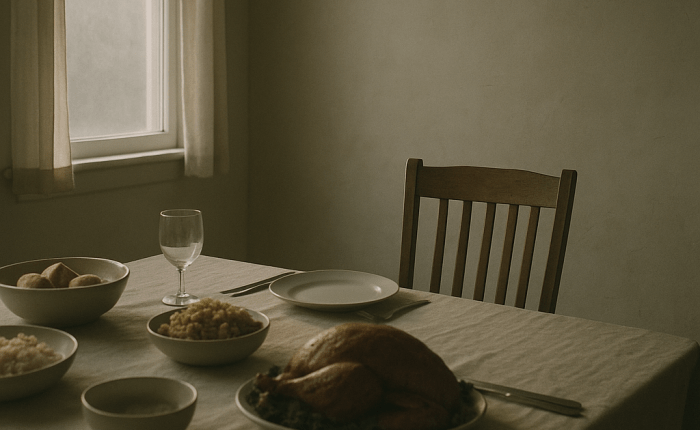
This year, I set a boundary with my parents.

We didn’t go to their house for Thanksgiving. We had it at ours instead. That might sound small to someone outside the situation, but it wasn’t. It carried years of pain, silence, and choices that should never have been mine to carry.

It wasn’t even about me this time. It was about my daughter.

There’s a story I’m not going into here, but I’ll say this much. My daughter was violated by a family member, their grandson, my son. He’s in prison now for what he did to her. But my parents still choose to stay in contact with him.

She was the one who said she didn’t want to go. She didn’t want to sit in a place that still protects the person who hurt her. And I decided to support her, choose her, and stand on her side.

It was the right thing. I know that. But it didn’t stop the fallout.

My mom didn’t speak to me for a whole week. My dad turned on the guilt, the blame, and the disappointment. Like I was the one punishing them. All I did was protect my daughter from the people who made her feel betrayed.

And still, I spiraled. I second-guessed myself. I wondered if I was being dramatic, if I had taken it too far, if I was being cruel by drawing a line.

That’s how deep the conditioning goes. That’s how beating yourself up becomes your favorite hobby.

You protect your child. You do what you know is right. And then you punish yourself for it.

Here’s how that cycle works. Here’s how the guilt gets under your skin and stays there, even when it shouldn’t.

1. You confuse guilt with being good.
You grew up thinking that if it hurts, it must mean you care. If you carry the guilt long enough, maybe it proves you’re the better person. Perhaps it means you’re nothing like the ones who hurt you. So you hold it. You nurse it. You call it empathy, but it’s not. It’s grief. It’s fear. It’s survival mode, you never got the chance to grow out of.

2. You turn on yourself before anyone else can.
It’s safer that way. You blame yourself first. You get ahead of the punishment. You run the worst-case scenario before it even happens. That way, if someone does get mad, you’re already halfway into self-destruction. You don’t have to be blindsided. You’re already bleeding. You call it control, but it’s fear disguised as preparation.

3. You were trained to carry the weight for everyone.
Keeping the peace was your job. Making things easier and smoothing things over. So when you finally make a decision that protects someone else, someone innocent, someone hurt, it still feels like betrayal. It feels like you’re letting everyone down, even when you’re the only one standing up for what’s right.

4. You think beating yourself up makes you accountable.
You think that if you suffer enough, it proves you’re not careless. That you’re not cold. That you understand the impact. But accountability is not self-punishment. It’s not turning your own heart into a punching bag. Accountability means standing in your truth and owning your choices, even when they hurt, even when you’re alone in them.

You can know something is right and still feel crushed by the guilt of doing it. That’s the part people don’t talk about.

The pain of healing is that it often makes you look like the villain to the people who benefited from your silence. And the reflex to beat yourself up is strong. It feels like the only way to keep the peace with yourself when everyone else is pulling away. But beating yourself up is not the same as being good. It’s just the story they taught you to believe. And you don’t have to keep telling it.
DON’T TAKE IT PERSONAL

DON’T TAKE IT PERSONAL

Why You Take Everything Personally (And What No One Told You About It)

Let’s be real. You don’t just “hear” what someone says—you absorb it.
A sigh? You feel it like a slap.
A short text? Your stomach drops.
If they are quiet? You spiral.

Taking things personally isn’t a flaw—it’s a reaction to what you’ve been through…

Someone trained you to feel this way.

Maybe you were in a relationship like mine—one where your partner, or parents, made sure you were never really safe. Where you had to study their mood the way a sailor studies the sky.
Because one wrong word, one wrong look, could start a storm.

I know what that feels like.
To live in a home that felt more like a test.
To love someone who used your love against you.
To be blamed for everything—their anger, their silence, their outbursts, their boredom.

When you’re with an abuser, especially for years, you don’t just fear them—you become them in your own head.
You start criticizing yourself before they can.
You start shrinking your needs because it’s safer that way.
You start interpreting everything around you as a threat.

That’s why you take things personally.
Because you were trained to see danger in the subtlest shifts.

You were taught that mistakes mean punishment.
That emotions are weapons.
That love means walking on eggshells while setting yourself on fire to keep someone else warm.

So now, when someone gives you feedback, you feel attacked.
When someone pulls away, you assume it’s your fault.
When someone’s upset, you blame yourself.

But here’s the part you need to hear:
It’s not your fault.

You were conditioned to believe that your survival depended on reading people perfectly.
You weren’t being sensitive—you were being smart.
You were protecting yourself.
But now?
Now you don’t have to live like that anymore.

That voice in your head telling you “you messed up,” “they hate you,” “you ruined everything”—
That’s not your voice.
That’s theirs.
That’s the voice of the person who broke you down, not the one who gets to build you back up.

And you’re allowed to question it.
You’re allowed to replace it.
You’re allowed to heal—even if they never apologize.

So if you’re sitting there wondering why you take things so personally, let me say this:

You’re not crazy.
You’re not broken.
You’re carrying a survival instinct that once kept you safe—but it doesn’t have to run your life anymore.

You can learn to breathe again.
To trust again.
To love without fear.
To hear someone’s words without turning them into wounds.

You’re allowed to take your power back.

One truth at a time.

How to Recover After Someone Humiliates You

How to Recover After Someone Humiliates You

If something happened that left you shaky, ashamed, exposed, or suddenly doubting yourself, I want you to know this:

What you’re feeling is real. And it makes sense.

Most people have no idea what humiliation actually does to a person. They think it’s “just embarrassment.” They think you should shrug it off. But humiliation is a psychological wound. It hits the same part of your brain that reacts to physical pain. It knocks your confidence, your voice, and sometimes your sense of self out from under you.

And if no one ever taught you how to deal with this kind of emotional blow, you might be blaming yourself for a wound you never deserved.

Let’s walk through this slowly, in a way that makes space for your pain and gives you a way forward.


1. Something painful happened — you didn’t imagine it

Someone cut you down.
Someone used their words, tone, or power to make you feel small.
Someone spoke to you in a way that pierced straight through your dignity.

You weren’t “overreacting.”
You weren’t “too sensitive.”

You were caught off guard by a moment that should not have happened.

Humiliation exposes the person who delivered it — not the person who received it.


> “A painful moment happened to me. It does not define me.”


2. Your body responded because humiliation is a body-level injury

Most people don’t talk about this part, but humiliation hits the body first:

Your throat closes.
Your stomach flips.
Your face gets hot.
Your mind blanks out.
Your chest tightens.

This is your nervous system trying to protect you.

It doesn’t mean you’re weak.
It means you’re human.

Before you try to make sense of anything, let your body settle.

Try this:

Drop your shoulders

Loosen your jaw

Place your hand on your chest

Slow your exhale

Whisper, “I’m safe enough right now.”


You cannot think clearly in a body that feels attacked.


3. The wound came from the story your mind created afterward

There’s the event itself…
and then there’s the meaning your mind wrapped around it.

Humiliation tries to whisper things like:

“Everyone saw.”

“You looked foolish.”

“You should’ve known better.”

“They were right about you.”


But those thoughts aren’t truth.
They’re the bruise talking.

Say this gently: “The story I told myself was…”

Name it so it stops running the show in the dark.


4. Humiliation makes you want to hide — but hiding keeps the wound open

After you’re hurt like this, the instinct to disappear is strong.
You avoid eye contact, replay the moment, pull your energy inward.
You shrink as if shrinking will protect you.

But hiding is exactly what keeps the wound tender.

You don’t have to tell the whole story.
Just start with one simple sentence:

“Something happened that made me feel small.”

Speaking it breaks the isolation humiliation depends on.


5. Reclaim your authority over what the moment meant

When someone cuts you down, their voice can become louder in your head than your own.

But your dignity is still yours.

Say: “I get to decide what this means.”

Not them.
Not the moment.
Not the fear that followed.

You.

Every time you say it, something inside you stands a little straighter.


6. Give yourself what you needed in that moment

Ask yourself: “What did I need right then?”

Respect?
Understanding?
Protection?
Someone to step in?
Someone to say, “That wasn’t okay”?

Now ask: “How can I give even a small piece of that to myself now?”

This is what begins to repair the psychological wound.


Here’s the truth I want you to carry with you

You are not the smallness someone tried to put on you.
You are not the version of yourself their words tried to create.
You are not the moment that knocked your voice out of your chest.

You were wounded.
And wounded people don’t need shame — they need understanding, space, and a way back to themselves.

This is that way back.

👉 Download the Humiliation Recovery Guide

Why Happiness Makes You Nervous

Why Happiness Makes You Nervous

For the girl who thinks the tightness in her chest is normal

Good times make you nervous, don’t they?

You don’t call it fear—you call it “being cautious,” or “not getting your hopes up.” But the truth is quieter: you’re not used to peace. For so long, love has felt like tension, panic, apologizing, overthinking, and walking around someone else’s moods like they’re landmines.

So when something finally goes right… Your whole body glitches.

You look around, waiting for the explosion.
You wait for the tone in his voice to shift.
You wait for the moment he decides you’re “too sensitive,” “too emotional,” or “too much.”

And if nothing happens right away, your brain fills the silence with dread: Is this the part where it all turns again?
You don’t trust happiness—not because you’re broken, but because you’ve survived too long without it.

Girls like us learn early that peace feels like a trap.
A setup.
A calm before the next storm.

No one told you that real love isn’t supposed to feel like bracing for impact.
No one told you that safety isn’t the same thing as “keeping the peace.”
No one told you that if your body relaxes only when he isn’t home… that’s not comfort. That’s survival.

Listen, sweetheart—if happiness feels foreign, it’s not because you’re incapable of it.
It’s because someone taught you to expect pain.

And here’s the part I wish someone had whispered to me sooner:
You don’t have to keep living in the story where fear feels like love. You don’t have to keep shrinking yourself just to fit into a relationship that was never safe to begin with.

Real peace doesn’t make you nervous.
Real love doesn’t make you flinch.
And real happiness doesn’t feel like a setup—it feels like finally coming home to yourself.

You deserve that kind of happiness.
And I promise… it won’t explode.

When someone ties despair to God Himself, it buries you in a deeper kind of fear. You stop dreaming. You stop believing in the better. And every time life gets quiet, you brace yourself, because you know the calm never lasts.

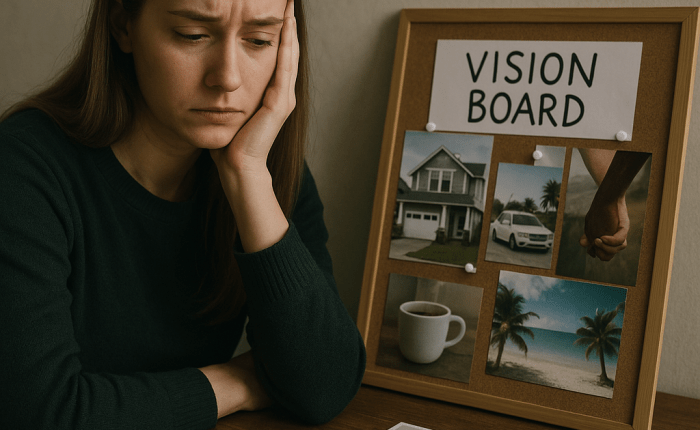
I remember once, after one of our rare calm seasons, we tried to dream again. We made a little vision board together — nothing extravagant, just things a normal couple would hope for. A peaceful home. A reliable car. A future that didn’t feel like walking through broken glass.

But his face went dark, the way it always did when anything felt too good.

He looked at me and said,

“God hates me. We will never get any of this.”

And just like that, the air changed.
The hope drained out of the room.
My body learned — again — that peace wasn’t safe, and happiness wasn’t to be trusted.

When You Take the Blame That Wasn’t Yours to Begin With

When You Take the Blame That Wasn’t Yours to Begin With

To Every Woman Still Carrying the Weight That Was Never Hers

I used to believe that everything was my fault.

The slammed doors, the silence, the yelling that followed the silence, the fists that followed the yelling—I took the blame for all of it. If dinner was cold, it was my fault. If he had a bad day, somehow I caused it. If he lost his temper, I should’ve known better. I should’ve stayed quiet. I should’ve smiled more. I should’ve been less.

When you live under the same roof as someone who thrives off control, you learn quickly that survival means shrinking yourself. It means bending until you barely resemble a person. It means learning the art of swallowing blame for things that never had anything to do with you—because arguing only brings pain, and agreeing brings temporary peace.

But what they don’t tell you is that even when you get out—when you finally pack the bags, find the courage, or flee in the middle of the night with nothing but your breath in your chest—that voice follows you.

Even in freedom, I found myself taking the blame for things that weren’t mine.

If a friend was upset, I’d replay our last ten conversations, convinced I did something wrong. If my boss looked stressed, I’d take on extra work, hoping it would ease a tension I didn’t cause. I’d apologize for everything. For asking questions. For not asking enough. For existing, sometimes. I was hunting for ways to feel terrible, and life kept handing me proof that I was right… because that’s what trauma does. It warps the lens.

But here’s the truth I’ve learned—he was wrong.

I was not the problem. I was not too sensitive. I was not too loud or too quiet or too emotional or too needy. I was not weak for staying. I was not selfish for leaving.

Healing isn’t linear, and it sure as hell isn’t clean. Some days, the guilt creeps back in like fog through a cracked window. But I catch it now. I see it for what it is: a ghost of the past, trying to convince me that I’m still that powerless woman I used to be.

I’m not her anymore.

I don’t carry blame that isn’t mine. I lay it down and walk away from it.

Now, I advocate. I speak. I write. I sit with other survivors and tell them: you are not crazy. You are not broken. And you are not to blame.

If you’re reading this and you’ve ever felt like the villain in your own story—take a breath. Hand back what was never yours to carry.

You deserve peace. You deserve love. And most of all, you deserve to be free from blame that was never yours to begin with.

You survived.

Now it’s time to thrive.

The Victim Mindset Is Keeping You Stuck

The Victim Mindset Is Keeping You Stuck

Why Blaming the Past Feels Safe—but Is Silently Sabotaging Your Growth

There’s a mindset that keeps people trapped—and often, they don’t even realize they’re in it. It shows up subtly, quietly, in the way someone reacts to life’s hardships. And over time, it becomes the lens through which everything is seen.

It’s the victim mindset.

It convinces you that life is just happening to you. That your circumstances, your past, and the way people have failed you are the reasons you can’t move forward. And while there may be truth in those hardships, staying stuck in that story only leads to one place: nowhere.

This mindset is especially dangerous because it feels justified. You’ve been hurt. Life has been unfair. Opportunities have slipped through your fingers. But the victim mindset doesn’t just acknowledge the pain—it builds a home in it. It keeps you focused on what’s been done to you rather than on what you can do now.

And the most painful part? Sometimes, it makes you push away the very help that could make a difference.

You might tell yourself that you’re independent—that you’ll figure it out alone. But if you’re rejecting real, practical help while still depending on handouts or the temporary kindness of others, that’s not strength. That’s survival. And survival is exhausting when there’s no plan to move beyond it.

When you stop asking yourself hard questions like, “What part am I playing in this?” or “What can I take responsibility for?”, you give your power away. It’s easier to blame the system, your past, or your circumstances. But blaming keeps you stuck. It keeps you from healing. And it lets you off the hook.

The truth is: you’re not powerless. You’re not broken. And you’re not doomed.

But if you’re constantly rejecting growth, avoiding discomfort, and refusing to let others help you in meaningful ways, you’re choosing stagnation. And deep down, you probably know it.

Real change is hard. Accepting help feels vulnerable. Facing your patterns takes courage. But that’s where transformation lives. It’s not in the blaming, the begging, or the surviving—it’s in the choosing.

You can’t heal what you refuse to take ownership of.
You can’t rise if you keep convincing yourself that you’re stuck.
And you can’t move forward if you keep turning your back on the help that’s already within reach.

Let this be the moment you get honest with yourself. Not to shame or guilt yourself—but to reclaim your power.

Because the victim mindset will always keep you stuck —and you deserve better than that.

I see this in my daughter. We have sent her to trade school twice, but she has dropped out both times. We paid off her car, paid her auto insurance for a year, and helped her pay for her own apartment.

And now she is in a worse place than before we did that, begging people for money.

My family members and I offer true, lasting help – like coming to stay with us so you can get on your feet, etc. – but she refuses. Instead, she chooses to remain in the chaos, her comfort zone.

When Pain Feels Familiar, And Peace Feels Like ARisk

When Pain Feels Familiar, And Peace Feels Like ARisk

It’s not your fault you feel this way. But you don’t have to stay there.

Sometimes it feels like emotions happen to us, like the weather.
“I guess I’m just sad today.”
“It is what it is.”

But here’s the part no one tells you:

You might not get to choose the feeling that shows up. But you do have a say in how long it stays there.

When we’ve been through trauma or long-term hurt, sadness, or pain can start to feel familiar. It’s almost comforting in a strange way. We stop trying to feel better because part of us doesn’t trust that “feeling better” is even possible. So we sit in the sadness like it’s the only place we belong.

Sometimes, without realizing it, we even let the pain in like a guest who shows up uninvited…. and we don’t ask it to leave. Not because we want to suffer, but because suffering is what we know. It feels predictable. Safe. Normal.

But here’s the truth:

You’re allowed to feel your feelings, and you’re allowed to move through them.

Pain doesn’t have to be your home anymore. You deserve moments of peace, even if they feel unfamiliar at first, because you deserve better.

It took me over 20 years to realize that I deserved better. I sat in my pain day after day—wishing it would go away, wanting it to stop—but doing nothing about it because it had become my comfort zone. I was stuck in a rut and had no idea how to pull myself out.

But once I finally recognized that I did deserve better, the answers started coming to me — sometimes slowly, and sometimes all at once.

I spent 24 years in an abusive marriage. Today, I can say I made it out. And so can you.

Why No One Can Cheer You Up (And Why You Don’t Want Them To)

Why No One Can Cheer You Up (And Why You Don’t Want Them To)

It’s not that you can’t feel better…it’s that you don’t trust better.

When you’re upset, it feels like nothing can touch you. Friends try to cheer you up, but their words bounce right off. You shut it down with,

“You don’t understand,” or “I can’t help the way I feel.”

Here’s the thing: you’re not wrong for wanting to sit in your feelings. Pain can feel safer than pretending everything’s okay. But sometimes, without realizing it, you hold on to that pain like proof. Proof that you were hurt, evidence that your feelings are real, proof that you’re not invisible.

And letting it go? That feels scary. Because misery, as heavy as it is, can start to feel familiar. Almost like home.

You’re not broken for feeling this way. You’ve just learned to live with despair for so long that happiness feels foreign. But here’s the truth: you deserve more than the familiar depression. You deserve peace, even if it feels uncomfortable at first.

Such was I. I lived in an abusive marriage for 24 years. When I finally dared to leave, I started reflecting and asked myself,

“Why had I stayed so long?”

In the future, I knew I didn’t want to make the same mistake. I didn’t want to end up in another abusive marriage. So I looked back at my past relationships, and they were all the same. Abusive.

Wow. Who am I? And why am I choosing this path?

That’s when I realized I had an addiction problem. I was addicted to pain—the pain and the drama of the chaos. I was stuck in a cycle, like a revolving door. So I constantly had to remind myself why I was leaving. I had to remind myself that I deserved better and that I should look for someone who was the complete opposite.

And that’s precisely what I did. Today, I stand on the other side of abuse. Stronger, freer, and committed to helping others find their own path out.

Need help?
If you or someone you know is struggling with addiction, emotional distress, or abuse, support is available 24/7:

  • Addiction Recovery: Call 866-606-0182 or visit our treatment center directory
  • Suicide & Crisis Lifeline: Dial 988 (free, confidential, 24/7)
  • Domestic Violence Hotline: Call 800-799-7233 or text START to 88788
  • Sexual Assault Hotline (RAINN): Call 800-656-4673 or visit online.rainn.org

You are not alone. There is help. There is hope. And you are worth the healing.

Question Everything

Question Everything

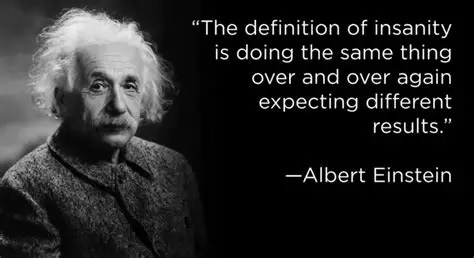
“Learn from yesterday, live for today, hope for tomorrow.  The important thing is not to stop questioning.” – Albert Einstein

Have you ever asked God, “Why?”

Have you ever questioned His existence?

Have you ever screamed out in agony, wondering why YOU even exist?

Have you ever wondered how a “loving God” could allow such pain and suffering?

Have you ever sat in a puddle of your own tears and felt you couldn’t go on?

Have you ever felt the hatred burning in your bones?

Have you ever tried to wake up, hoping it was just a nightmare?

Have you ever sought answers but found none?

Have you ever wondered, “Why me?”

Have you ever put on a fake smile so that you didn’t have to talk about it?

Have you ever wanted to start all over?

Have you ever wanted to give up? Everyday?

Have you ever wondered why you couldn’t get on the good side of life?

Have you ever felt cursed?

Have you ever felt depressed and regretted so much of your life?

I have.

“The power to question is the basis of all human progress.” – Indira Gandhi

How many times have you been told that you should never question God? I lost count of the times I was told that.  But guess what? He understands.  We were born questioning everything around us.  That is how we learn and grow.  The only ignorant question is the one that is never asked.  Asking questions clears confusion, gives us a better understanding of any given situation, and helps us find answers.  Questions help solve problems.  It is absolutely fine to question our life; it shows that we do not accept our current position or status and that we are willing to improve.

A Quiet Voice Echoes

A Quiet Voice Echoes

Dear Me,


I hear you.
I see what you endured.
I believe every word you wrote.

You were a victim—not because you were weak, but because others chose to harm you, control you, silence you.
It was not your fault. Not then, not ever.
You were not to blame for the loneliness, the violence, the brainwashing, the betrayal.
You were doing your best to survive inside a world that kept telling you to disappear.

And still, you are here.
You are speaking.
You are remembering.
You are healing.

I honor your pain. I honor your courage.
You don’t have to carry this alone anymore.
You are allowed to rest.
You are allowed to feel angry, sad, and confused.
You are allowed to feel everything.

There is no right pace. No deadline.
Only this: you are not silent anymore.
And that is everything.

I love you.
I am with you.
You are not alone.

Me