The Victim Mindset Is Keeping You Stuck

The Victim Mindset Is Keeping You Stuck

Why Blaming the Past Feels Safe—but Is Silently Sabotaging Your Growth

There’s a mindset that keeps people trapped—and often, they don’t even realize they’re in it. It shows up subtly, quietly, in the way someone reacts to life’s hardships. And over time, it becomes the lens through which everything is seen.

It’s the victim mindset.

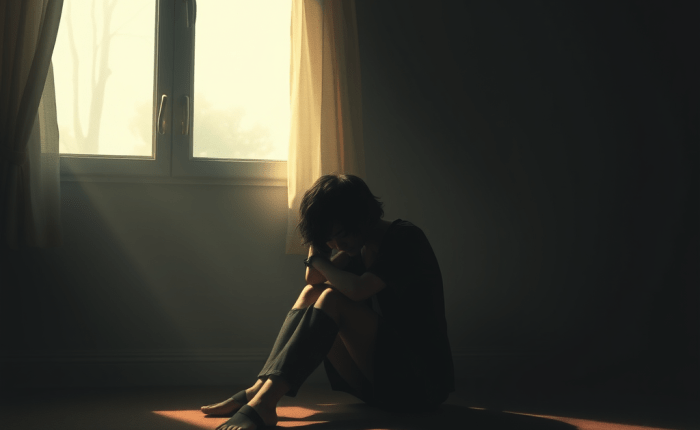
It convinces you that life is just happening to you. That your circumstances, your past, and the way people have failed you are the reasons you can’t move forward. And while there may be truth in those hardships, staying stuck in that story only leads to one place: nowhere.

This mindset is especially dangerous because it feels justified. You’ve been hurt. Life has been unfair. Opportunities have slipped through your fingers. But the victim mindset doesn’t just acknowledge the pain—it builds a home in it. It keeps you focused on what’s been done to you rather than on what you can do now.

And the most painful part? Sometimes, it makes you push away the very help that could make a difference.

You might tell yourself that you’re independent—that you’ll figure it out alone. But if you’re rejecting real, practical help while still depending on handouts or the temporary kindness of others, that’s not strength. That’s survival. And survival is exhausting when there’s no plan to move beyond it.

When you stop asking yourself hard questions like, “What part am I playing in this?” or “What can I take responsibility for?”, you give your power away. It’s easier to blame the system, your past, or your circumstances. But blaming keeps you stuck. It keeps you from healing. And it lets you off the hook.

The truth is: you’re not powerless. You’re not broken. And you’re not doomed.

But if you’re constantly rejecting growth, avoiding discomfort, and refusing to let others help you in meaningful ways, you’re choosing stagnation. And deep down, you probably know it.

Real change is hard. Accepting help feels vulnerable. Facing your patterns takes courage. But that’s where transformation lives. It’s not in the blaming, the begging, or the surviving—it’s in the choosing.

You can’t heal what you refuse to take ownership of.
You can’t rise if you keep convincing yourself that you’re stuck.
And you can’t move forward if you keep turning your back on the help that’s already within reach.

Let this be the moment you get honest with yourself. Not to shame or guilt yourself—but to reclaim your power.

Because the victim mindset will always keep you stuck —and you deserve better than that.

I see this in my daughter. We have sent her to trade school twice, but she has dropped out both times. We paid off her car, paid her auto insurance for a year, and helped her pay for her own apartment.

And now she is in a worse place than before we did that, begging people for money.

My family members and I offer true, lasting help – like coming to stay with us so you can get on your feet, etc. – but she refuses. Instead, she chooses to remain in the chaos, her comfort zone.

Why You Always Zero In on What Hurts

Why You Always Zero In on What Hurts

When trauma teaches you to fear the good, trusting peace can feel like betrayal

Have you ever noticed how fast your mind finds the crack in the glass?

Something good happens—and before it even settles, you’ve already ruined it in your head.
You pass the test, then tell yourself you’ll probably fail the next one.
Someone says they’re proud of you, and you immediately wonder what they really meant.
You finally get a moment of peace, and instead of resting in it, you’re holding your breath waiting for it to explode.

That’s not you being dramatic.
That’s trauma.
That’s conditioning.

When you’ve lived in survival mode long enough—when love came with punishment, when silence meant danger, when even your joy got twisted into a weapon—you stop trusting anything that feels too good.

Your brain starts treating calm like a trap.
It looks for warning signs even when there aren’t any.
Because in your experience, the good things never came without a price.

So, of course, your mind zeroes in on what hurts.
That was your safety plan. That’s how you kept yourself alive.

You learned to listen for footsteps. You studied his moods like they were gospel. You walked on eggshells because they were safer than landmines.

So when someone tells you to “just think positive” or “celebrate the good,” it doesn’t land. It feels fake. It feels dangerous. Because in your world, hope always came back with bruises.

I remember the day I reached for help.

I wasn’t even expecting a miracle—just someone to see me. I told the truth. I admitted I was scared, confused, and unraveling. I laid it all out there: how small I felt, how broken I had become, how the God I was clinging to didn’t feel like He was anywhere near me anymore.

And the answer I got?

“Just go home and be a good wife.”

No rescue. No comfort. Just a command.
That broke something in me.
I learned right then: honesty doesn’t guarantee help. Hope can backfire.
So I stopped reaching. I started bracing harder. I got quieter.
Because at least silence couldn’t slap me in the face like that again.

That moment shaped me. And not in a holy way.

But here’s what I want to tell you—what someone should have told me:

You’re not negative.
You’re not broken.
You are conditioned. And you can unlearn it.

But not by pretending. Not by slapping affirmations over your scars.

It starts small. Like this:
When the voice comes up that says, “This won’t last,” or “You don’t deserve this,”
just pause.
Don’t fight it. Don’t obey it. Just notice it.

That voice isn’t your truth.
It’s your trauma.

And slowly, you can start choosing differently.

Not because you’re suddenly healed. But because for once, you’re finally allowed to be aware of how deep the damage goes—and how much more you were made for.

You’re allowed to want peace without fear.
You’re allowed to hold joy without bracing for pain.
You’re allowed to believe something good… might actually be good.

Even if your brain’s not there yet, you are.

GRATITUDE IN REVERSE

What felt like the end of the world turned out to be my greatest gift.

Albert charged into the side door of our house, clad in polyester basketball shorts and a t-shirt adorned with armpit sweat.

I inhaled, holding my breath, thinking, “Oh boy, what now?”.

“Pastor Riggs told me to hand in my resignation.”

He wouldn’t say he got fired — that would sound too obvious, like admitting he did something wrong. No, he was ‘asked to resign.’ He explained, with pride, that he had told the pastor off and had a long list of reasons.

All I could think of was Thanksgiving back in 2007, when we had to eat spaghetti because he had been fired from a previous position helping a pastor grow his church. He didn’t have a proper title, so we called him the church evangelist — but really, he was the church shit stirrer. I can recall three men who have dared to tell Albert the truth to his face. None of these men was a hothead like him. They had boundaries, and he crossed them. One preacher even went so far as to call him “a wolf in sheep’s clothing.” I remember that night and still chuckle inwardly.

But this day felt like the end of an era—the end of our lives. We knew poverty. We survived it. But I was so tired of just surviving. So tired of pinching pennies, being the recipient of groceries because people felt sorry for us. I was downright exhausted. He told off the wrong guy, and that guy had the balls to stand up for himself. Kudos. But that didn’t help the situation. We were in dire straits. Bills do not miraculously stop just because you lose a job. No, electricity still runs, and a bill is still accumulating.

This is when he decided we would pursue his lifelong dream of starting a cleaning business.

“Oh gawd, yuck. I hate cleaning.” I thought. I did not want to do this. But being the obedient wife I was,

I said, “Okay.”

I was already at my wits’ end with him. I had even filed a restraining order earlier that year, thinking it would change him and he would be a different person. It only changed me. I became a different person. I was finding my voice.

We pushed along, started from scratch, and kept on scratching until we had a decent little cleaning business. It turned out it wasn’t as brutal as I thought it would be —cleaning, that is. Since he was OCD, I had learned to pay attention to detail.

I remember one time he was at work (I was a stay-at-home wife and mom), he may have been at bible college. Regardless, I spent all day cleaning the house. I wasn’t taught to keep a clean home. As a kid, my room was livable — clothes piled up, and I’d make a path to the bed and push them off to sleep. Dishes would overflow in the sink and onto the counters, even with a dishwasher sitting right there. My mom never asked for help — just pouted on weekends, complaining nobody helped her. But she never asked for help. I do not remember a single time my mom showed me how to wash dishes or asked me to wash them. But when I stayed the summer at my aunt’s house, she made me clean up after myself and even showed me how to clean behind the toilet.

So like I said, living with an OCD person – my husband – taught me to pay attention to detail.

Back to the part where I had cleaned all day, then he came home and went on a rampage:

“What have you been doing all day? Why does the house look like this? Get off your lazy ass and clean this fucking house!”

Nothing was lying around —not even a particle on the floor; everything had been freshly mopped and vacuumed. Do you know what he saw? A smudge on the corner of a mirror. Something I had missed. I cried that day. But I learned how to pay attention to detail on that day, too.

Cleaning houses felt a bit rewarding. I cleaned behind toilets and wiped baseboards, tops of door frames, and ledges on the doors. Top to bottom. No mirror had a smudge, and you could eat off the toilet seat. 10/10 would not recommend, but it would have been safe to do so.

As time went by, my disgust for him grew. But I could not figure out how to survive on my own with all these kids still living at home. It wasn’t until he got sick. Real sick. He ran a fever for over a week and refused to see a doctor. He would come downstairs and cry and whine like a baby, literally. Imagine a 3-year-old whining when they want their way. That was him. Then he would go back upstairs to sleep. He slept and slept. I would bring him soup, tea, water, and even made a homemade herbal remedy, which, for the first time in our 23-year marriage, he took. I welcomed the quietness his illness brought me, but I still performed my wifely duties of “in sickness and in health,”. Then went to clean the houses by myself. My daughter, who was in Christian school, would take a few days off to help me, but I found it easier to clean by myself than to go behind her to make sure she did it right. Not that she couldn’t clean, but this was our only income, and I didn’t feel I had room for mistakes.

Two more days went by, and he did not get out of bed. I got scared. I realized something was really wrong with him. He’s not faking or overreacting this time. So I called my sister-in-law and told her what was going on, and she said,

“You march up there and tell him he is going to the doctor, that he doesn’t have a choice.”

And so I did. He refused, crying and whining the whole time I was helping him dress, like a child not wanting to leave the park. Then, I drove him straight to the hospital. The doctor asked a bunch of questions that I answered, since he liked to withhold vital information. I even got the doctor to give him a prostate exam, which brings a smile to my face today. Turns out it was his appendix. It had been oozing into his body, and instead of being able to have the simple surgery, he had the large one where they cut from the top of the sternum to the pubic bone. I felt little sympathy for him, and he is a miserable patient. I was thankful to have work to go to. Grateful that we had just started an enormous organization project that was able to keep me away from seeing his green face and the black bile coming out of his mouth. His recovery took over six weeks. But by then, I’d already been cleaning solo for 8 — and I realized I could keep doing it. I could support my family without him. He had already lost interest in cleaning, wanting always to rush through the houses. He was there only to collect the check. Turns out he did not have as great a work ethic as he proclaimed.

When we finally separated, he left me the house and the business. A detailed story for another page, but what I thought was the end was just the beginning.

I thought when he got fired, we were going to do like we always did and move to another state and start all over. But instead, we started a cleaning business I didn’t want to start, and that business helped me support my then-6 kids at home. And without him there to tell me how the money was going to be spent frivolously, I was finally able to buy my kids’ school clothes and school supplies. For the first time, when they came to me with a need, I was able to supply it.

And that was the greatest gift of all.

Before the World Awakes

Before the World Awakes

Even the most ordinary mornings are full of movement, memory, and quiet decisions.
Maybe we don’t need big moments to feel present—just enough space to notice the small ones.

I turned over in bed, wondering how long I’d been in that same position. My arm had fallen asleep, and my chest felt crunched. I took a deep breath, thinking about checking the clock, but I also wanted to roll back over. I usually toss and turn all night, but this time, I didn’t. Must be the progesterone doing its job.

I adjusted my pillows — only to realize one was missing. I patted around until I found it above my head. Did I slide down during the night? Did I fall asleep on my husband again? That usually throws off the pillow setup. I sat up, got the pillow back under my head… and then, of course, my alarm started to vibrate, lighting up the room.

Oh no — it’s going to wake him. I never let the alarm go off. I’m usually up before it. I tapped the dismiss button on my watch and sat on the edge of the bed, brushing hair out of my face — except it was stuck. Strands crisscrossed my mouth, nose, and eyes. What in the world? Did I drool? Then I remembered — my detox box sent me that nighttime serum that makes my face sticky. That explains it.

I grabbed my phone, picked up my clothes from the floor — we both agreed sleeping naked is non-negotiable — and tiptoed to the bathroom. I used my phone light to close the door slowly. The bathroom light stays off — his eyelids are basically transparent. He’s a night owl. I’m a morning person. Our compromise is to be in bed by 9–10, and I’m up between 3 and 4. He “sleeps in” until 6:30.

I turned on the closet light instead — it’s in the bathroom, which I always thought was a weird design choice, but it works and is quite convenient. I sat on the toilet, like usual, giving my body time to eliminate any bad decisions from dinner. Then I changed into yoga pants, a sports bra, and one of my many sweatshirts. I always tell myself I need to buy another one—I wear them year-round.

Then came the stealth mission: turn off lights, tiptoe across the tile (hoping my ankles don’t click), and open the bedroom door without setting off the vacuum-force door slam. The cat meowed her usual greeting — so I didn’t wake him, but I did wake her. Last obstacle: close the door behind me with just the right amount of pressure to keep the vacuum from yanking it.

Once it clicked into place, I exhaled. I hadn’t even realized I was holding my breath.

The kitchen was dark. I turned on the light and went through the usual motions:
Tea pod out. Decaf in. Brew on espresso.
Creamer in the frother. Start.
Swap in a chicory pod. 10oz of bold flavor.
Yeti from the dishwasher. Cream, coffee, done.
Spring water in a glass. Cat fed.

And now I’m downstairs, writing this, wondering…

  • Is it out of respect for his sleep… or is there something comforting in the ritual of moving unnoticed?
  • Is it desire for peace, control, or maybe even to feel needed in the stillness?
  • Why do small creatures always seem to keep us on schedule better than alarms?
  • Does waking early give me a head start… or just a moment to exist without anyone else’s noise?
  • And what am I really trying to let go of — each morning, sitting there in silence, waiting?

When Pain Feels Familiar, And Peace Feels Like ARisk

When Pain Feels Familiar, And Peace Feels Like ARisk

It’s not your fault you feel this way. But you don’t have to stay there.

Sometimes it feels like emotions happen to us, like the weather.
“I guess I’m just sad today.”
“It is what it is.”

But here’s the part no one tells you:

You might not get to choose the feeling that shows up. But you do have a say in how long it stays there.

When we’ve been through trauma or long-term hurt, sadness, or pain can start to feel familiar. It’s almost comforting in a strange way. We stop trying to feel better because part of us doesn’t trust that “feeling better” is even possible. So we sit in the sadness like it’s the only place we belong.

Sometimes, without realizing it, we even let the pain in like a guest who shows up uninvited…. and we don’t ask it to leave. Not because we want to suffer, but because suffering is what we know. It feels predictable. Safe. Normal.

But here’s the truth:

You’re allowed to feel your feelings, and you’re allowed to move through them.

Pain doesn’t have to be your home anymore. You deserve moments of peace, even if they feel unfamiliar at first, because you deserve better.

It took me over 20 years to realize that I deserved better. I sat in my pain day after day—wishing it would go away, wanting it to stop—but doing nothing about it because it had become my comfort zone. I was stuck in a rut and had no idea how to pull myself out.

But once I finally recognized that I did deserve better, the answers started coming to me — sometimes slowly, and sometimes all at once.

I spent 24 years in an abusive marriage. Today, I can say I made it out. And so can you.

It’s My Birthday

It’s My Birthday

After 50, birthdays are not as welcome or eagerly anticipated.
Maybe because they no longer symbolize beginning—they feel more like markers of what’s already passed.

I’m in the era of searching for the fountain of youth.
Not in fairy tales or myths—just in small hopes, routines, supplements, & habits.

I want to live to be 100, but sometimes my body tells me it’s not so sure it will.
And on those days, it feels like I’m negotiating with time.

50 is the halfway point, and 57 is past the halfway point.
It depends on the lens: optimism or realism. I’ve already stepped beyond that imagined middle.

I’m still quite a way from 100, but as the years go by faster and faster with each birthday, it doesn’t feel like it’s only 43 years away.
Time feels slippery now, like it’s speeding up while I’m slowing down.

And see that little word “only” — 43 is less than 50, and 43 is too soon.
It used to sound like a lifetime. Now it sounds like a countdown.

They say to live every life like it is your last, and live each day like it is your last.
A noble idea. But who can actually do that, every day?

I definitely couldn’t do all the things I’ve wanted to do in life in 1 day.
I couldn’t fit it into this one day.
Dreams take decades. Some never arrive. Some arrive too late.

But I could treat people and anyone I came across as I would if today were “it.”
I could. I can be the best version of myself TODAY.
And maybe that’s more powerful than any bucket list.

Why No One Can Cheer You Up (And Why You Don’t Want Them To)

Why No One Can Cheer You Up (And Why You Don’t Want Them To)

It’s not that you can’t feel better…it’s that you don’t trust better.

When you’re upset, it feels like nothing can touch you. Friends try to cheer you up, but their words bounce right off. You shut it down with,

“You don’t understand,” or “I can’t help the way I feel.”

Here’s the thing: you’re not wrong for wanting to sit in your feelings. Pain can feel safer than pretending everything’s okay. But sometimes, without realizing it, you hold on to that pain like proof. Proof that you were hurt, evidence that your feelings are real, proof that you’re not invisible.

And letting it go? That feels scary. Because misery, as heavy as it is, can start to feel familiar. Almost like home.

You’re not broken for feeling this way. You’ve just learned to live with despair for so long that happiness feels foreign. But here’s the truth: you deserve more than the familiar depression. You deserve peace, even if it feels uncomfortable at first.

Such was I. I lived in an abusive marriage for 24 years. When I finally dared to leave, I started reflecting and asked myself,

“Why had I stayed so long?”

In the future, I knew I didn’t want to make the same mistake. I didn’t want to end up in another abusive marriage. So I looked back at my past relationships, and they were all the same. Abusive.

Wow. Who am I? And why am I choosing this path?

That’s when I realized I had an addiction problem. I was addicted to pain—the pain and the drama of the chaos. I was stuck in a cycle, like a revolving door. So I constantly had to remind myself why I was leaving. I had to remind myself that I deserved better and that I should look for someone who was the complete opposite.

And that’s precisely what I did. Today, I stand on the other side of abuse. Stronger, freer, and committed to helping others find their own path out.

Need help?
If you or someone you know is struggling with addiction, emotional distress, or abuse, support is available 24/7:

  • Addiction Recovery: Call 866-606-0182 or visit our treatment center directory
  • Suicide & Crisis Lifeline: Dial 988 (free, confidential, 24/7)
  • Domestic Violence Hotline: Call 800-799-7233 or text START to 88788
  • Sexual Assault Hotline (RAINN): Call 800-656-4673 or visit online.rainn.org

You are not alone. There is help. There is hope. And you are worth the healing.

My People

My People

My people are positive thinkers. They believe in the good and see the good in others. They stand by me through every challenge, loving me not for what I can give but for who I am. My people lift me up, even when I feel drained from giving too much. They remind me to grow, to rise, to become the best version of myself.

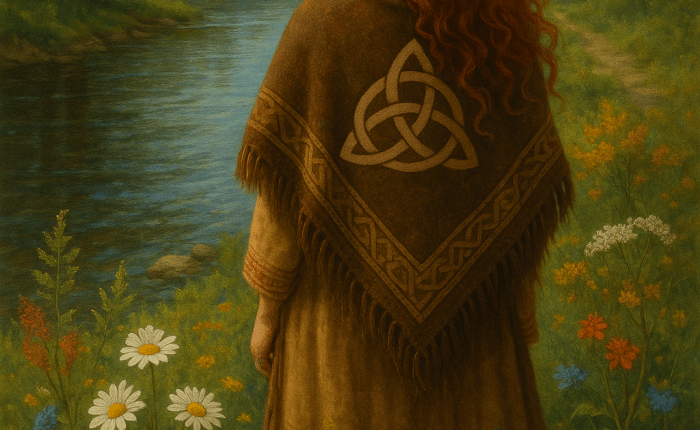
When I think about my people today, I also think about where we came from—those whose blood and spirit still flow through me.

My people were Irish, transplanted to America. But for what? What freedom were they searching for? Perhaps they sought escape from the weight of strict religion—only to find themselves bound again by another form of it.

I was told we were also part Cherokee. I held onto that story with pride, feeling its truth even without proof. Maybe somewhere in my lineage, someone loved a Native soul, and their spirit found its way into mine. I feel it in the pull of the water, the whisper of the wind, the pulse of the earth beneath my feet.

I wonder what my Irish ancestors worshipped. They weren’t always Catholic or God-centered, I’m sure. I feel too much spiritual energy in my veins to believe they were ever confined to one god or doctrine. I imagine they were people of the land—forest lovers and wildflower smellers—souls who found divinity in nature itself.

Whether Irish or Native, I know my ancestors were connected to the earth, to Spirit, to something larger than themselves. Their reverence for nature runs through my blood, stronger than any written creed.

And today, my people are here with me—my children, my husband, my grandchildren—the ones who carry the same light, the same hope, the same heartbeat of all who came before us.

ODE TO PETE

ODE TO PETE

Ode to Pete

You can see the age in the white fur around his face.
Even old dogs get gray hair.

He’s stood watch over this home for so many years—
steady, loyal, patient.
He’s kept it safe while they were away,
and when they were home, he still kept watch.

He knows this is his family.
They belong to him.

Through the noise of the house—
the laughter, the shouting,
the running of little feet—
he knows his job.
He doesn’t need to be told.

He finds his spot on the old tree stump in the yard,
his throne, his lookout, his comfort.
The wind carries the world to him—
the familiar scents, the faintest hints of change.
He knows every smell, every sound.

His eyesight isn’t what it used to be,
but he doesn’t let that stop him.
Where sight fades,
his nose and his heart make up for it.

He’s heard it all over the years.
Every conversation.
Every disagreement.
Every whispered apology made after the house quieted down.

He’s been there through the sicknesses and the scares—
waiting at closed doors,
lying close when someone needed warmth.

He’s seen the birthdays,
the holidays,
the tables full of food,
the laughter spilling out into the room.
He’s been part of all of it—
quiet, steady, always there.

He sits and he watches.
He makes sure everything is safe.
Everyone is safe—
because Pete is on duty,
just like always.

And when the day quiets,
and everyone goes inside,
he waits.

He waits to be called in,
to hear a kind voice,
to be told he’s done well.
But humans forget sometimes.

They take it for granted,
thinking, “He’s just a dog. My dog.”

But that’s not really true.

We are his.

We’re more than just the people who fill his days—
we are his purpose.
His reason.

Every breath,
every watchful moment,
has been for us.
He has given his whole life
to our safety,
our laughter,
our love.

We belong to him.

And now—
when I see him resting in the soft light of evening,
his muzzle dusted white,
his eyes still following every sound—
I understand.

He’s not just watching anymore.
He’s remembering.

Every argument.
Every joy.
Every moment he’s kept for us.
Every growing child,
every season passed,
every quiet night he stood guard.

And as I watch him now,
I realize—
I’m the one still being kept safe,
just by knowing he’s here.