Positively Divine

What positive events have taken place in your life over the past year?

This year has been one of the most unexpected beautiful years of my life, full of surprises, healing, and quiet miracles I did not always see coming.

It began with the joy of the birth of grandchild number ten and the sweet anticipation of number eleven already on the way. Every new little heartbeat in this family reminds me how wide my world is and how love continues to grow around me whether I am ready or not.

Our third short-term rental went online and stays booked. It amazes me to watch what I dreamed of into existence, and watch it take off and thrive. There is a quiet pride in that, a feeling of finally seeing hard work turn into something real.

Then came Colorado. Two weeks of pure beauty, with every turn revealing something that made me pause and breathe a little deeper. I did not realize how much I needed that trip until I was standing there, surrounded by mountains that made everything inside me feel a little clearer.

But the biggest changes this year happened within me.

After years of gut problems, I finally discovered the physical cause. That alone felt like a breakthrough I had been waiting for far too long. Therapy opened an even deeper door. I began to uncover the emotional weight I had been carrying and the trauma that had settled into my body. I started learning how to set boundaries and how to listen to the parts of myself I had ignored. I connected with my inner child, the version of me who needed comfort and understanding, and I finally began to give her that.

Along the way, I started feeling more comfortable in my own skin. Not the person I thought I was supposed to be, but the person I actually am. This shift feels real, even if it is still unfolding.

And perhaps one of the most meaningful steps I am taking this year is working on my book proposal. I’m not  just dreaming about it, I’m doing it. This alone feels like reclaiming a part of myself I thought I lost.

When I look back, this year was not simply positive. It was transformative. It was a year of returning to myself in ways I never expected.

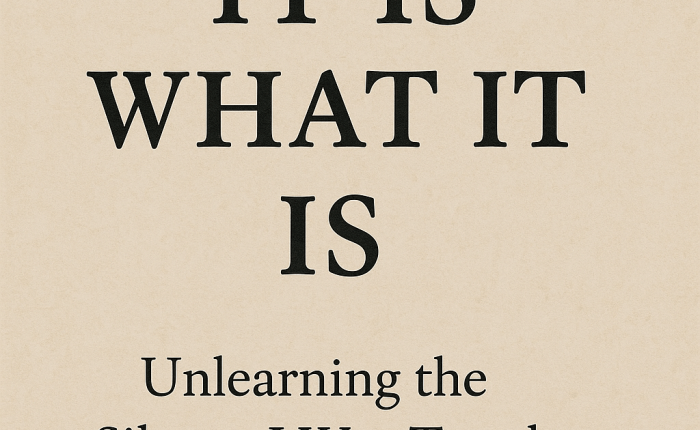
It Is What It Is

It Is What It Is

“It is what it is.”

I told my assistant, after spilling everything about why I had been absent,

“Hey, that’s a dismissive statement. You can’t dismiss this. It is not your fault.” He said.

Yesterday I stopped by my parents’ house to help Mom with her Facebook. After about an hour of scrolling through her activity history, and Dad complaining about how three of their specialist doctors were leaving our town for a bigger one, they ended with,

“She owes us an apology.”

I shook my head no.
They didn’t like that.

They insisted they had been wrongly accused. They brushed past the fact that they are still, even after everything, keeping contact with her abuser. Instead, they turned the extra pictures on Facebook into their own story. A story where they were the victims. A story where she had attacked them.

Dad with his angry, silent face.
Mom had her lip pulled in, as if she were bracing for battle.


“Yes, she does,” they sneered.
“Wouldn’t you want an apology if you were accused of something you didn’t do?”

I let out one of those airy laughs. The kind you do when you remember something painful. In my case, it was Dad’s accusatory text. I brushed it off again by saying,


“You have to understand how scared she is.”
And then the conversation was over.

I left feeling like I had failed her and myself.

I have never been good at ‘thinking on my toes’ when I get backed into a corner. And for some reason, my parents have always had the power to back me in that corner. Even as an adult. Even after therapy. Even after years of growth.

I think I have been dismissive of them for years without realizing it. Not because I didn’t care, but because I didn’t want to face the fear I carried of them. A fear I only recently learned to name.

Therapy has helped me draw cleaner lines. It showed me that my anxieties did not begin with my ex-husband. He added to the damage, but he did not build the foundation. My parents did. Their dismissiveness shaped me long before adulthood, long before marriage, long before the trauma that came later.

My dad does not know how to love without control. His love has limits, and those limits end where his control ends.
My mom has always believed the world is against her. So it makes sense she sees her own granddaughter as just one more person out to hurt her.

And for years, I’ve repeated the exact phrase like a mantra.

“It is what it is.”

But now I know that phrase was never peace. It was resignation.
It was the sound of folding into silence.
It was the armor I wore when I didn’t yet have the language to name the wounds.

But I do now.

So no, it’s not “what it is.”

It’s what it was.

When Doing the Right Thing Still Makes You Feel Like the Villain

When Doing the Right Thing Still Makes You Feel Like the Villain

A story about family, guilt, and the cost of choosing someone’s peace and safety

This year, I set a boundary with my parents.

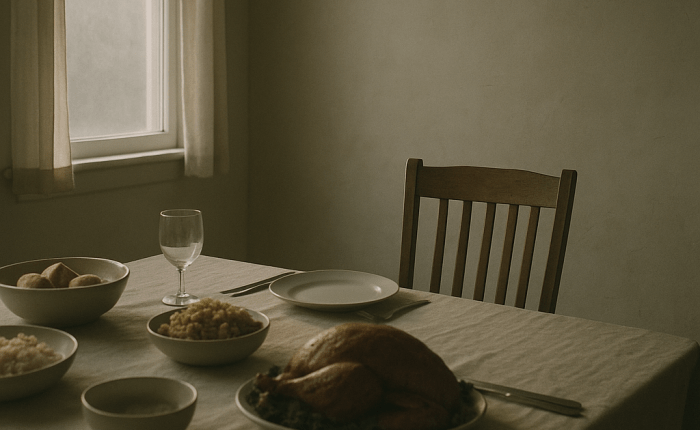
We didn’t go to their house for Thanksgiving. We had it at ours instead. That might sound small to someone outside the situation, but it wasn’t. It carried years of pain, silence, and choices that should never have been mine to carry.

It wasn’t even about me this time. It was about my daughter.

There’s a story I’m not going into here, but I’ll say this much. My daughter was violated by a family member, their grandson, my son. He’s in prison now for what he did to her. But my parents still choose to stay in contact with him.

She was the one who said she didn’t want to go. She didn’t want to sit in a place that still protects the person who hurt her. And I decided to support her, choose her, and stand on her side.

It was the right thing. I know that. But it didn’t stop the fallout.

My mom didn’t speak to me for a whole week. My dad turned on the guilt, the blame, and the disappointment. Like I was the one punishing them. All I did was protect my daughter from the people who made her feel betrayed.

And still, I spiraled. I second-guessed myself. I wondered if I was being dramatic, if I had taken it too far, if I was being cruel by drawing a line.

That’s how deep the conditioning goes. That’s how beating yourself up becomes your favorite hobby.

You protect your child. You do what you know is right. And then you punish yourself for it.

Here’s how that cycle works. Here’s how the guilt gets under your skin and stays there, even when it shouldn’t.

1. You confuse guilt with being good.
You grew up thinking that if it hurts, it must mean you care. If you carry the guilt long enough, maybe it proves you’re the better person. Perhaps it means you’re nothing like the ones who hurt you. So you hold it. You nurse it. You call it empathy, but it’s not. It’s grief. It’s fear. It’s survival mode, you never got the chance to grow out of.

2. You turn on yourself before anyone else can.
It’s safer that way. You blame yourself first. You get ahead of the punishment. You run the worst-case scenario before it even happens. That way, if someone does get mad, you’re already halfway into self-destruction. You don’t have to be blindsided. You’re already bleeding. You call it control, but it’s fear disguised as preparation.

3. You were trained to carry the weight for everyone.
Keeping the peace was your job. Making things easier and smoothing things over. So when you finally make a decision that protects someone else, someone innocent, someone hurt, it still feels like betrayal. It feels like you’re letting everyone down, even when you’re the only one standing up for what’s right.

4. You think beating yourself up makes you accountable.
You think that if you suffer enough, it proves you’re not careless. That you’re not cold. That you understand the impact. But accountability is not self-punishment. It’s not turning your own heart into a punching bag. Accountability means standing in your truth and owning your choices, even when they hurt, even when you’re alone in them.

You can know something is right and still feel crushed by the guilt of doing it. That’s the part people don’t talk about.

The pain of healing is that it often makes you look like the villain to the people who benefited from your silence. And the reflex to beat yourself up is strong. It feels like the only way to keep the peace with yourself when everyone else is pulling away. But beating yourself up is not the same as being good. It’s just the story they taught you to believe. And you don’t have to keep telling it.

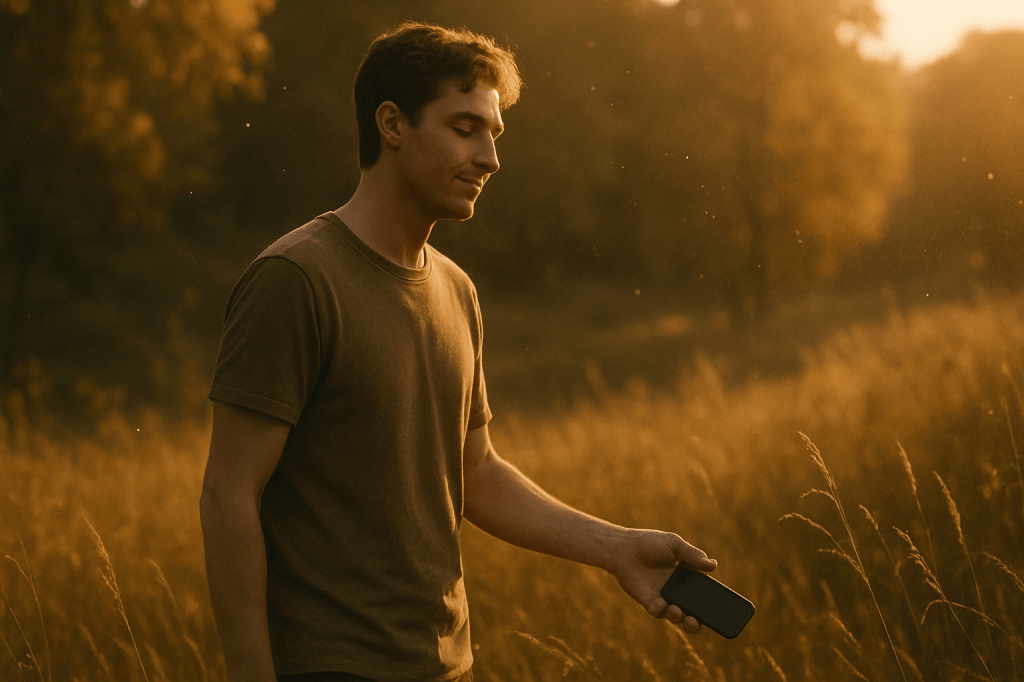
Cell Phones

What technology would you be better off without, why?

The little rectangles that own us
more than we’d ever admit.
We cling to them like lifelines,
but they drain more than they give.

Take them away
and maybe people would finally remember
what boundaries are.
No more entitlement to instant replies,
no more “?” as a guilt trip,
no more being punished
for daring to exist offline.

Life wouldn’t get twisted
into misread texts and passive-aggressive punctuation.
We’d have to speak.
Out loud, with real voices.
Exposing those hiding behind screens.
Transparency terrifying them, because they might really be seen.

And let’s not ignore the anxiety tax:
We’re fed a constant drip of news
we were never meant to carry.
Tragedies across the globe
delivered before breakfast,
opinions we didn’t ask for,
chaos we can’t fix.
Without a cell phone,
half the things we stress over
wouldn’t even reach us.

We might actually look up, too.
Notice the world
With its brutality and its beauty.
Its everything we scroll past
because we’re too addicted
to the glowing distraction.

And the money we pour into these things…
the pointless upgrades,
the cases, the cables,
the repairs, and replacements.
All for a piece of tech
that clearly stresses us out.

Take away the cell phone
and life wouldn’t be as harsh.
It would be quieter,
more spacious,
more ours.
Less noise, less pressure,
less manufactured urgency.
More peace in the places
we forgot peace could exist.

We might finally notice
our own thoughts again.
Hear the world around us
instead of the notifications.
And live instead of react.

DON’T TAKE IT PERSONAL

DON’T TAKE IT PERSONAL

Why You Take Everything Personally (And What No One Told You About It)

Let’s be real. You don’t just “hear” what someone says—you absorb it.
A sigh? You feel it like a slap.
A short text? Your stomach drops.
If they are quiet? You spiral.

Taking things personally isn’t a flaw—it’s a reaction to what you’ve been through…

Someone trained you to feel this way.

Maybe you were in a relationship like mine—one where your partner, or parents, made sure you were never really safe. Where you had to study their mood the way a sailor studies the sky.
Because one wrong word, one wrong look, could start a storm.

I know what that feels like.
To live in a home that felt more like a test.
To love someone who used your love against you.
To be blamed for everything—their anger, their silence, their outbursts, their boredom.

When you’re with an abuser, especially for years, you don’t just fear them—you become them in your own head.
You start criticizing yourself before they can.
You start shrinking your needs because it’s safer that way.
You start interpreting everything around you as a threat.

That’s why you take things personally.
Because you were trained to see danger in the subtlest shifts.

You were taught that mistakes mean punishment.
That emotions are weapons.
That love means walking on eggshells while setting yourself on fire to keep someone else warm.

So now, when someone gives you feedback, you feel attacked.
When someone pulls away, you assume it’s your fault.
When someone’s upset, you blame yourself.

But here’s the part you need to hear:
It’s not your fault.

You were conditioned to believe that your survival depended on reading people perfectly.
You weren’t being sensitive—you were being smart.
You were protecting yourself.
But now?
Now you don’t have to live like that anymore.

That voice in your head telling you “you messed up,” “they hate you,” “you ruined everything”—
That’s not your voice.
That’s theirs.
That’s the voice of the person who broke you down, not the one who gets to build you back up.

And you’re allowed to question it.
You’re allowed to replace it.
You’re allowed to heal—even if they never apologize.

So if you’re sitting there wondering why you take things so personally, let me say this:

You’re not crazy.
You’re not broken.
You’re carrying a survival instinct that once kept you safe—but it doesn’t have to run your life anymore.

You can learn to breathe again.
To trust again.
To love without fear.
To hear someone’s words without turning them into wounds.

You’re allowed to take your power back.

One truth at a time.

Why Happiness Makes You Nervous

Why Happiness Makes You Nervous

For the girl who thinks the tightness in her chest is normal

Good times make you nervous, don’t they?

You don’t call it fear—you call it “being cautious,” or “not getting your hopes up.” But the truth is quieter: you’re not used to peace. For so long, love has felt like tension, panic, apologizing, overthinking, and walking around someone else’s moods like they’re landmines.

So when something finally goes right… Your whole body glitches.

You look around, waiting for the explosion.
You wait for the tone in his voice to shift.
You wait for the moment he decides you’re “too sensitive,” “too emotional,” or “too much.”

And if nothing happens right away, your brain fills the silence with dread: Is this the part where it all turns again?
You don’t trust happiness—not because you’re broken, but because you’ve survived too long without it.

Girls like us learn early that peace feels like a trap.
A setup.
A calm before the next storm.

No one told you that real love isn’t supposed to feel like bracing for impact.
No one told you that safety isn’t the same thing as “keeping the peace.”
No one told you that if your body relaxes only when he isn’t home… that’s not comfort. That’s survival.

Listen, sweetheart—if happiness feels foreign, it’s not because you’re incapable of it.
It’s because someone taught you to expect pain.

And here’s the part I wish someone had whispered to me sooner:
You don’t have to keep living in the story where fear feels like love. You don’t have to keep shrinking yourself just to fit into a relationship that was never safe to begin with.

Real peace doesn’t make you nervous.
Real love doesn’t make you flinch.
And real happiness doesn’t feel like a setup—it feels like finally coming home to yourself.

You deserve that kind of happiness.
And I promise… it won’t explode.

When someone ties despair to God Himself, it buries you in a deeper kind of fear. You stop dreaming. You stop believing in the better. And every time life gets quiet, you brace yourself, because you know the calm never lasts.

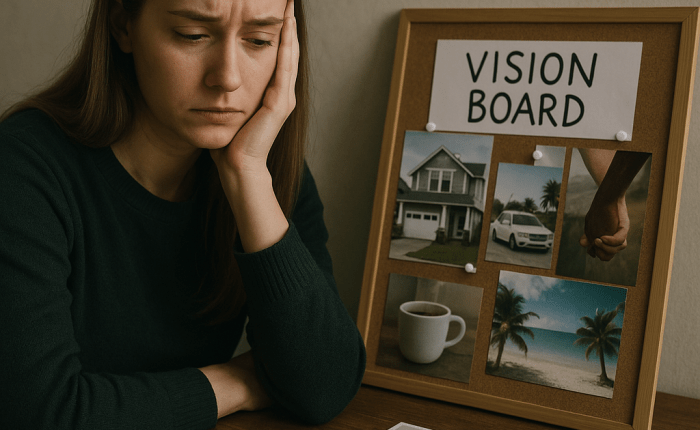
I remember once, after one of our rare calm seasons, we tried to dream again. We made a little vision board together — nothing extravagant, just things a normal couple would hope for. A peaceful home. A reliable car. A future that didn’t feel like walking through broken glass.

But his face went dark, the way it always did when anything felt too good.

He looked at me and said,

“God hates me. We will never get any of this.”

And just like that, the air changed.
The hope drained out of the room.
My body learned — again — that peace wasn’t safe, and happiness wasn’t to be trusted.

My Gut Reaction: Living with Public Anxiety, IBS, and a Submarine Emergency

My Gut Reaction: Living with Public Anxiety, IBS, and a Submarine Emergency

A funny, honest essay about navigating IBS, hidden anxiety, and one unforgettable moment in a submarine that led to personal healing.

I never considered myself an anxious person — but the swooshing in my gut, the bubbles, the ache — it happens too often to ignore. And it only ever happens in public places, which made me start to wonder: maybe this is anxiety.

We were on a little weekend getaway and decided to go to the Arkansas Inland Maritime Museum before heading home. The USS Razorback (SS 394) submarine is harbored on the Arkansas River. The tour starts in the visitor center, where I went to the restroom one last time — just to be safe.

Walking across the plank, I looked out at the foggy river, thinking, I love Arkansas; it’s so beautiful here. It was bizarre but amazing — a real submarine in the middle of the Arkansas River. It made me wonder if there were others.

Our tour guide opened the hatch door and pointed to the 14-foot ladder leading down into the vessel, instructing us to climb down. I was cursing my choice in shoes that morning. I wore wooden-heeled pumps, not knowing we were going on this spontaneous side adventure after breakfast.

I chose to be the last to go down. Each step made me tremble with fear.

She talked, leading us down narrow pathways, stepping through doorways. There was so much machinery, equipment, and living necessities squeezed into this tiny space. It was warm and damp, and you could still get the faintest waft of sweaty sailors.

I usually welcome warmth, but this day my belly was giving me a different type of heat. I knew I shouldn’t have eaten the eggs when we were not close to home. Eating eggs was always like playing roulette. I might have explosive diarrhea, I might not. We would wait and see. Of course, if I had known we were going on a side trip before heading home, I would have ordered something safer.

Every time we go out, I calculate the distance from the restaurant to home because these bathroom emergencies, we like to call them, had become a part of my life. When we go to shows or concerts, we always choose aisle seats so I don’t have to walk in front of a bunch of people, clenching my butt, praying I don’t pass gas in someone’s face.

But here we were in this submarine — tight and suffocating, with recycled air that clung to your skin. Not even a quarter of the way through our tour, I couldn’t hear what she was saying. All my focus was on the swooshing and bubbles in my intestines, calculating how long or how much time I had to climb up that dreaded ladder and get to the bathroom.

It wouldn’t have been so bad if we had been the only people on the tour. But there were others. And I was about to have to interrupt and explain my situation.

I crossed my arms across the top of my bloated belly as if to say, “No. I refuse to let you do this to me,” but honestly, I was praying I could just make it through the tour.

Then I felt it.

The drop — when my stomach contents fall into the next chamber like a trap door has opened. That’s the signal: time is running out. Once that happens, the rest of my system tends to follow suit in a panic. Maybe that’s why they call it “taking a dump” — because once it starts, it’s all downhill from there.

I raised my hand like a shy elementary student asking the teacher to go to the bathroom — but in a whisper, so no one close by could hear me, so they wouldn’t laugh and make fun of me.

I said quietly, “I think I’m going to throw up.”

I learned that if you tell them you’re about to toss your cookies, they are more sympathetic and quicker to get you out of there because no one wants to deal with vomit. This happened to me on a cave tour in Colorado. They stopped the entire group, handed me a barf bag I knew I wouldn’t need, while everyone waited for someone to rescue me and take me back above ground.

She led me to the porthole, climbed up to open the hatch, and stood there watching as I clumsily made my way up the ladder in my wooden-heeled shoes.

Once outside, I walked as fast as I possibly could to the bathroom, feeling it crowning like a baby fixing to be born. I don’t know about your bladder and other systems, but as soon as I see the bathroom, my systems think it’s time to release — steadfast, I keep my gaze on the ground, not wanting to make “eye contact” with the bathroom door.

I barely had time to pull my pants down before the rest of my digestive tract let go. It was a speedy, high-volume exit.

And that was it.

I breathed a sigh of relief, wiped the sweat off my forehead, and — being too embarrassed to return to the tour or wait for the next one — we drove on home.


That experience prompted me to reflect.

My stomach doesn’t betray me — as long as I don’t leave the comfort of my home. Conveniently, I work just down the driveway, so even work feels safe. But as soon as I round the corner to head toward town, leaving the comforts of our rural home, my gut will start doing its thing.

There have been times when I was driving that I felt I would pass out. It happened so often that I started keeping a closer eye on my glucose and blood pressure, thinking it could be a physical cause. But my vitals always came back normal.

Then I read something about how, when we’ve been through traumatic events, we often create an environment for ourselves that’s so comfortable we don’t want to leave it — and become afraid to.

And it dawned on me.

I have it really good at home. From the deck, we have a view of the mountains, surrounded by trees, and it’s just a short walk to a creek — everything I ever dreamed of and more. It even makes searching for vacation homes difficult, because not many places can beat the one I live in.

But leaving this wonderful, comfortable place gave me anxiety. And that anxiety was taking control of my life.

So I decided to start therapy.

When she asked why I was there, I told her I think I have anxiety — and how my gut liked to let loose in response. Little by little, she helped me peel back the layers to understand why it was happening.

That was two years ago. Now, I can safely go places — tours, car rides, even crowded events. The gut thing has only popped its ugly head up once recently, after getting bad news from two of my adult children — separate events in their lives, but both deeply upsetting.

I’m learning to live with a gut that feels everything — and to finally listen to what it’s been trying to tell me.


When You Take the Blame That Wasn’t Yours to Begin With

When You Take the Blame That Wasn’t Yours to Begin With

To Every Woman Still Carrying the Weight That Was Never Hers

I used to believe that everything was my fault.

The slammed doors, the silence, the yelling that followed the silence, the fists that followed the yelling—I took the blame for all of it. If dinner was cold, it was my fault. If he had a bad day, somehow I caused it. If he lost his temper, I should’ve known better. I should’ve stayed quiet. I should’ve smiled more. I should’ve been less.

When you live under the same roof as someone who thrives off control, you learn quickly that survival means shrinking yourself. It means bending until you barely resemble a person. It means learning the art of swallowing blame for things that never had anything to do with you—because arguing only brings pain, and agreeing brings temporary peace.

But what they don’t tell you is that even when you get out—when you finally pack the bags, find the courage, or flee in the middle of the night with nothing but your breath in your chest—that voice follows you.

Even in freedom, I found myself taking the blame for things that weren’t mine.

If a friend was upset, I’d replay our last ten conversations, convinced I did something wrong. If my boss looked stressed, I’d take on extra work, hoping it would ease a tension I didn’t cause. I’d apologize for everything. For asking questions. For not asking enough. For existing, sometimes. I was hunting for ways to feel terrible, and life kept handing me proof that I was right… because that’s what trauma does. It warps the lens.

But here’s the truth I’ve learned—he was wrong.

I was not the problem. I was not too sensitive. I was not too loud or too quiet or too emotional or too needy. I was not weak for staying. I was not selfish for leaving.

Healing isn’t linear, and it sure as hell isn’t clean. Some days, the guilt creeps back in like fog through a cracked window. But I catch it now. I see it for what it is: a ghost of the past, trying to convince me that I’m still that powerless woman I used to be.

I’m not her anymore.

I don’t carry blame that isn’t mine. I lay it down and walk away from it.

Now, I advocate. I speak. I write. I sit with other survivors and tell them: you are not crazy. You are not broken. And you are not to blame.

If you’re reading this and you’ve ever felt like the villain in your own story—take a breath. Hand back what was never yours to carry.

You deserve peace. You deserve love. And most of all, you deserve to be free from blame that was never yours to begin with.

You survived.

Now it’s time to thrive.

The Victim Mindset Is Keeping You Stuck

The Victim Mindset Is Keeping You Stuck

Why Blaming the Past Feels Safe—but Is Silently Sabotaging Your Growth

There’s a mindset that keeps people trapped—and often, they don’t even realize they’re in it. It shows up subtly, quietly, in the way someone reacts to life’s hardships. And over time, it becomes the lens through which everything is seen.

It’s the victim mindset.

It convinces you that life is just happening to you. That your circumstances, your past, and the way people have failed you are the reasons you can’t move forward. And while there may be truth in those hardships, staying stuck in that story only leads to one place: nowhere.

This mindset is especially dangerous because it feels justified. You’ve been hurt. Life has been unfair. Opportunities have slipped through your fingers. But the victim mindset doesn’t just acknowledge the pain—it builds a home in it. It keeps you focused on what’s been done to you rather than on what you can do now.

And the most painful part? Sometimes, it makes you push away the very help that could make a difference.

You might tell yourself that you’re independent—that you’ll figure it out alone. But if you’re rejecting real, practical help while still depending on handouts or the temporary kindness of others, that’s not strength. That’s survival. And survival is exhausting when there’s no plan to move beyond it.

When you stop asking yourself hard questions like, “What part am I playing in this?” or “What can I take responsibility for?”, you give your power away. It’s easier to blame the system, your past, or your circumstances. But blaming keeps you stuck. It keeps you from healing. And it lets you off the hook.

The truth is: you’re not powerless. You’re not broken. And you’re not doomed.

But if you’re constantly rejecting growth, avoiding discomfort, and refusing to let others help you in meaningful ways, you’re choosing stagnation. And deep down, you probably know it.

Real change is hard. Accepting help feels vulnerable. Facing your patterns takes courage. But that’s where transformation lives. It’s not in the blaming, the begging, or the surviving—it’s in the choosing.

You can’t heal what you refuse to take ownership of.
You can’t rise if you keep convincing yourself that you’re stuck.
And you can’t move forward if you keep turning your back on the help that’s already within reach.

Let this be the moment you get honest with yourself. Not to shame or guilt yourself—but to reclaim your power.

Because the victim mindset will always keep you stuck —and you deserve better than that.

I see this in my daughter. We have sent her to trade school twice, but she has dropped out both times. We paid off her car, paid her auto insurance for a year, and helped her pay for her own apartment.

And now she is in a worse place than before we did that, begging people for money.

My family members and I offer true, lasting help – like coming to stay with us so you can get on your feet, etc. – but she refuses. Instead, she chooses to remain in the chaos, her comfort zone.

Why You Always Zero In on What Hurts

Why You Always Zero In on What Hurts

When trauma teaches you to fear the good, trusting peace can feel like betrayal

Have you ever noticed how fast your mind finds the crack in the glass?

Something good happens—and before it even settles, you’ve already ruined it in your head.
You pass the test, then tell yourself you’ll probably fail the next one.
Someone says they’re proud of you, and you immediately wonder what they really meant.
You finally get a moment of peace, and instead of resting in it, you’re holding your breath waiting for it to explode.

That’s not you being dramatic.
That’s trauma.
That’s conditioning.

When you’ve lived in survival mode long enough—when love came with punishment, when silence meant danger, when even your joy got twisted into a weapon—you stop trusting anything that feels too good.

Your brain starts treating calm like a trap.
It looks for warning signs even when there aren’t any.
Because in your experience, the good things never came without a price.

So, of course, your mind zeroes in on what hurts.
That was your safety plan. That’s how you kept yourself alive.

You learned to listen for footsteps. You studied his moods like they were gospel. You walked on eggshells because they were safer than landmines.

So when someone tells you to “just think positive” or “celebrate the good,” it doesn’t land. It feels fake. It feels dangerous. Because in your world, hope always came back with bruises.

I remember the day I reached for help.

I wasn’t even expecting a miracle—just someone to see me. I told the truth. I admitted I was scared, confused, and unraveling. I laid it all out there: how small I felt, how broken I had become, how the God I was clinging to didn’t feel like He was anywhere near me anymore.

And the answer I got?

“Just go home and be a good wife.”

No rescue. No comfort. Just a command.
That broke something in me.
I learned right then: honesty doesn’t guarantee help. Hope can backfire.
So I stopped reaching. I started bracing harder. I got quieter.
Because at least silence couldn’t slap me in the face like that again.

That moment shaped me. And not in a holy way.

But here’s what I want to tell you—what someone should have told me:

You’re not negative.
You’re not broken.
You are conditioned. And you can unlearn it.

But not by pretending. Not by slapping affirmations over your scars.

It starts small. Like this:
When the voice comes up that says, “This won’t last,” or “You don’t deserve this,”
just pause.
Don’t fight it. Don’t obey it. Just notice it.

That voice isn’t your truth.
It’s your trauma.

And slowly, you can start choosing differently.

Not because you’re suddenly healed. But because for once, you’re finally allowed to be aware of how deep the damage goes—and how much more you were made for.

You’re allowed to want peace without fear.
You’re allowed to hold joy without bracing for pain.
You’re allowed to believe something good… might actually be good.

Even if your brain’s not there yet, you are.