Louder Than Necessary

Listening Past The Noise

Beep-beep-beep-beep, I hear the constant noise of a business just one mountain over from us. We often tell our guests that sound carries in this valley, and that is no lie. Today, it seems as though the breeze is bringing the sound my way. Du-du-du, mingling with the clank-ety clank of engines pushing and scraping. Another engine chugs to life. Beep-du-beep. It’s all day long.

My view, however, is textbook. The steep, not-so-gentle slope of the hill coming off our back patio dips ever downward into an overgrown brushy area of trees and leaves where deer often like to bed down. In the distance, I hear a man yell a sound that I cannot make out. Beeping and engines continue.

In front of me, dry leaves lay fallen. Winter’s blanket for the ground, our rocky soil welcomes the nourishment, chirps and cheeps, then the dee-dee-dee of a Chickadee. Walking out, I spooked the doves, hoping they would come back when they realized I was no threat. I love when winter delays its cold slap across the cheek. Mornings like this make the season bearable.

Deet-deet-deet, another machine’s noise, but that one beep above all will not stop. I try to tune it out, trying to focus on the chickadee and the titmouse and the occasional crow with the hawk. That relentless beep with its piercing signal, I see red. I can imagine there is a red light attached to the top of whatever is making that beeping noise. The cathedral chime plays in the key of C, humming, switching octaves as the gentle breeze passes by.  

Woodpecker calls to the chickadee, wondering why I’m here. I guess I came to listen to the business over the mountain, because beyond that, it’s hard to listen to anything else. The thing about the industry over the hill is that it isn’t even in my backyard. It doesn’t pertain to me. But the call of the birds, they are here, they are in my yard, in my trees. They pertain to me.

Isn’t that just like us? We want to focus on what’s happening around and beyond us, things that have nothing to do with us, because sometimes they’re louder and more evident than what actually matters. Sometimes, those things cause us more distress and keep us from enjoying the little things right in front of us. The birds and squirrels ignore the background noise; maybe we could learn from them.

A squirrel is hopping at the bottom of the hill, unfazed. Caw-caw-caw, says the crow. I hear the hum of the hot tub turning back on, working to keep the water at an ideal temperature. The breeze switches directions, proudly reminding me that it is winter, after all. Dark clouds peek over the mountain, shoving the sun to the side.

The beep of that business is the kind of sound they use to torture people, relentless, shrill, designed to drive you insane. Someone’s dog in the distance barks. Leaves rustle as the squirrel jumps, skips, and hops. What an enjoyable sight.

I take a swig of my lukewarm coffee and ponder:

If I didn’t mind missing the aviary conversations, I might wear headphones next time.
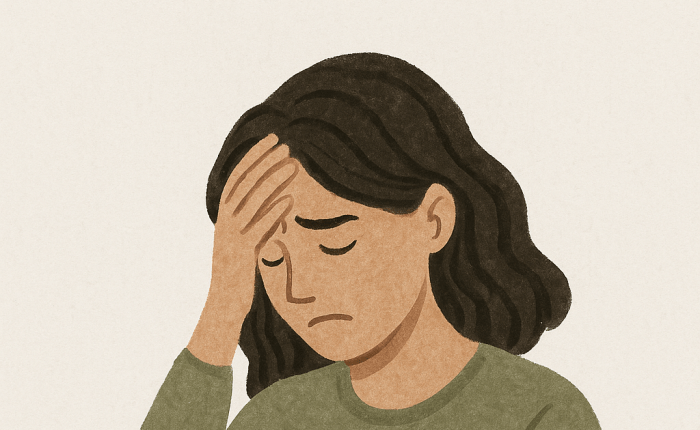
How to Recover After Someone Humiliates You

How to Recover After Someone Humiliates You

If something happened that left you shaky, ashamed, exposed, or suddenly doubting yourself, I want you to know this:

What you’re feeling is real. And it makes sense.

Most people have no idea what humiliation actually does to a person. They think it’s “just embarrassment.” They think you should shrug it off. But humiliation is a psychological wound. It hits the same part of your brain that reacts to physical pain. It knocks your confidence, your voice, and sometimes your sense of self out from under you.

And if no one ever taught you how to deal with this kind of emotional blow, you might be blaming yourself for a wound you never deserved.

Let’s walk through this slowly, in a way that makes space for your pain and gives you a way forward.


1. Something painful happened — you didn’t imagine it

Someone cut you down.
Someone used their words, tone, or power to make you feel small.
Someone spoke to you in a way that pierced straight through your dignity.

You weren’t “overreacting.”
You weren’t “too sensitive.”

You were caught off guard by a moment that should not have happened.

Humiliation exposes the person who delivered it — not the person who received it.


> “A painful moment happened to me. It does not define me.”


2. Your body responded because humiliation is a body-level injury

Most people don’t talk about this part, but humiliation hits the body first:

Your throat closes.
Your stomach flips.
Your face gets hot.
Your mind blanks out.
Your chest tightens.

This is your nervous system trying to protect you.

It doesn’t mean you’re weak.
It means you’re human.

Before you try to make sense of anything, let your body settle.

Try this:

Drop your shoulders

Loosen your jaw

Place your hand on your chest

Slow your exhale

Whisper, “I’m safe enough right now.”


You cannot think clearly in a body that feels attacked.


3. The wound came from the story your mind created afterward

There’s the event itself…
and then there’s the meaning your mind wrapped around it.

Humiliation tries to whisper things like:

“Everyone saw.”

“You looked foolish.”

“You should’ve known better.”

“They were right about you.”


But those thoughts aren’t truth.
They’re the bruise talking.

Say this gently: “The story I told myself was…”

Name it so it stops running the show in the dark.


4. Humiliation makes you want to hide — but hiding keeps the wound open

After you’re hurt like this, the instinct to disappear is strong.
You avoid eye contact, replay the moment, pull your energy inward.
You shrink as if shrinking will protect you.

But hiding is exactly what keeps the wound tender.

You don’t have to tell the whole story.
Just start with one simple sentence:

“Something happened that made me feel small.”

Speaking it breaks the isolation humiliation depends on.


5. Reclaim your authority over what the moment meant

When someone cuts you down, their voice can become louder in your head than your own.

But your dignity is still yours.

Say: “I get to decide what this means.”

Not them.
Not the moment.
Not the fear that followed.

You.

Every time you say it, something inside you stands a little straighter.


6. Give yourself what you needed in that moment

Ask yourself: “What did I need right then?”

Respect?
Understanding?
Protection?
Someone to step in?
Someone to say, “That wasn’t okay”?

Now ask: “How can I give even a small piece of that to myself now?”

This is what begins to repair the psychological wound.


Here’s the truth I want you to carry with you

You are not the smallness someone tried to put on you.
You are not the version of yourself their words tried to create.
You are not the moment that knocked your voice out of your chest.

You were wounded.
And wounded people don’t need shame — they need understanding, space, and a way back to themselves.

This is that way back.

👉 Download the Humiliation Recovery Guide

To the Trees

To the trees I will sing
To the trees I will scream
You will not see you affecting me

I will sing of love that’s lost
I will scream of what you cost
You will not hear me sing of love to thee

To the trees I will sing
To the trees I will scream
You will not see you affecting me

You will not see you affecting me

I will sing of darkness lit
I will scream of how hard this hit
You will not hear me screaming for you

To the trees I will sing
To the trees I will scream
You will not see you affecting me

You will not see you affecting me
You will not see you afflicting me

20140428-190147.jpg

20140428-190157.jpg