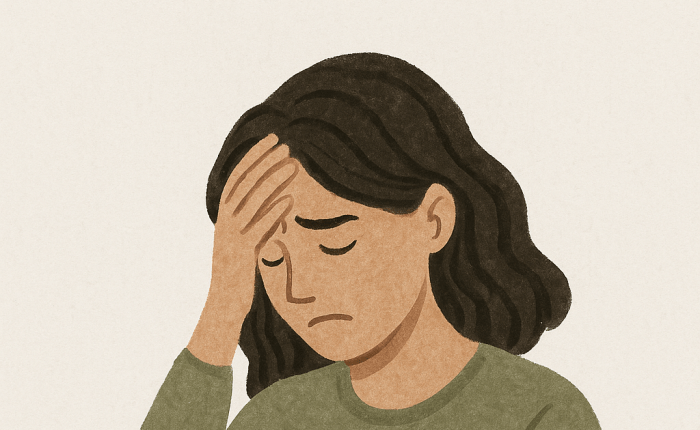
How to Recover After Someone Humiliates You

How to Recover After Someone Humiliates You

If something happened that left you shaky, ashamed, exposed, or suddenly doubting yourself, I want you to know this:

What you’re feeling is real. And it makes sense.

Most people have no idea what humiliation actually does to a person. They think it’s “just embarrassment.” They think you should shrug it off. But humiliation is a psychological wound. It hits the same part of your brain that reacts to physical pain. It knocks your confidence, your voice, and sometimes your sense of self out from under you.

And if no one ever taught you how to deal with this kind of emotional blow, you might be blaming yourself for a wound you never deserved.

Let’s walk through this slowly, in a way that makes space for your pain and gives you a way forward.


1. Something painful happened — you didn’t imagine it

Someone cut you down.
Someone used their words, tone, or power to make you feel small.
Someone spoke to you in a way that pierced straight through your dignity.

You weren’t “overreacting.”
You weren’t “too sensitive.”

You were caught off guard by a moment that should not have happened.

Humiliation exposes the person who delivered it — not the person who received it.


> “A painful moment happened to me. It does not define me.”


2. Your body responded because humiliation is a body-level injury

Most people don’t talk about this part, but humiliation hits the body first:

Your throat closes.
Your stomach flips.
Your face gets hot.
Your mind blanks out.
Your chest tightens.

This is your nervous system trying to protect you.

It doesn’t mean you’re weak.
It means you’re human.

Before you try to make sense of anything, let your body settle.

Try this:

Drop your shoulders

Loosen your jaw

Place your hand on your chest

Slow your exhale

Whisper, “I’m safe enough right now.”


You cannot think clearly in a body that feels attacked.


3. The wound came from the story your mind created afterward

There’s the event itself…
and then there’s the meaning your mind wrapped around it.

Humiliation tries to whisper things like:

“Everyone saw.”

“You looked foolish.”

“You should’ve known better.”

“They were right about you.”


But those thoughts aren’t truth.
They’re the bruise talking.

Say this gently: “The story I told myself was…”

Name it so it stops running the show in the dark.


4. Humiliation makes you want to hide — but hiding keeps the wound open

After you’re hurt like this, the instinct to disappear is strong.
You avoid eye contact, replay the moment, pull your energy inward.
You shrink as if shrinking will protect you.

But hiding is exactly what keeps the wound tender.

You don’t have to tell the whole story.
Just start with one simple sentence:

“Something happened that made me feel small.”

Speaking it breaks the isolation humiliation depends on.


5. Reclaim your authority over what the moment meant

When someone cuts you down, their voice can become louder in your head than your own.

But your dignity is still yours.

Say: “I get to decide what this means.”

Not them.
Not the moment.
Not the fear that followed.

You.

Every time you say it, something inside you stands a little straighter.


6. Give yourself what you needed in that moment

Ask yourself: “What did I need right then?”

Respect?
Understanding?
Protection?
Someone to step in?
Someone to say, “That wasn’t okay”?

Now ask: “How can I give even a small piece of that to myself now?”

This is what begins to repair the psychological wound.


Here’s the truth I want you to carry with you

You are not the smallness someone tried to put on you.
You are not the version of yourself their words tried to create.
You are not the moment that knocked your voice out of your chest.

You were wounded.
And wounded people don’t need shame — they need understanding, space, and a way back to themselves.

This is that way back.

👉 Download the Humiliation Recovery Guide

GRATITUDE IN REVERSE

What felt like the end of the world turned out to be my greatest gift.

Albert charged into the side door of our house, clad in polyester basketball shorts and a t-shirt adorned with armpit sweat.

I inhaled, holding my breath, thinking, “Oh boy, what now?”.

“Pastor Riggs told me to hand in my resignation.”

He wouldn’t say he got fired — that would sound too obvious, like admitting he did something wrong. No, he was ‘asked to resign.’ He explained, with pride, that he had told the pastor off and had a long list of reasons.

All I could think of was Thanksgiving back in 2007, when we had to eat spaghetti because he had been fired from a previous position helping a pastor grow his church. He didn’t have a proper title, so we called him the church evangelist — but really, he was the church shit stirrer. I can recall three men who have dared to tell Albert the truth to his face. None of these men was a hothead like him. They had boundaries, and he crossed them. One preacher even went so far as to call him “a wolf in sheep’s clothing.” I remember that night and still chuckle inwardly.

But this day felt like the end of an era—the end of our lives. We knew poverty. We survived it. But I was so tired of just surviving. So tired of pinching pennies, being the recipient of groceries because people felt sorry for us. I was downright exhausted. He told off the wrong guy, and that guy had the balls to stand up for himself. Kudos. But that didn’t help the situation. We were in dire straits. Bills do not miraculously stop just because you lose a job. No, electricity still runs, and a bill is still accumulating.

This is when he decided we would pursue his lifelong dream of starting a cleaning business.

“Oh gawd, yuck. I hate cleaning.” I thought. I did not want to do this. But being the obedient wife I was,

I said, “Okay.”

I was already at my wits’ end with him. I had even filed a restraining order earlier that year, thinking it would change him and he would be a different person. It only changed me. I became a different person. I was finding my voice.

We pushed along, started from scratch, and kept on scratching until we had a decent little cleaning business. It turned out it wasn’t as brutal as I thought it would be —cleaning, that is. Since he was OCD, I had learned to pay attention to detail.

I remember one time he was at work (I was a stay-at-home wife and mom), he may have been at bible college. Regardless, I spent all day cleaning the house. I wasn’t taught to keep a clean home. As a kid, my room was livable — clothes piled up, and I’d make a path to the bed and push them off to sleep. Dishes would overflow in the sink and onto the counters, even with a dishwasher sitting right there. My mom never asked for help — just pouted on weekends, complaining nobody helped her. But she never asked for help. I do not remember a single time my mom showed me how to wash dishes or asked me to wash them. But when I stayed the summer at my aunt’s house, she made me clean up after myself and even showed me how to clean behind the toilet.

So like I said, living with an OCD person – my husband – taught me to pay attention to detail.

Back to the part where I had cleaned all day, then he came home and went on a rampage:

“What have you been doing all day? Why does the house look like this? Get off your lazy ass and clean this fucking house!”

Nothing was lying around —not even a particle on the floor; everything had been freshly mopped and vacuumed. Do you know what he saw? A smudge on the corner of a mirror. Something I had missed. I cried that day. But I learned how to pay attention to detail on that day, too.

Cleaning houses felt a bit rewarding. I cleaned behind toilets and wiped baseboards, tops of door frames, and ledges on the doors. Top to bottom. No mirror had a smudge, and you could eat off the toilet seat. 10/10 would not recommend, but it would have been safe to do so.

As time went by, my disgust for him grew. But I could not figure out how to survive on my own with all these kids still living at home. It wasn’t until he got sick. Real sick. He ran a fever for over a week and refused to see a doctor. He would come downstairs and cry and whine like a baby, literally. Imagine a 3-year-old whining when they want their way. That was him. Then he would go back upstairs to sleep. He slept and slept. I would bring him soup, tea, water, and even made a homemade herbal remedy, which, for the first time in our 23-year marriage, he took. I welcomed the quietness his illness brought me, but I still performed my wifely duties of “in sickness and in health,”. Then went to clean the houses by myself. My daughter, who was in Christian school, would take a few days off to help me, but I found it easier to clean by myself than to go behind her to make sure she did it right. Not that she couldn’t clean, but this was our only income, and I didn’t feel I had room for mistakes.

Two more days went by, and he did not get out of bed. I got scared. I realized something was really wrong with him. He’s not faking or overreacting this time. So I called my sister-in-law and told her what was going on, and she said,

“You march up there and tell him he is going to the doctor, that he doesn’t have a choice.”

And so I did. He refused, crying and whining the whole time I was helping him dress, like a child not wanting to leave the park. Then, I drove him straight to the hospital. The doctor asked a bunch of questions that I answered, since he liked to withhold vital information. I even got the doctor to give him a prostate exam, which brings a smile to my face today. Turns out it was his appendix. It had been oozing into his body, and instead of being able to have the simple surgery, he had the large one where they cut from the top of the sternum to the pubic bone. I felt little sympathy for him, and he is a miserable patient. I was thankful to have work to go to. Grateful that we had just started an enormous organization project that was able to keep me away from seeing his green face and the black bile coming out of his mouth. His recovery took over six weeks. But by then, I’d already been cleaning solo for 8 — and I realized I could keep doing it. I could support my family without him. He had already lost interest in cleaning, wanting always to rush through the houses. He was there only to collect the check. Turns out he did not have as great a work ethic as he proclaimed.

When we finally separated, he left me the house and the business. A detailed story for another page, but what I thought was the end was just the beginning.

I thought when he got fired, we were going to do like we always did and move to another state and start all over. But instead, we started a cleaning business I didn’t want to start, and that business helped me support my then-6 kids at home. And without him there to tell me how the money was going to be spent frivolously, I was finally able to buy my kids’ school clothes and school supplies. For the first time, when they came to me with a need, I was able to supply it.

And that was the greatest gift of all.

What I Remember About My Mom…

What I remember about my mother is…

October 14, 2025

With a title like that, it makes me feel like it should go under the title of “what I can’t write about”. What I remember about my mother is how emotionally unstable she was when I was a teenager. But should I stay focused on that? I feel guilty even putting that on paper. Shouldn’t I be looking for the happy moments to remember about my mom? Like the time she took me to Disneyland? Or the time we simultaneously fell on the beach? Or the time we drove, what felt like across country, to visit family in Texas. Those were some fun times. And I suppose, if I allow myself, I can recall those and focus on them instead, but it feels like my mind wants to dwell on the events that scarred me or caused the most unrest.

Once, I remember in particular. She came home from church crying, sobbing, actually. Staring at her hands, hands that were starting to wither and constrict from years as a red cross nurse. When my 15-year-old-self asked her why she was crying.

She said, “Because Gayle wouldn’t talk to me . She wouldn’t even shake my hand”.

Gayle and my mom were best friends for a long time, then all of a sudden they weren’t. Some issue went down between my mom and Gayle’s son, Dave, the same one who molested me. And Gayle no longer wanted to be friends with my mom. I could not understand why she was allowing another human to cause her such distress. This woman controlled my mom’s every emotion. As a teenager, I wished my mom had been stronger. I knew that I was not able to go to my mom if I was in distress. She wouldn’t be able to handle it. I needed her to be emotionally available. I needed her to protect me. But instead, I had to be strong for her—a fifteen-year-old girl holding up a grown woman who couldn’t carry her own grief. She leaned on me like I was her anchor, her therapist.

What she wanted—what she demanded—was my undying devotion, my complete loyalty, maybe even my worship. But her constant victimhood repulsed me. The way she wallowed in it, wrapped herself in it like a favorite robe. She didn’t just live in that identity—she tried to pass it on to me. Now that I am an adult, she looks at me like I am broken. Like I am stuck in suffering, too fragile to stand on my own. But I’m not. I have already learned how to carry pain quietly. She doesn’t see that. She only sees what she wants to—someone who needs saving, so she can be the savior. But I don’t need her to rescue me. I need her to show up, like I needed when I was a teenager.

I remember my mom would go places on the weekends with her friends, and I would feel abandoned and neglected, wondering why she never took me. I suppose that is the life of a lonely only child. You get used to them keeping themselves occupied that you forget to invite them to places. Or maybe they stop asking because they always say no, like my last and only child at home.

I remember my mother being capitulating, emotionally distraught, and neglectful. It’s hard to put into words how exhausting it was to carry the emotional weight she dropped. I didn’t just have a mother—I had a fragile force of chaos that needed managing. I was the one steadying the ship, reading her moods like weather, preparing for storms. She needed me to be her anchor, her audience, her child-lover and devotee. But I needed her just to be a mother. I needed someone who could tell me everything was going to be okay. Instead, I spent most of my youth making her feel okay.

I also remember how she was so spiritual and sanctimonious until her family came around. She didn’t drink unless they were there. Now bear with me, I detect I am being a bit judgmental here, because I was raised in church and taught that drinking was sinful. So to see her drink when family came around seemed like a double standard. My adult self sees it a little differently now. I don’t know how to put it on paper. But good for her for choosing not to drink daily. Only allowing herself to let go of her inhibitions when the family was around.

I remember when I threw them a 25th anniversary party, I was a staunch Christian at the time, and I made sure EVERYONE knew that there was no alcohol allowed. So, they brought it in their ice chests, in the back of their cars. They would step outside to chug their beloved beer. I attempted to create order—purity—something untangled and clean. I wanted to make her proud, but I also wanted to undo the parts of her that embarrassed me, shamed me, weakened me. I wanted her to see me as strong, in control, untouched by the mess she seemed to bathe in. But the truth is, even then, I was still craving her approval, still hoping she’d finally see me—see what I was building to survive what she gave me.

Drinking is and was a thing my family does, has done, and still does. I did a genetic test, and it showed that specific genes inhibit my ability to produce dopamine. I can’t help but wonder if this is an inherited thing and why drinking and drugs are the go-to for dopamine hits in our family. Then I think about my mom and her pain pill addiction.  She’s not like the ones you would think of who take them to be high; she’s what we call functioning. She waits until a specific time of day. Then mixes it with a beer for the best effect. But cannot go a day without the pill. To do so would cause excruciating pain.

What I remember about my mom is how she wanted to file for grandparent rights because we were not letting her see the grandkids, because she wasn’t in church, or because she was drinking. Honestly, I do not remember the actual reason why we did that.  Again, it was self-righteousness on my part, but I remember that about my mom.

What I remember about my mom is how, when I turned my 22-year-old son in for molesting his sister, Mom was willing to stand by his side to testify on his behalf instead of standing by my daughter. THAT is what I remember about my mom. How she allows him to call her every week, how she gives him money, and how she accepts his letters. I know that is her grandson. It is my son. It hurts. It stings. But everyone assumes that “that is memaw,” and she can be weird like that. What devastates me isn’t just her loyalty to him. It’s what her loyalty costs. Her silence toward my daughter. Her refusal to draw a line. Her willingness to let me fracture. It’s like she needed to prove she could still be someone’s everything—and he gave her that opportunity. That kind of loyalty looks like love, but it isn’t love. It’s desperation. She’s always needed someone to cling to, to believe in, to fight for. I just never understood why it couldn’t be me.

What I remember is when she left my dad because she was so sure he was filming child pornography in their home. (He wasn’t) She still believes that to this day. Mom is delusional. Currently struggling with thinking someone has hacked her Facebook. Yes, it’s possible, but after looking at it multiple times, her FB is not being hacked. She has forgotten how to navigate it, and if FB upgrades, she will be even more confused and, with absolute certainty, think she is being hacked by someone else. There’s something hollow about watching your parent decline into paranoia. There’s grief in it, but also resentment. She still calls me like I’m her tech support, her lifeline, her handler. But I’ve been handling her my whole life. There’s no space to say, “I can’t do this anymore.” She wouldn’t hear it. She would only feel betrayed. Every time I try to step away, I feel like the bad daughter. But being her daughter has always felt like an assignment I didn’t ask for.

Reminding myself that I don’t have to decide right away whether to focus only on the “happy moments” or only on the painful ones. Memory is not tidy. It rarely divides neatly between joy and hurt. Often, the most actual writing comes when both are allowed to sit side by side.

I remember how, when she laughs, it is crackly, raspy. She has COPD from years of smoking. Laughter will send her into a coughing fit. Although the cough sounds congested, it is never productive; the phlegm persists.

I remember how mom goes silent when she is angry or feels wronged. Mom often feels like she has been wronged. She views life through a victim’s eyes.

When mom looks at me, she looks at me with pity, as if I am experiencing some horrible event. Yes, many times I have. But my daily life as a mom, wife, and office manager is not horrific, and I am not a victim because I go to work every day (well, technically not every day). It’s like she wants me to be wounded. Like she needs me to be just as broken as she is so she can understand me—or maybe justify herself. She calls it concern. But it feels like a projection. I’m not fragile. I’m tired. I’m functioning, flawed, healing—but I’m not living in a wound like she does. And every time she looks at me with those sad eyes, it’s like she’s trying to pull me back into her story, her suffering. I won’t go.

But still—I remember her. All of it. The good, the unbearable, the beautiful, the warped. I remember her as she was, not as I wish she had been. Maybe that’s the most honest kind of remembering there is. Not choosing sides between pain and peace, but letting them live together and letting them both be true. What I can’t write about is exactly what needs to be written. And maybe, somehow, that’s enough.