A funny, honest essay about navigating IBS, hidden anxiety, and one unforgettable moment in a submarine that led to personal healing.
I never considered myself an anxious person — but the swooshing in my gut, the bubbles, the ache — it happens too often to ignore. And it only ever happens in public places, which made me start to wonder: maybe this is anxiety.
We were on a little weekend getaway and decided to go to the Arkansas Inland Maritime Museum before heading home. The USS Razorback (SS 394) submarine is harbored on the Arkansas River. The tour starts in the visitor center, where I went to the restroom one last time — just to be safe.
Walking across the plank, I looked out at the foggy river, thinking, I love Arkansas; it’s so beautiful here. It was bizarre but amazing — a real submarine in the middle of the Arkansas River. It made me wonder if there were others.
Our tour guide opened the hatch door and pointed to the 14-foot ladder leading down into the vessel, instructing us to climb down. I was cursing my choice in shoes that morning. I wore wooden-heeled pumps, not knowing we were going on this spontaneous side adventure after breakfast.
I chose to be the last to go down. Each step made me tremble with fear.
She talked, leading us down narrow pathways, stepping through doorways. There was so much machinery, equipment, and living necessities squeezed into this tiny space. It was warm and damp, and you could still get the faintest waft of sweaty sailors.
I usually welcome warmth, but this day my belly was giving me a different type of heat. I knew I shouldn’t have eaten the eggs when we were not close to home. Eating eggs was always like playing roulette. I might have explosive diarrhea, I might not. We would wait and see. Of course, if I had known we were going on a side trip before heading home, I would have ordered something safer.
Every time we go out, I calculate the distance from the restaurant to home because these bathroom emergencies, we like to call them, had become a part of my life. When we go to shows or concerts, we always choose aisle seats so I don’t have to walk in front of a bunch of people, clenching my butt, praying I don’t pass gas in someone’s face.
But here we were in this submarine — tight and suffocating, with recycled air that clung to your skin. Not even a quarter of the way through our tour, I couldn’t hear what she was saying. All my focus was on the swooshing and bubbles in my intestines, calculating how long or how much time I had to climb up that dreaded ladder and get to the bathroom.
It wouldn’t have been so bad if we had been the only people on the tour. But there were others. And I was about to have to interrupt and explain my situation.
I crossed my arms across the top of my bloated belly as if to say, “No. I refuse to let you do this to me,” but honestly, I was praying I could just make it through the tour.
Then I felt it.
The drop — when my stomach contents fall into the next chamber like a trap door has opened. That’s the signal: time is running out. Once that happens, the rest of my system tends to follow suit in a panic. Maybe that’s why they call it “taking a dump” — because once it starts, it’s all downhill from there.
I raised my hand like a shy elementary student asking the teacher to go to the bathroom — but in a whisper, so no one close by could hear me, so they wouldn’t laugh and make fun of me.
I said quietly, “I think I’m going to throw up.”
I learned that if you tell them you’re about to toss your cookies, they are more sympathetic and quicker to get you out of there because no one wants to deal with vomit. This happened to me on a cave tour in Colorado. They stopped the entire group, handed me a barf bag I knew I wouldn’t need, while everyone waited for someone to rescue me and take me back above ground.
She led me to the porthole, climbed up to open the hatch, and stood there watching as I clumsily made my way up the ladder in my wooden-heeled shoes.
Once outside, I walked as fast as I possibly could to the bathroom, feeling it crowning like a baby fixing to be born. I don’t know about your bladder and other systems, but as soon as I see the bathroom, my systems think it’s time to release — steadfast, I keep my gaze on the ground, not wanting to make “eye contact” with the bathroom door.
I barely had time to pull my pants down before the rest of my digestive tract let go. It was a speedy, high-volume exit.
And that was it.
I breathed a sigh of relief, wiped the sweat off my forehead, and — being too embarrassed to return to the tour or wait for the next one — we drove on home.
That experience prompted me to reflect.
My stomach doesn’t betray me — as long as I don’t leave the comfort of my home. Conveniently, I work just down the driveway, so even work feels safe. But as soon as I round the corner to head toward town, leaving the comforts of our rural home, my gut will start doing its thing.
There have been times when I was driving that I felt I would pass out. It happened so often that I started keeping a closer eye on my glucose and blood pressure, thinking it could be a physical cause. But my vitals always came back normal.
Then I read something about how, when we’ve been through traumatic events, we often create an environment for ourselves that’s so comfortable we don’t want to leave it — and become afraid to.
And it dawned on me.
I have it really good at home. From the deck, we have a view of the mountains, surrounded by trees, and it’s just a short walk to a creek — everything I ever dreamed of and more. It even makes searching for vacation homes difficult, because not many places can beat the one I live in.
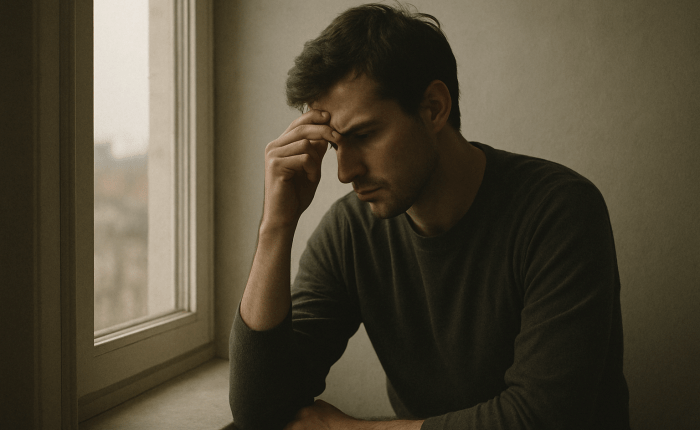
But leaving this wonderful, comfortable place gave me anxiety. And that anxiety was taking control of my life.
So I decided to start therapy.
When she asked why I was there, I told her I think I have anxiety — and how my gut liked to let loose in response. Little by little, she helped me peel back the layers to understand why it was happening.
That was two years ago. Now, I can safely go places — tours, car rides, even crowded events. The gut thing has only popped its ugly head up once recently, after getting bad news from two of my adult children — separate events in their lives, but both deeply upsetting.
I’m learning to live with a gut that feels everything — and to finally listen to what it’s been trying to tell me.


 Yoli's Write To Sanity