What positive events have taken place in your life over the past year?
This year has been one of the most unexpected beautiful years of my life, full of surprises, healing, and quiet miracles I did not always see coming.
It began with the joy of the birth of grandchild number ten and the sweet anticipation of number eleven already on the way. Every new little heartbeat in this family reminds me how wide my world is and how love continues to grow around me whether I am ready or not.
Our third short-term rental went online and stays booked. It amazes me to watch what I dreamed of into existence, and watch it take off and thrive. There is a quiet pride in that, a feeling of finally seeing hard work turn into something real.
Then came Colorado. Two weeks of pure beauty, with every turn revealing something that made me pause and breathe a little deeper. I did not realize how much I needed that trip until I was standing there, surrounded by mountains that made everything inside me feel a little clearer.
But the biggest changes this year happened within me.
After years of gut problems, I finally discovered the physical cause. That alone felt like a breakthrough I had been waiting for far too long. Therapy opened an even deeper door. I began to uncover the emotional weight I had been carrying and the trauma that had settled into my body. I started learning how to set boundaries and how to listen to the parts of myself I had ignored. I connected with my inner child, the version of me who needed comfort and understanding, and I finally began to give her that.
Along the way, I started feeling more comfortable in my own skin. Not the person I thought I was supposed to be, but the person I actually am. This shift feels real, even if it is still unfolding.
And perhaps one of the most meaningful steps I am taking this year is working on my book proposal. I’m not just dreaming about it, I’m doing it. This alone feels like reclaiming a part of myself I thought I lost.
When I look back, this year was not simply positive. It was transformative. It was a year of returning to myself in ways I never expected.
Being caught in the middle doesn’t feel like conflict — it feels like captivity. It feels like being stuck in a snare with no way to move without hurting someone. Like a mouse trap waiting to snap shut. Like you’re locked in a raccoon cage, unsure if speaking the truth will free you… or cost you everything.
People talk about “taking sides” like it’s simple. But when you’re caught in the middle of family, trauma, loyalty, and truth, nothing about it is simple.
It’s one of the loneliest places a person can stand.
What You’re Really Caught Between
Sometimes “caught in the middle” means choosing between two opinions.
But sometimes — like in my life — it means standing between your own child who was harmed and your own child who did the harming.
Between the daughter who still carries wounds and the son whose actions caused them.
Between the victim in your home and the perpetrator who shares your blood.
Between your mother — who continues contact with the perpetrator — and your daughter, the victim.
Between your loyalty as a mother and your integrity as a protector.
Between who you used to be and who you’re becoming.
Between the pressure to keep quiet and the truth that refuses to stay silent anymore.
It’s not two sides. It is layers of emotional conflict, guilt, fear, and responsibility colliding inside your chest.
Why This Position Freezes You
People say, “Just say what you feel,” but they don’t see what comes with it.
When you’re in the middle, speaking the truth feels dangerous.
You fear hurting someone you love. You fear being misunderstood. You fear being shunned. You fear being blamed for protecting the wrong person — when you know exactly who needs protection. You fear your mother’s reaction. You fear the silence, the withdrawal, the guilt she might use. You fear your childhood patterns pulling you back into old roles.
You fear becoming the target for finally telling the truth.
That fear freezes you. Not because you’re weak, but because you’ve carried too many people’s emotions for too long.
You’re Allowed to Step Out of the Middle
This is the truth many of us need spoken out loud:
You are not betraying anyone by protecting the victim. You are not abandoning someone by refusing to enable harmful choices. You are not wrong for saying, “Enough.” You are not required to cushion your truth to keep someone else comfortable. You can love someone and still say, “This crosses a line for me.” You can grieve what happened without sacrificing your integrity.
You are allowed to choose clarity over chaos. You are allowed to choose protection over appeasement. You are allowed to choose truth over silence.
You are allowed — fully allowed — to walk out of the middle.
How to Un-Freeze When You’re Caught in the Middle
Here are the steps that help you move from paralysis to clarity:
1. Name What’s Actually Happening
Write it plainly. Do not soften it for someone else’s comfort.
2. Ask What Aligns With Your Values
What decision reflects the kind of mother, woman, friend, or human you want to be?
3. Decide Who Truly Needs Protection
Protect the vulnerable one. Protect the honest one. Protect the one who did not choose this.
4. Set One Clear, Simple Boundary
Not a debate. Not a speech. A boundary.
“This is not okay with me.” “I won’t participate in this.” “I love you, but I cannot be involved if you continue this.”
5. Speak With Clarity and Compassion
Firm does not mean unkind. Compassion does not mean surrender.
6. Allow People to React However They React
They may: – Shame you – Guilt you – Pull away – Play victim – Get angry – Give the silent treatment
Their reaction belongs to them. It is not proof you did something wrong. It is evidence that you set a boundary they didn’t like.
7. Anchor Yourself After the Conversation
Your body may shake. Your stomach may twist. Old fears may roar.
That is normal.
Here are anchoring practices:
• Breathe: 4 seconds in, 6–8 out. • Hand on chest: “I am safe. I told the truth.” • Move your body: walk, stretch, shake out your hands. • Ground yourself: 5 things you see 4 things you can touch 3 things you hear 2 things you smell 1 thing you taste • Write what triggered you. • Remind yourself: “A trembling body is a brave body.” • Talk to someone who truly understands the situation.
Anchoring doesn’t erase fear — it prevents fear from dragging you back into silence.
Taking a Stand Doesn’t Make You Divisive
Taking a stand does not divide a family. Harm divides families. Silence divides families. Minimizing what happened divides families.
Standing for what’s right is clarity, not conflict.
Protecting a victim is integrity. Refusing to stand in the middle is courage.
A Soft, Steady Closing
There comes a moment when staying in the middle becomes impossible. Not because you stopped loving people. Not because you’re choosing sides out of anger. But because the truth finally whispers:
“You don’t belong in the snare anymore.”
Stepping out isn’t selfish — it’s sacred. It’s the moment you choose protection over silence, healing over guilt, and courage over captivity.
It’s the moment you finally allow yourself to stand somewhere solid — where your truth has room to breathe.
If something happened that left you shaky, ashamed, exposed, or suddenly doubting yourself, I want you to know this:
What you’re feeling is real. And it makes sense.
Most people have no idea what humiliation actually does to a person. They think it’s “just embarrassment.” They think you should shrug it off. But humiliation is a psychological wound. It hits the same part of your brain that reacts to physical pain. It knocks your confidence, your voice, and sometimes your sense of self out from under you.
And if no one ever taught you how to deal with this kind of emotional blow, you might be blaming yourself for a wound you never deserved.
Let’s walk through this slowly, in a way that makes space for your pain and gives you a way forward.
—
1. Something painful happened — you didn’t imagine it
Someone cut you down. Someone used their words, tone, or power to make you feel small. Someone spoke to you in a way that pierced straight through your dignity.
You weren’t “overreacting.” You weren’t “too sensitive.”
You were caught off guard by a moment that should not have happened.
Humiliation exposes the person who delivered it — not the person who received it.
—
> “A painful moment happened to me. It does not define me.”
—
2. Your body responded because humiliation is a body-level injury
Most people don’t talk about this part, but humiliation hits the body first:
Your throat closes. Your stomach flips. Your face gets hot. Your mind blanks out. Your chest tightens.
This is your nervous system trying to protect you.
It doesn’t mean you’re weak. It means you’re human.
Before you try to make sense of anything, let your body settle.
Try this:
Drop your shoulders
Loosen your jaw
Place your hand on your chest
Slow your exhale
Whisper, “I’m safe enough right now.”
You cannot think clearly in a body that feels attacked.
—
3. The wound came from the story your mind created afterward
There’s the event itself… and then there’s the meaning your mind wrapped around it.
Humiliation tries to whisper things like:
“Everyone saw.”
“You looked foolish.”
“You should’ve known better.”
“They were right about you.”
But those thoughts aren’t truth. They’re the bruise talking.
Say this gently: “The story I told myself was…”
Name it so it stops running the show in the dark.
—
4. Humiliation makes you want to hide — but hiding keeps the wound open
After you’re hurt like this, the instinct to disappear is strong. You avoid eye contact, replay the moment, pull your energy inward. You shrink as if shrinking will protect you.
But hiding is exactly what keeps the wound tender.
You don’t have to tell the whole story. Just start with one simple sentence:
“Something happened that made me feel small.”
Speaking it breaks the isolation humiliation depends on.
—
5. Reclaim your authority over what the moment meant
When someone cuts you down, their voice can become louder in your head than your own.
But your dignity is still yours.
Say: “I get to decide what this means.”
Not them. Not the moment. Not the fear that followed.
You.
Every time you say it, something inside you stands a little straighter.
—
6. Give yourself what you needed in that moment
Ask yourself: “What did I need right then?”
Respect? Understanding? Protection? Someone to step in? Someone to say, “That wasn’t okay”?
Now ask: “How can I give even a small piece of that to myself now?”
This is what begins to repair the psychological wound.
—
Here’s the truth I want you to carry with you
You are not the smallness someone tried to put on you. You are not the version of yourself their words tried to create. You are not the moment that knocked your voice out of your chest.
You were wounded. And wounded people don’t need shame — they need understanding, space, and a way back to themselves.
What felt like the end of the world turned out to be my greatest gift.
Albert charged into the side door of our house, clad in polyester basketball shorts and a t-shirt adorned with armpit sweat.
I inhaled, holding my breath, thinking, “Oh boy, what now?”.
“Pastor Riggs told me to hand in my resignation.”
He wouldn’t say he got fired — that would sound too obvious, like admitting he did something wrong. No, he was ‘asked to resign.’ He explained, with pride, that he had told the pastor off and had a long list of reasons.
All I could think of was Thanksgiving back in 2007, when we had to eat spaghetti because he had been fired from a previous position helping a pastor grow his church. He didn’t have a proper title, so we called him the church evangelist — but really, he was the church shit stirrer. I can recall three men who have dared to tell Albert the truth to his face. None of these men was a hothead like him. They had boundaries, and he crossed them. One preacher even went so far as to call him “a wolf in sheep’s clothing.” I remember that night and still chuckle inwardly.
But this day felt like the end of an era—the end of our lives. We knew poverty. We survived it. But I was so tired of just surviving. So tired of pinching pennies, being the recipient of groceries because people felt sorry for us. I was downright exhausted. He told off the wrong guy, and that guy had the balls to stand up for himself. Kudos. But that didn’t help the situation. We were in dire straits. Bills do not miraculously stop just because you lose a job. No, electricity still runs, and a bill is still accumulating.
This is when he decided we would pursue his lifelong dream of starting a cleaning business.
“Oh gawd, yuck. I hate cleaning.” I thought. I did not want to do this. But being the obedient wife I was,
I said, “Okay.”
I was already at my wits’ end with him. I had even filed a restraining order earlier that year, thinking it would change him and he would be a different person. It only changed me. I became a different person. I was finding my voice.
We pushed along, started from scratch, and kept on scratching until we had a decent little cleaning business. It turned out it wasn’t as brutal as I thought it would be —cleaning, that is. Since he was OCD, I had learned to pay attention to detail.
I remember one time he was at work (I was a stay-at-home wife and mom), he may have been at bible college. Regardless, I spent all day cleaning the house. I wasn’t taught to keep a clean home. As a kid, my room was livable — clothes piled up, and I’d make a path to the bed and push them off to sleep. Dishes would overflow in the sink and onto the counters, even with a dishwasher sitting right there. My mom never asked for help — just pouted on weekends, complaining nobody helped her. But she never asked for help. I do not remember a single time my mom showed me how to wash dishes or asked me to wash them. But when I stayed the summer at my aunt’s house, she made me clean up after myself and even showed me how to clean behind the toilet.
So like I said, living with an OCD person – my husband – taught me to pay attention to detail.
Back to the part where I had cleaned all day, then he came home and went on a rampage:
“What have you been doing all day? Why does the house look like this? Get off your lazy ass and clean this fucking house!”
Nothing was lying around —not even a particle on the floor; everything had been freshly mopped and vacuumed. Do you know what he saw? A smudge on the corner of a mirror. Something I had missed. I cried that day. But I learned how to pay attention to detail on that day, too.
Cleaning houses felt a bit rewarding. I cleaned behind toilets and wiped baseboards, tops of door frames, and ledges on the doors. Top to bottom. No mirror had a smudge, and you could eat off the toilet seat. 10/10 would not recommend, but it would have been safe to do so.
As time went by, my disgust for him grew. But I could not figure out how to survive on my own with all these kids still living at home. It wasn’t until he got sick. Real sick. He ran a fever for over a week and refused to see a doctor. He would come downstairs and cry and whine like a baby, literally. Imagine a 3-year-old whining when they want their way. That was him. Then he would go back upstairs to sleep. He slept and slept. I would bring him soup, tea, water, and even made a homemade herbal remedy, which, for the first time in our 23-year marriage, he took. I welcomed the quietness his illness brought me, but I still performed my wifely duties of “in sickness and in health,”. Then went to clean the houses by myself. My daughter, who was in Christian school, would take a few days off to help me, but I found it easier to clean by myself than to go behind her to make sure she did it right. Not that she couldn’t clean, but this was our only income, and I didn’t feel I had room for mistakes.
Two more days went by, and he did not get out of bed. I got scared. I realized something was really wrong with him. He’s not faking or overreacting this time. So I called my sister-in-law and told her what was going on, and she said,
“You march up there and tell him he is going to the doctor, that he doesn’t have a choice.”
And so I did. He refused, crying and whining the whole time I was helping him dress, like a child not wanting to leave the park. Then, I drove him straight to the hospital. The doctor asked a bunch of questions that I answered, since he liked to withhold vital information. I even got the doctor to give him a prostate exam, which brings a smile to my face today. Turns out it was his appendix. It had been oozing into his body, and instead of being able to have the simple surgery, he had the large one where they cut from the top of the sternum to the pubic bone. I felt little sympathy for him, and he is a miserable patient. I was thankful to have work to go to. Grateful that we had just started an enormous organization project that was able to keep me away from seeing his green face and the black bile coming out of his mouth. His recovery took over six weeks. But by then, I’d already been cleaning solo for 8 — and I realized I could keep doing it. I could support my family without him. He had already lost interest in cleaning, wanting always to rush through the houses. He was there only to collect the check. Turns out he did not have as great a work ethic as he proclaimed.
When we finally separated, he left me the house and the business. A detailed story for another page, but what I thought was the end was just the beginning.
I thought when he got fired, we were going to do like we always did and move to another state and start all over. But instead, we started a cleaning business I didn’t want to start, and that business helped me support my then-6 kids at home. And without him there to tell me how the money was going to be spent frivolously, I was finally able to buy my kids’ school clothes and school supplies. For the first time, when they came to me with a need, I was able to supply it.
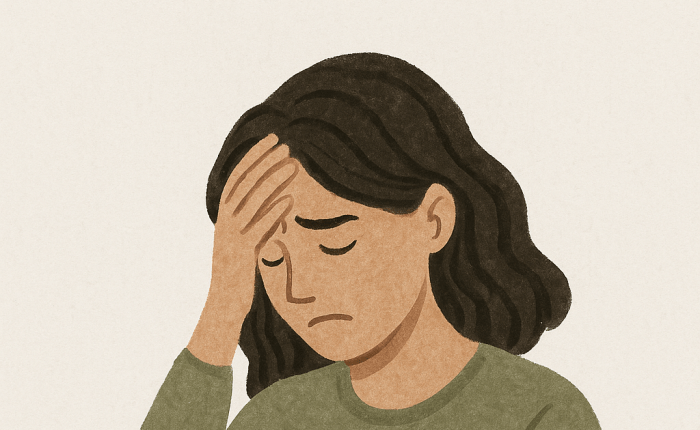
Suppressing my feelings is nothing new to me. It’s a learned trait. I’ve been doing it for 20 years or more … I hold in my feelings because I don’t want to hurt anyone yet I am breaking and bleeding inside, so instead I hurt myself.
I want to say all that’s on my mind but I fear the outcome. Fear that whatever I’ve been worrying about is really the truth and reality. Maybe I do live in a fantasy world. Maybe I do wish for things that are unattainable.
Is it too much to ask for stability? Too much to ask for something that my kids can put confidence in? At this point i feel like I should teach my kids to only put confidence in themselves because everyone else will





 Yoli's Write To Sanity