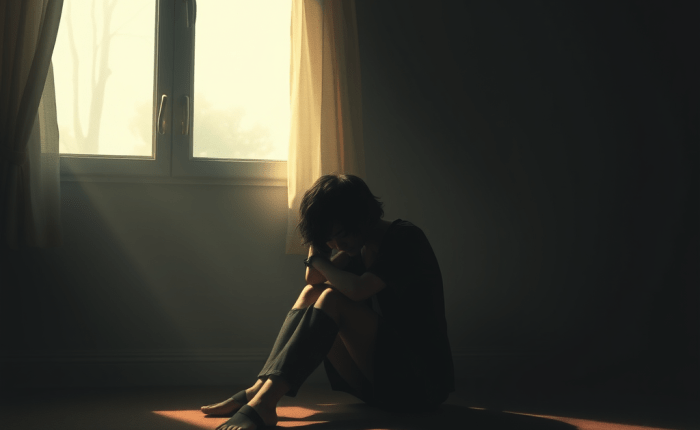
Are You Addicted to Suffering and Struggle?

Are You Addicted to Suffering and Struggle?

A Letter from One Survivor to Another

Let me take you on a journey through my own cycle of pain, one that might mirror your own.

For over 24 years, I stayed stuck in a cycle of pain. Not only because I didn’t know how to escape, but also because I had no idea that part of me had become used to it. That pain was my comfort zone; I needed it. That is not easy to admit, but maybe that is precisely what you need to hear.

I was addicted to pain and suffering. And maybe you are too.

Consider if your life feels like a constant storm, with relationships that break rather than build you, where chaos feels more familiar than peace.

Then I want you to consider that you might be emotionally addicted to your struggle. In the same way, someone is addicted to alcohol, cigarettes, or drugs.

You don’t choose to be this way on purpose, but you can choose to stop feeding it.

How Does Someone Get Addicted to Suffering?

It might seem strange, but when survival mode becomes your norm, your body adapts to a constant state of fear, anger, and panic, as if these emotions are essential for survival. The body doesn’t know good adrenaline from bad. It just feels familiar. So if pain becomes what you’re used to, your brain will start chasing it like a drug.

I’ll be honest with you: After I left my abusive husband, I thought I’d be free. But instead, I felt lost, restless, and empty. And one day I caught myself missing the drama, missing the feeling of being needed, even if it came with cruelty.

That’s when I realized I wasn’t just healing from abuse. I was detoxing from it.

Understanding the Chemistry of Emotion

Here’s what’s really going on under the surface. Every emotion you feel, love, sadness, rage, guilt, and fear, comes with a chemical mix your body gets used to. When you feel anger or shame over and over, your body floods itself with stress hormones like cortisol and adrenaline.

And your nervous system thinks,

 “Ah, yes. This is normal. Let’s keep doing that.”

It doesn’t care if it’s killing you emotionally.  It only cares that it’s predictable. That’s why breaking the cycle is more than leaving them. It’s also about rewiring your system and healing your brain. You have to teach your body that peace isn’t dull, it’s safe.

Why You Keep Ending Up With the Same Kind of Person

If you’ve ever escaped one toxic relationship only to fall into another… and another…

You’re not weak or broken.  You’re still addicted to the feelings that chaos brings.

And your brain will unconsciously lead you straight to people who can give you the fix.

It’s not because you want to be hurt, but it’s because deep down, you don’t yet believe you deserve anything else.

The Good News: You Can Break Free

I won’t lie to you. Healing is hard, but so is staying stuck. The difference is that one of them leads somewhere beautiful.

Here’s how I started the process, and you can too:

1. Tell yourself the truth.

Not the story you’ve been told or the lie that “this is just who you are.”

Say the truth, you are addicted to survival mode, and you were made for so much more.

2. Decide that it ends with you.

Not tomorrow, not when it gets easier. Right now.

You don’t need to hit another rock bottom to be done.

3. Catch yourself.

When the negative self-talk kicks in or when you feel that familiar urge to sabotage yourself, tell yourself, “I deserve better.

Then, breathe, even if you don’t believe it yet.

4. Let peace feel weird for a while.

Because it will, trust me. Quiet will feel loud, and safety will feel foreign.

That’s okay. Stay there anyway. Let yourself get used to calm.

5. Give it time. Give yourself grace.

This isn’t about perfection; it’s about persistence.

You’re teaching your nervous system a new language. That love doesn’t hurt, and peace doesn’t mean danger.

One More Thing,

You’re not broken. You’re not stupid for staying too long.  You were surviving.

And now? You’re waking up.

Your addiction to struggle isn’t your fault, but healing is your responsibility.

You deserve a life that doesn’t hurt. And it’s waiting for you, whenever you’re ready.
A Reflection on Grief

A Reflection on Grief

The Mourning Dove

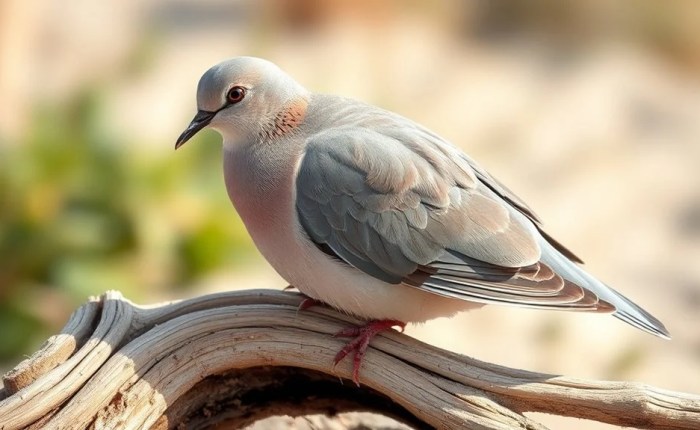
I remember the first time I noticed a mourning dove was at our backyard feeders. Its coo stood apart from the others. A sound that seemed to linger instead of passing through. I remember thinking how different it was, like a new voice I had not heard before.

I had read that mourning doves sometimes appear after a loved one has died, offering comfort. I wondered briefly whether that was true and whether it was meant for me or someone else. Then I did what I had learned to do over the years, I dismissed the thought. Too many beliefs I once held had not unfolded the way I thought they would, so it felt safer not to attach any meaning to this.

Later that afternoon, my husband called to tell me they found his brother. He had died in his car during the night. It was the end of his quiet battle with addiction.

That mourning dove stayed, reminding us of how fragile life is. And that people are delicate too. Potential and talent do not protect or shield us. My brother-in-law was profoundly gifted, a creator, a man with vision and skill in the horticulture world. But addiction did not care about any of that; it never does.

Now, three years later, a small flock visits our feeders regularly. Like grief, showing up a little here and there and sometimes all at once.

The mourning doves have become a regular presence in our lives, just like grief.

My husband lost his mom when he was 14. We lost my son in 2020, and now his brother. Sadness has a way of settling in quietly, rearranging our lives without permission. But the coo of the Mourning Dove reminds us to pause and notice that calm can exist alongside pain.

The word Mourning carries a lot of weight, yet the Dove itself is gentle. It does not exaggerate loss; it endures it. Instead of feeling like a symbol of sadness, it becomes a symbol of peace and survival. Encouraging us to persist after something irreversible happens, reminding us that love does not disappear when someone is gone.

Now, when I hear their coo at the feeders, I do not dismiss it. I stop, listen, and remember. I take that moment to whisper a prayer for my mother-in-law and husband because I understand that grief can show up at unexpected times, and that peace can make remembering them easier.

Tortured memories

Addicted to forget them

Yet scarred thoughts remain

Enslaved for the fix

Blacked out,

resting thoughts at peace

A soul gone too soon

Addiction and suicides

Fatal kiss

Why No One Can Cheer You Up (And Why You Don’t Want Them To)

Why No One Can Cheer You Up (And Why You Don’t Want Them To)

It’s not that you can’t feel better…it’s that you don’t trust better.

When you’re upset, it feels like nothing can touch you. Friends try to cheer you up, but their words bounce right off. You shut it down with,

“You don’t understand,” or “I can’t help the way I feel.”

Here’s the thing: you’re not wrong for wanting to sit in your feelings. Pain can feel safer than pretending everything’s okay. But sometimes, without realizing it, you hold on to that pain like proof. Proof that you were hurt, evidence that your feelings are real, proof that you’re not invisible.

And letting it go? That feels scary. Because misery, as heavy as it is, can start to feel familiar. Almost like home.

You’re not broken for feeling this way. You’ve just learned to live with despair for so long that happiness feels foreign. But here’s the truth: you deserve more than the familiar depression. You deserve peace, even if it feels uncomfortable at first.

Such was I. I lived in an abusive marriage for 24 years. When I finally dared to leave, I started reflecting and asked myself,

“Why had I stayed so long?”

In the future, I knew I didn’t want to make the same mistake. I didn’t want to end up in another abusive marriage. So I looked back at my past relationships, and they were all the same. Abusive.

Wow. Who am I? And why am I choosing this path?

That’s when I realized I had an addiction problem. I was addicted to pain—the pain and the drama of the chaos. I was stuck in a cycle, like a revolving door. So I constantly had to remind myself why I was leaving. I had to remind myself that I deserved better and that I should look for someone who was the complete opposite.

And that’s precisely what I did. Today, I stand on the other side of abuse. Stronger, freer, and committed to helping others find their own path out.

Need help?
If you or someone you know is struggling with addiction, emotional distress, or abuse, support is available 24/7:

  • Addiction Recovery: Call 866-606-0182 or visit our treatment center directory
  • Suicide & Crisis Lifeline: Dial 988 (free, confidential, 24/7)
  • Domestic Violence Hotline: Call 800-799-7233 or text START to 88788
  • Sexual Assault Hotline (RAINN): Call 800-656-4673 or visit online.rainn.org

You are not alone. There is help. There is hope. And you are worth the healing.

I’m addicted to pain

Apparently I’m still an addict

I keep finding myself in situations that I KNOW are going to cause me pain, yet I continue. I found this article on Pain Addiction. So I’m sharing with you. :

“Emotional pain can become an addiction. A negative feeling, such as anger, worry, grief, fear, or depression, can become so habitual that you cannot live without it. There are physical as well as mental reasons for emotional pain addiction.
When a person is continuously stressed by emotional pain, there are subtle changes in the body that create a dependency on stress-related chemistry. Changing habitual patterns of pain can be as difficult as giving up an addictive substance, such as nicotine, alcohol, or even heroin. The emotional pain addict unconsciously seeks out situations that are sure to result in pain. A history of prolonged, negative, stressful relationships is usually symptomatic of emotional pain addiction. The feelings of love and pain are so frequently associated that they become one and the same. Loving unavailable people and staying in intolerable relationships, for example, are signs that love and pain have become intertwined. There are many such pain-linked feelings in the repertoire of pain addiction. Understanding the physiological part of emotional pain addiction can make breaking these patterns easier.
The Physiology of Pain Addiction
On a physical level, the addiction is not really to pain, but primarily to free-flowing endorphins that accompany the pain. Endorphins are a hormone-like substance that the body releases whenever a pain or injury is experienced. They are very similar in structure and effect to the opiates, like heroin and morphine. Endorphins are pain-killers. When you stub your toe you feel a sharp pain, immediately followed by numbness, which accompanies the anaesthetizing endorphins. The feeling of numbness associated with endorphin release is not unpleasant and, in fact, can be an almost euphoric sensation. People who exercise vigorously are familiar with this feeling.
All strain on the body yields endorphins. Emotional stress, like physical stress, leads to strain. If the strain is constant, the body sends a continuous stream of endorphins, which results in a dull (and barely noticeable) anesthetic effect. When endorphin flooding is part of everyday life, the senses are actually deadened. Workaholics experience this, but just as in the toe-stubbing example, the feeling can be somewhat pleasant.
With sustained endorphin release you can still feel emotions, but only if they are intense, such as anger, rage, sorrow and fear. These trigger further endorphin release, which can lead to further emotional numbing. And once you become used to living an endorphin-filled existence, it is hard to give it up. With so much pain-killing substance running through your body, there is a sense of security that makes you feel safer in the world. It’s a shield inside the body that protects you from subtle feelings that are more difficult to block, like tenderness, vulnerability, and love.


Changing the Pattern
Once a person is addicted to pain, breaking the habit takes considerable strength. It also requires external support. The unconscious craving for stress and pain drives the isolated pain addict to make decisions that are based on need rather than wisdom. Unfortunately, emotional pain addicts do not usually have supportive relationships. They tend to gravitate towards partners who become a source of pain. Friends, family, and professional counselors are usually the best source of help. It is important that the support persons understand the inherent difficulty of withdrawal from pain addiction. If psychotherapy is used, it is helpful that the therapist be familiar with addictions and brain chemistry. Dynamic interventions seem to be the most effective approaches; they include Gestalt Therapy, the Intense-Feeling Process, and Bioenergetics.
Unfortunately, there are currently no Pain Addicts Anonymous or Pain-anon meetings, so it is up to friends, family, and professionals to help. But their effectiveness is limited if they do not grasp the true nature of pain addiction. Acknowledgment, encouragement, patience, and nurturance are the essential tools. Criticism, anger, and provoking guilt do not help the pain addict. On the contrary, they drive the pain addict deeper into the addiction.
Overcoming emotional pain addiction can take a long time. To the pain addict, a life without pain is completely unfamiliar. There are frequent reports of a frightening void that yearns to be filled when pain is no longer dominant. In many ways it’s like being without drugs after years of dependency. The goal is to replace stress with relaxation, chaotic relationships with supportive ones, and self-deprivation with self-nurturance.
It takes about six months to allow the system to function without the need for constant pain. The work, however, is not as difficult as it may seem, because positive changes are felt along the way. Life is filled with color instead of grayness, joy instead of dullness. Grace replaces tension, and a person’s natural beauty unfolds, in some cases for the very first time.
(thepositivemind.com)

Admitting I have a problem is half the cure, right?

IMG_4692.JPG