Are You Addicted to Suffering and Struggle?

Are You Addicted to Suffering and Struggle?

A Letter from One Survivor to Another

Let me take you on a journey through my own cycle of pain, one that might mirror your own.

For over 24 years, I stayed stuck in a cycle of pain. Not only because I didn’t know how to escape, but also because I had no idea that part of me had become used to it. That pain was my comfort zone; I needed it. That is not easy to admit, but maybe that is precisely what you need to hear.

I was addicted to pain and suffering. And maybe you are too.

Consider if your life feels like a constant storm, with relationships that break rather than build you, where chaos feels more familiar than peace.

Then I want you to consider that you might be emotionally addicted to your struggle. In the same way, someone is addicted to alcohol, cigarettes, or drugs.

You don’t choose to be this way on purpose, but you can choose to stop feeding it.

How Does Someone Get Addicted to Suffering?

It might seem strange, but when survival mode becomes your norm, your body adapts to a constant state of fear, anger, and panic, as if these emotions are essential for survival. The body doesn’t know good adrenaline from bad. It just feels familiar. So if pain becomes what you’re used to, your brain will start chasing it like a drug.

I’ll be honest with you: After I left my abusive husband, I thought I’d be free. But instead, I felt lost, restless, and empty. And one day I caught myself missing the drama, missing the feeling of being needed, even if it came with cruelty.

That’s when I realized I wasn’t just healing from abuse. I was detoxing from it.

Understanding the Chemistry of Emotion

Here’s what’s really going on under the surface. Every emotion you feel, love, sadness, rage, guilt, and fear, comes with a chemical mix your body gets used to. When you feel anger or shame over and over, your body floods itself with stress hormones like cortisol and adrenaline.

And your nervous system thinks,

 “Ah, yes. This is normal. Let’s keep doing that.”

It doesn’t care if it’s killing you emotionally.  It only cares that it’s predictable. That’s why breaking the cycle is more than leaving them. It’s also about rewiring your system and healing your brain. You have to teach your body that peace isn’t dull, it’s safe.

Why You Keep Ending Up With the Same Kind of Person

If you’ve ever escaped one toxic relationship only to fall into another… and another…

You’re not weak or broken.  You’re still addicted to the feelings that chaos brings.

And your brain will unconsciously lead you straight to people who can give you the fix.

It’s not because you want to be hurt, but it’s because deep down, you don’t yet believe you deserve anything else.

The Good News: You Can Break Free

I won’t lie to you. Healing is hard, but so is staying stuck. The difference is that one of them leads somewhere beautiful.

Here’s how I started the process, and you can too:

1. Tell yourself the truth.

Not the story you’ve been told or the lie that “this is just who you are.”

Say the truth, you are addicted to survival mode, and you were made for so much more.

2. Decide that it ends with you.

Not tomorrow, not when it gets easier. Right now.

You don’t need to hit another rock bottom to be done.

3. Catch yourself.

When the negative self-talk kicks in or when you feel that familiar urge to sabotage yourself, tell yourself, “I deserve better.

Then, breathe, even if you don’t believe it yet.

4. Let peace feel weird for a while.

Because it will, trust me. Quiet will feel loud, and safety will feel foreign.

That’s okay. Stay there anyway. Let yourself get used to calm.

5. Give it time. Give yourself grace.

This isn’t about perfection; it’s about persistence.

You’re teaching your nervous system a new language. That love doesn’t hurt, and peace doesn’t mean danger.

One More Thing,

You’re not broken. You’re not stupid for staying too long.  You were surviving.

And now? You’re waking up.

Your addiction to struggle isn’t your fault, but healing is your responsibility.

You deserve a life that doesn’t hurt. And it’s waiting for you, whenever you’re ready.
Life After Suicide Loss Is Lived in the Present Moment

Life After Suicide Loss Is Lived in the Present Moment

Lessons From the Tufted Titmouse

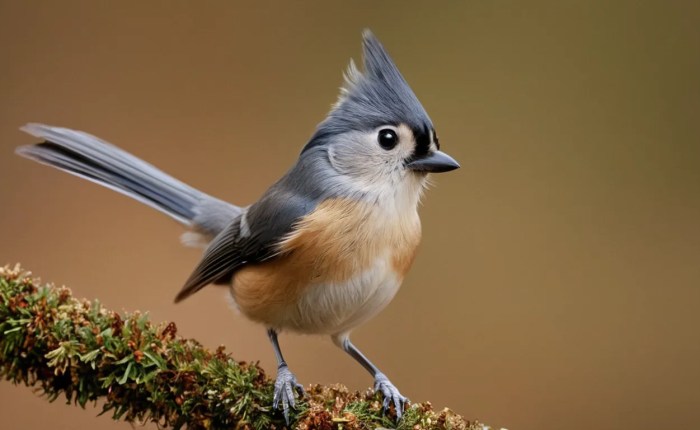
This morning, I was noticing the Tufted Titmouse at my feeders. It is a small, alert bird with a soft voice and a steady presence. A symbol of healing, but not in the way people often think. It is not promising closure or answers. It tells us to keep going even when life has permanently changed.

After losing a child, life stops making sense, and grief collapses time. The future feels unreachable, and the past feels too heavy to carry. Most days are not about hope or meaning; they are about surviving the stage you are in. The Tufted Titmouse reminds us to stay present, do what the moment requires, nothing more. It isn’t suggesting that we “move on.” It invites us to survive this moment, then the next.

The bird’s small, persistent movements mirror how we, as bereaved parents, can continue living through each season. Maybe you are just surviving, fragment by fragment. But getting up and feeding yourself is showing up. Saying their name and breathing through waves that come without warning does not weaken us; it is an endurance that strengthens us.

The titmouse is also known for its song, reminding us how important it is to speak our child’s name, tell their story, and to allow our grief to have a voice. Silence can isolate us. Sharing does not mean we are stuck; it means our love did not end. It does not mean “everything happened for a reason.”  But it does imply that life still has purpose, even while we carry this permanent loss.

Some days, noticing something simple in nature may feel like the only thing that can ground us. It’s a Tufted Titmouse at the feeder, a windchimes melody, a foggy morning of calm. These moments do not minimize our loss; they remind us that we are still here, even when our hearts are broken. The Titmouse teaches us to live with grief rather than resolve it. Strength is not the absence of sorrow; it is learning how to carry it.

Why Gratitude Feels So Hard When You Are Hurting

Why Gratitude Feels So Hard When You Are Hurting

And why the practice of gratitude cuts deeper for survivors

Gratitude feels impossible when you are still bleeding inside.
People tell you to practice gratitude as if it were a magic cure. They do not understand that when you have lived with someone who tore you down, gratitude is not a natural instinct. Survival is because you learned to scan for danger, not beauty. You learned to brace for the next blow instead of celebrating the wins.

So when someone says, “What are you grateful for?” your mind goes silent. You think you have nothing because, for so long, everything good has come with a price. Gratitude does not bloom in a war zone.

·  Misery becomes familiar, even when it hurts.
There is a strange comfort in what you already know, even if it’s toxic. Misery becomes a routine; you wake up with it every day. You sleep with it, you breathe it in, and it becomes the lens through which you see. Anything that contradicts your story feels wrong.

When people ask you to be grateful, it feels like they are asking you to betray your own truth.

For someone who lives in abuse, admitting there is still good in the world feels contradictory. It feels like letting your guard down.

·  Gratitude exposes the grief you have been avoiding
Finding even one small thing to be grateful for forces you to slow down, breathe, and feel. And feeling is terrifying when you’ve spent years shutting down your own emotions just to survive.

Gratitude is not fake; it’s risky. The moment you acknowledge something good, it feels like you’re ignoring everything you lost, everything you tolerated, and everything that broke you. Gratitude brings the grief to the surface, and most days, you are already carrying more than anyone sees.

·  But the smallest piece of gratitude can crack the prison walls
You do not have to write a list, and you do not have to be grateful for your trauma, the lessons, or the strength it gave you.

Forget all that.

Begin with one tiny thing, one moment where you felt safe or seen. Maybe a time you felt free to breathe. Was it a quiet morning? Or is it the fact that you left?. Maybe it is the way you no longer flinch at sudden movements.

Gratitude is not about pretending everything is fine. It is about recognizing the small signs that you are no longer living under someone else’s control.

One point of light in the dark, just one thing that reminds you that you survived. Something that proves your life is not finished, and once you find that one thing, even if it is small, you are no longer stuck in the same old story.

Why Happiness Makes You Nervous

Why Happiness Makes You Nervous

For the girl who thinks the tightness in her chest is normal

Good times make you nervous, don’t they?

You don’t call it fear—you call it “being cautious,” or “not getting your hopes up.” But the truth is quieter: you’re not used to peace. For so long, love has felt like tension, panic, apologizing, overthinking, and walking around someone else’s moods like they’re landmines.

So when something finally goes right… Your whole body glitches.

You look around, waiting for the explosion.
You wait for the tone in his voice to shift.
You wait for the moment he decides you’re “too sensitive,” “too emotional,” or “too much.”

And if nothing happens right away, your brain fills the silence with dread: Is this the part where it all turns again?
You don’t trust happiness—not because you’re broken, but because you’ve survived too long without it.

Girls like us learn early that peace feels like a trap.
A setup.
A calm before the next storm.

No one told you that real love isn’t supposed to feel like bracing for impact.
No one told you that safety isn’t the same thing as “keeping the peace.”
No one told you that if your body relaxes only when he isn’t home… that’s not comfort. That’s survival.

Listen, sweetheart—if happiness feels foreign, it’s not because you’re incapable of it.
It’s because someone taught you to expect pain.

And here’s the part I wish someone had whispered to me sooner:
You don’t have to keep living in the story where fear feels like love. You don’t have to keep shrinking yourself just to fit into a relationship that was never safe to begin with.

Real peace doesn’t make you nervous.
Real love doesn’t make you flinch.
And real happiness doesn’t feel like a setup—it feels like finally coming home to yourself.

You deserve that kind of happiness.
And I promise… it won’t explode.

When someone ties despair to God Himself, it buries you in a deeper kind of fear. You stop dreaming. You stop believing in the better. And every time life gets quiet, you brace yourself, because you know the calm never lasts.

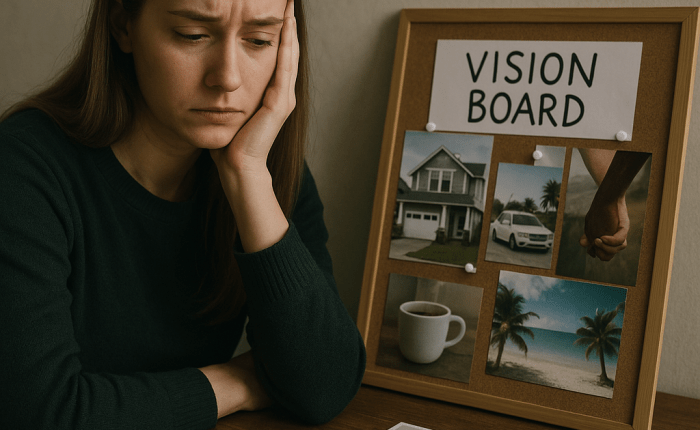
I remember once, after one of our rare calm seasons, we tried to dream again. We made a little vision board together — nothing extravagant, just things a normal couple would hope for. A peaceful home. A reliable car. A future that didn’t feel like walking through broken glass.

But his face went dark, the way it always did when anything felt too good.

He looked at me and said,

“God hates me. We will never get any of this.”

And just like that, the air changed.
The hope drained out of the room.
My body learned — again — that peace wasn’t safe, and happiness wasn’t to be trusted.

Why You Always Zero In on What Hurts

Why You Always Zero In on What Hurts

When trauma teaches you to fear the good, trusting peace can feel like betrayal

Have you ever noticed how fast your mind finds the crack in the glass?

Something good happens—and before it even settles, you’ve already ruined it in your head.
You pass the test, then tell yourself you’ll probably fail the next one.
Someone says they’re proud of you, and you immediately wonder what they really meant.
You finally get a moment of peace, and instead of resting in it, you’re holding your breath waiting for it to explode.

That’s not you being dramatic.
That’s trauma.
That’s conditioning.

When you’ve lived in survival mode long enough—when love came with punishment, when silence meant danger, when even your joy got twisted into a weapon—you stop trusting anything that feels too good.

Your brain starts treating calm like a trap.
It looks for warning signs even when there aren’t any.
Because in your experience, the good things never came without a price.

So, of course, your mind zeroes in on what hurts.
That was your safety plan. That’s how you kept yourself alive.

You learned to listen for footsteps. You studied his moods like they were gospel. You walked on eggshells because they were safer than landmines.

So when someone tells you to “just think positive” or “celebrate the good,” it doesn’t land. It feels fake. It feels dangerous. Because in your world, hope always came back with bruises.

I remember the day I reached for help.

I wasn’t even expecting a miracle—just someone to see me. I told the truth. I admitted I was scared, confused, and unraveling. I laid it all out there: how small I felt, how broken I had become, how the God I was clinging to didn’t feel like He was anywhere near me anymore.

And the answer I got?

“Just go home and be a good wife.”

No rescue. No comfort. Just a command.
That broke something in me.
I learned right then: honesty doesn’t guarantee help. Hope can backfire.
So I stopped reaching. I started bracing harder. I got quieter.
Because at least silence couldn’t slap me in the face like that again.

That moment shaped me. And not in a holy way.

But here’s what I want to tell you—what someone should have told me:

You’re not negative.
You’re not broken.
You are conditioned. And you can unlearn it.

But not by pretending. Not by slapping affirmations over your scars.

It starts small. Like this:
When the voice comes up that says, “This won’t last,” or “You don’t deserve this,”
just pause.
Don’t fight it. Don’t obey it. Just notice it.

That voice isn’t your truth.
It’s your trauma.

And slowly, you can start choosing differently.

Not because you’re suddenly healed. But because for once, you’re finally allowed to be aware of how deep the damage goes—and how much more you were made for.

You’re allowed to want peace without fear.
You’re allowed to hold joy without bracing for pain.
You’re allowed to believe something good… might actually be good.

Even if your brain’s not there yet, you are.

My People

My People

My people are positive thinkers. They believe in the good and see the good in others. They stand by me through every challenge, loving me not for what I can give but for who I am. My people lift me up, even when I feel drained from giving too much. They remind me to grow, to rise, to become the best version of myself.

When I think about my people today, I also think about where we came from—those whose blood and spirit still flow through me.

My people were Irish, transplanted to America. But for what? What freedom were they searching for? Perhaps they sought escape from the weight of strict religion—only to find themselves bound again by another form of it.

I was told we were also part Cherokee. I held onto that story with pride, feeling its truth even without proof. Maybe somewhere in my lineage, someone loved a Native soul, and their spirit found its way into mine. I feel it in the pull of the water, the whisper of the wind, the pulse of the earth beneath my feet.

I wonder what my Irish ancestors worshipped. They weren’t always Catholic or God-centered, I’m sure. I feel too much spiritual energy in my veins to believe they were ever confined to one god or doctrine. I imagine they were people of the land—forest lovers and wildflower smellers—souls who found divinity in nature itself.

Whether Irish or Native, I know my ancestors were connected to the earth, to Spirit, to something larger than themselves. Their reverence for nature runs through my blood, stronger than any written creed.

And today, my people are here with me—my children, my husband, my grandchildren—the ones who carry the same light, the same hope, the same heartbeat of all who came before us.

One Truth in Many Beliefs

One Truth in Many Beliefs

Religion comes in many shapes, colors, and languages. Each tradition uses its own words, rituals, and practices. But when I look past the surface, I see the same core ideas repeated over and over, just dressed differently. Whether it’s Christianity, Islam, Buddhism, or even the Law of Attraction, there’s a thread that runs through them all.

Ramadan, Fasting, and the Practice of Discipline

Take Ramadan, for instance. the ninth month on the Islamic calendar. Muslims fast from sunrise to sunset. No food. No water. It’s a strict discipline that resets the mind, body, and spirit.

It’s not quite like biblical fasting, where the abstention could last for days without reprieve. With Ramadan, you can eat and drink at night, which some might liken to intermittent fasting. But spiritual fasting in any form is always about more than just food. It’s about focus. Sacrifice. Clarity.

Yet there’s always a way to “beat the system” if you want to. A fast with set hours can become routine. Disciplined, yes. But also predictable. It makes me wonder, is the spirit of the practice lost when it becomes mechanical?

Same Prayers, Different Tongues

The Bible says, “Whatever you ask in prayer, believing, you will receive.”
The Law of Attraction says, “Ask. Believe. Receive.”

Different words. Same principle.

In fact, many belief systems teach that our thoughts create reality. Speak it. Think it. Envision it. And it will manifest.

The power of belief is universal.

Rituals, Symbols, and the Sacred

In Catholicism, the Eucharist is a sacred ceremony. It’s deeply symbolic: incense fills the air, holy water is sprinkled, and the priest places a piece of bread on your tongue. The lighting is dim, the setting reverent.

To an outsider, it might resemble a mystical ritual, something ancient and ceremonial, similar to what you might see in witchcraft or manifestation rites. But again, the goal is the same: connection with the divine.

One Law with Many Names

Every tradition has some version of this:
What you do comes back to you.

  • Christians call it sowing and reaping.
  • Hindus and Buddhists call it karma.
  • The secular world calls it cause and effect, or vibration.

The Golden Rule echoes it perfectly: “Do unto others as you would have them do unto you.”

It’s everywhere — spoken in every language, in every tradition.

Cleanliness, Purity, and Discipline

“Cleanliness is next to godliness.” That phrase may not be a direct quote from the Bible, but the message is biblical. Christians are warned against drunkenness. Muslims abstain from alcohol altogether. Pork is considered unclean in both Islam and the Old Testament.

There’s a shared desire across cultures to separate from what corrupts, to seek purity—whether physical, spiritual, or mental.

Giving Power a Name

Everyone thanks someone. God. Allah. Buddha. The Universe. Divine Energy.
There’s always a higher power.

But I’ve come to wonder:
What if that higher power isn’t the one we elevate above ourselves?

What if the divine… is within?

The “I Am” Within Us

In the Bible, God tells Moses: “I am that I am.”

He was declaring himself the source, the essence of all being. But he was also saying something more profound: “I am whatever you say I am.”

Think about that.

When I say,

  • “I am a mother.”
  • “I am a survivor.”
  • “I am love.”
  • “I am enough.”

I am invoking divinity. That phrase — “I am” — is sacred. It’s power. It is creation. It is identity.

The spirit lives within. The answers are within. The power is within.

Positive Thinking and the Thought-Life Connection

Philippians tells us to think on things that are true, noble, lovely, and good.
Positive thinking teaches us to avoid toxic thoughts because they affect our lives.
It’s the same idea. Again.

The power of thought. The power of words. This is a universal law — not owned by one religion, but revealed in all of them.

Does Every Religion Have a Devil?

In Christianity, Satan plays a prominent role as the deceiver, the accuser. But I find myself asking: Do other religions have a “devil”?

Do Muslims have a Satan?
Does Buddhism have a devil figure?
Or is this idea of a singular dark enemy unique to Christianity?

That’s a question worth digging into.

Sometimes I think Christians give Satan too much credit. They attribute every hardship to him, giving him more power than he deserves. Maybe that’s precisely what he wants.

But perhaps the real enemy isn’t external at all.
Maybe it’s internal, fear, ego, anger, or doubt.

Even Atheism Holds a Place for God

Even an atheist, by declaring “There is no God,” acknowledges the idea of God.
They define their position in relation to Him.
It’s been said that there are no atheists on their deathbed. Maybe that’s true. Maybe not. But the instinct to reach for something beyond this life seems built into us.

Omnism: The Path of Many Roads

There’s a belief called Omnism — the idea that all religions hold some truth, that each one offers a piece of the divine puzzle.

They’re not all about clothes or dietary laws. They’re about how we think, how we act, and how we love.

Because love is another universal.
Love never fails. Love endures all things. Love makes the world go round.

Final Thoughts: The Universal “I Am”

In the end, I believe this:
There is one Spirit. One Energy. One Truth.
Many names. Many faces. Many paths.
But at the center of it all is the divine I Am.” The one that lives within you and me.

You are the vessel.
You are the voice.
You are the I Am.

Not All Storms Are Destructive

Not All Storms Are Destructive

“The wise man in the storm prays God not for safety from danger but for deliverance from fear. It is the storm within which endangers him, not the storm without.” –  Ralph Waldo Emerson

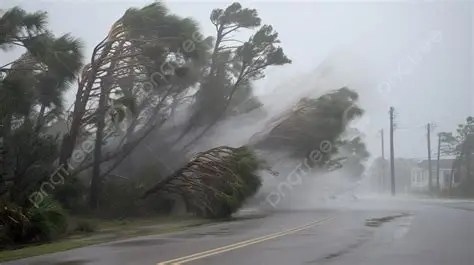
It was black outside, dark as night.  The wind was blowing so hard that the tops of the trees were bowed, touching the ground. Our trailer shook from the wind’s fury.  Alvarado was rural in those days, with no audible tornado sirens.  It would not have mattered. We did not have a storm shelter and did not know where one was located.  I grabbed my son and we sat in the middle of the living room floor. I held him tight, rocking back and forth. “What time I am afraid I will trust in thee. When I am afraid, I will trust in thee. What time I am afraid I will trust in thee.” I quoted repeatedly. Praying, “Please, God, protect us. Please do not let anything happen. What time I am afraid I will trust in thee.”  I was shivering, not from cold but from fear. The wind whipped around the trailer.  I am sure there was thunder, but I only remember the wind and the feeling that I could be transported into the heavens at any moment. 

People have often asked me, “What is worse, a tornado or an earthquake?” I used to answer, “Earthquake, because you can predict a tornado.”  But living in the infamous “Tornado Alley” has caused me to change that answer.

I have heard Preachers say, “You’re either entering a storm, in a storm, or coming out of a storm.” Although this statement might be true, it is such a pessimistic philosophy.

Bear with me while I give you some statistics.  In 2022, 1,329 tornadoes were reported in the US. 160 of them were in Texas. Only one of them hit Houston, the biggest city in Texas. Harris County (Houston) has the most tornadoes reported in the state. From 1950 to 2022, 246 tornadoes were reported.  That averages to 3 a year. If Houston is only seeing three tornadoes a year, then what is Houston doing during the other 362 days of the year?  Are they stressing about the next approaching storm? Are they talking about how horrible they have it because they go through so many storms?

The only thing affected by the storm that day was my faith. There was no damage to any of the surrounding homes.

“I am not afraid of storms for I am learning how to sail my ship.” – Louisa May Alcott.

You cannot or should not live each day worrying about the next storm of life headed your way, nor should you fixate on the one that just passed.  Not all storms are destructive.  Most are just a sideshow, a distraction. Enjoy the days in between the storms. Don’t worry yourself sick about the things you cannot control.  It usually isn’t as bad as you imagined.

Question Everything

Question Everything

“Learn from yesterday, live for today, hope for tomorrow.  The important thing is not to stop questioning.” – Albert Einstein

Have you ever asked God, “Why?”

Have you ever questioned His existence?

Have you ever screamed out in agony, wondering why YOU even exist?

Have you ever wondered how a “loving God” could allow such pain and suffering?

Have you ever sat in a puddle of your own tears and felt you couldn’t go on?

Have you ever felt the hatred burning in your bones?

Have you ever tried to wake up, hoping it was just a nightmare?

Have you ever sought answers but found none?

Have you ever wondered, “Why me?”

Have you ever put on a fake smile so that you didn’t have to talk about it?

Have you ever wanted to start all over?

Have you ever wanted to give up? Everyday?

Have you ever wondered why you couldn’t get on the good side of life?

Have you ever felt cursed?

Have you ever felt depressed and regretted so much of your life?

I have.

“The power to question is the basis of all human progress.” – Indira Gandhi

How many times have you been told that you should never question God? I lost count of the times I was told that.  But guess what? He understands.  We were born questioning everything around us.  That is how we learn and grow.  The only ignorant question is the one that is never asked.  Asking questions clears confusion, gives us a better understanding of any given situation, and helps us find answers.  Questions help solve problems.  It is absolutely fine to question our life; it shows that we do not accept our current position or status and that we are willing to improve.

What I Should Have Said Was…

What I Should Have Said Was…

What I should have said was:
“Oh wow! That’s a unique name. Where did you come up with it?”

But instead, I said:

“P?? That’s a boy’s name.”

My oldest son and his wife were expecting their first child, my first granddaughter. I remember the night they called to share the fantastic news that they were having a girl.

“Do you have any names picked out?” I asked.

With pride and excitement, they told me the name they had chosen.
In my old-lady shock, I blurted out:

“P? Why do you want to name her that? That’s a boy’s name!”

I didn’t realize how in love they were with that name. To my embarrassment, I later learned the error of my disappointing words. What I should have said was:

“Oh wow, that’s really cute.”

Even though at the time I had never heard that name used for a girl, I’ve met a few girls with that name since then. I’ll tell you what, when I hear baby name announcements now, I say things like:

“Ohhh, that’s unique!” or

“Sweet!”

Or, I immediately look it up to see what the name means.

Irie means God’s grace looking down on us.

It was too late to look up the meaning of “P.” It didn’t matter how hard I tried to smooth it over; I said what I said, and what has been said cannot be unsaid.

Turns out “P” means keeper of the parks and nature, the perfect name for a little girl who loves the outdoors. Like a wildflower growing in an unexpected place, her name bloomed in my heart, slowly, then all at once.

These days, I keep my Grandma mouth in check. I’ve learned the art of the polite pause, long enough to Google and nod appreciatively.

I’ve also learned that names, like people, grow on you. And sometimes, the name you couldn’t understand becomes the name you can’t imagine living without.
Now, when I call out to little “P” and she turns around with that curious sparkle in her eyes, I think…

“What a perfect name for such a wild and wonderful little girl.”