When You Take the Blame That Wasn’t Yours to Begin With

When You Take the Blame That Wasn’t Yours to Begin With

To Every Woman Still Carrying the Weight That Was Never Hers

I used to believe that everything was my fault.

The slammed doors, the silence, the yelling that followed the silence, the fists that followed the yelling—I took the blame for all of it. If dinner was cold, it was my fault. If he had a bad day, somehow I caused it. If he lost his temper, I should’ve known better. I should’ve stayed quiet. I should’ve smiled more. I should’ve been less.

When you live under the same roof as someone who thrives off control, you learn quickly that survival means shrinking yourself. It means bending until you barely resemble a person. It means learning the art of swallowing blame for things that never had anything to do with you—because arguing only brings pain, and agreeing brings temporary peace.

But what they don’t tell you is that even when you get out—when you finally pack the bags, find the courage, or flee in the middle of the night with nothing but your breath in your chest—that voice follows you.

Even in freedom, I found myself taking the blame for things that weren’t mine.

If a friend was upset, I’d replay our last ten conversations, convinced I did something wrong. If my boss looked stressed, I’d take on extra work, hoping it would ease a tension I didn’t cause. I’d apologize for everything. For asking questions. For not asking enough. For existing, sometimes. I was hunting for ways to feel terrible, and life kept handing me proof that I was right… because that’s what trauma does. It warps the lens.

But here’s the truth I’ve learned—he was wrong.

I was not the problem. I was not too sensitive. I was not too loud or too quiet or too emotional or too needy. I was not weak for staying. I was not selfish for leaving.

Healing isn’t linear, and it sure as hell isn’t clean. Some days, the guilt creeps back in like fog through a cracked window. But I catch it now. I see it for what it is: a ghost of the past, trying to convince me that I’m still that powerless woman I used to be.

I’m not her anymore.

I don’t carry blame that isn’t mine. I lay it down and walk away from it.

Now, I advocate. I speak. I write. I sit with other survivors and tell them: you are not crazy. You are not broken. And you are not to blame.

If you’re reading this and you’ve ever felt like the villain in your own story—take a breath. Hand back what was never yours to carry.

You deserve peace. You deserve love. And most of all, you deserve to be free from blame that was never yours to begin with.

You survived.

Now it’s time to thrive.
The Victim Mindset Is Keeping You Stuck

The Victim Mindset Is Keeping You Stuck

Why Blaming the Past Feels Safe—but Is Silently Sabotaging Your Growth

There’s a mindset that keeps people trapped—and often, they don’t even realize they’re in it. It shows up subtly, quietly, in the way someone reacts to life’s hardships. And over time, it becomes the lens through which everything is seen.

It’s the victim mindset.

It convinces you that life is just happening to you. That your circumstances, your past, and the way people have failed you are the reasons you can’t move forward. And while there may be truth in those hardships, staying stuck in that story only leads to one place: nowhere.

This mindset is especially dangerous because it feels justified. You’ve been hurt. Life has been unfair. Opportunities have slipped through your fingers. But the victim mindset doesn’t just acknowledge the pain—it builds a home in it. It keeps you focused on what’s been done to you rather than on what you can do now.

And the most painful part? Sometimes, it makes you push away the very help that could make a difference.

You might tell yourself that you’re independent—that you’ll figure it out alone. But if you’re rejecting real, practical help while still depending on handouts or the temporary kindness of others, that’s not strength. That’s survival. And survival is exhausting when there’s no plan to move beyond it.

When you stop asking yourself hard questions like, “What part am I playing in this?” or “What can I take responsibility for?”, you give your power away. It’s easier to blame the system, your past, or your circumstances. But blaming keeps you stuck. It keeps you from healing. And it lets you off the hook.

The truth is: you’re not powerless. You’re not broken. And you’re not doomed.

But if you’re constantly rejecting growth, avoiding discomfort, and refusing to let others help you in meaningful ways, you’re choosing stagnation. And deep down, you probably know it.

Real change is hard. Accepting help feels vulnerable. Facing your patterns takes courage. But that’s where transformation lives. It’s not in the blaming, the begging, or the surviving—it’s in the choosing.

You can’t heal what you refuse to take ownership of.
You can’t rise if you keep convincing yourself that you’re stuck.
And you can’t move forward if you keep turning your back on the help that’s already within reach.

Let this be the moment you get honest with yourself. Not to shame or guilt yourself—but to reclaim your power.

Because the victim mindset will always keep you stuck —and you deserve better than that.

I see this in my daughter. We have sent her to trade school twice, but she has dropped out both times. We paid off her car, paid her auto insurance for a year, and helped her pay for her own apartment.

And now she is in a worse place than before we did that, begging people for money.

My family members and I offer true, lasting help – like coming to stay with us so you can get on your feet, etc. – but she refuses. Instead, she chooses to remain in the chaos, her comfort zone.

Why You Always Zero In on What Hurts

Why You Always Zero In on What Hurts

When trauma teaches you to fear the good, trusting peace can feel like betrayal

Have you ever noticed how fast your mind finds the crack in the glass?

Something good happens—and before it even settles, you’ve already ruined it in your head.
You pass the test, then tell yourself you’ll probably fail the next one.
Someone says they’re proud of you, and you immediately wonder what they really meant.
You finally get a moment of peace, and instead of resting in it, you’re holding your breath waiting for it to explode.

That’s not you being dramatic.
That’s trauma.
That’s conditioning.

When you’ve lived in survival mode long enough—when love came with punishment, when silence meant danger, when even your joy got twisted into a weapon—you stop trusting anything that feels too good.

Your brain starts treating calm like a trap.
It looks for warning signs even when there aren’t any.
Because in your experience, the good things never came without a price.

So, of course, your mind zeroes in on what hurts.
That was your safety plan. That’s how you kept yourself alive.

You learned to listen for footsteps. You studied his moods like they were gospel. You walked on eggshells because they were safer than landmines.

So when someone tells you to “just think positive” or “celebrate the good,” it doesn’t land. It feels fake. It feels dangerous. Because in your world, hope always came back with bruises.

I remember the day I reached for help.

I wasn’t even expecting a miracle—just someone to see me. I told the truth. I admitted I was scared, confused, and unraveling. I laid it all out there: how small I felt, how broken I had become, how the God I was clinging to didn’t feel like He was anywhere near me anymore.

And the answer I got?

“Just go home and be a good wife.”

No rescue. No comfort. Just a command.
That broke something in me.
I learned right then: honesty doesn’t guarantee help. Hope can backfire.
So I stopped reaching. I started bracing harder. I got quieter.
Because at least silence couldn’t slap me in the face like that again.

That moment shaped me. And not in a holy way.

But here’s what I want to tell you—what someone should have told me:

You’re not negative.
You’re not broken.
You are conditioned. And you can unlearn it.

But not by pretending. Not by slapping affirmations over your scars.

It starts small. Like this:
When the voice comes up that says, “This won’t last,” or “You don’t deserve this,”
just pause.
Don’t fight it. Don’t obey it. Just notice it.

That voice isn’t your truth.
It’s your trauma.

And slowly, you can start choosing differently.

Not because you’re suddenly healed. But because for once, you’re finally allowed to be aware of how deep the damage goes—and how much more you were made for.

You’re allowed to want peace without fear.
You’re allowed to hold joy without bracing for pain.
You’re allowed to believe something good… might actually be good.

Even if your brain’s not there yet, you are.

GRATITUDE IN REVERSE

What felt like the end of the world turned out to be my greatest gift.

Albert charged into the side door of our house, clad in polyester basketball shorts and a t-shirt adorned with armpit sweat.

I inhaled, holding my breath, thinking, “Oh boy, what now?”.

“Pastor Riggs told me to hand in my resignation.”

He wouldn’t say he got fired — that would sound too obvious, like admitting he did something wrong. No, he was ‘asked to resign.’ He explained, with pride, that he had told the pastor off and had a long list of reasons.

All I could think of was Thanksgiving back in 2007, when we had to eat spaghetti because he had been fired from a previous position helping a pastor grow his church. He didn’t have a proper title, so we called him the church evangelist — but really, he was the church shit stirrer. I can recall three men who have dared to tell Albert the truth to his face. None of these men was a hothead like him. They had boundaries, and he crossed them. One preacher even went so far as to call him “a wolf in sheep’s clothing.” I remember that night and still chuckle inwardly.

But this day felt like the end of an era—the end of our lives. We knew poverty. We survived it. But I was so tired of just surviving. So tired of pinching pennies, being the recipient of groceries because people felt sorry for us. I was downright exhausted. He told off the wrong guy, and that guy had the balls to stand up for himself. Kudos. But that didn’t help the situation. We were in dire straits. Bills do not miraculously stop just because you lose a job. No, electricity still runs, and a bill is still accumulating.

This is when he decided we would pursue his lifelong dream of starting a cleaning business.

“Oh gawd, yuck. I hate cleaning.” I thought. I did not want to do this. But being the obedient wife I was,

I said, “Okay.”

I was already at my wits’ end with him. I had even filed a restraining order earlier that year, thinking it would change him and he would be a different person. It only changed me. I became a different person. I was finding my voice.

We pushed along, started from scratch, and kept on scratching until we had a decent little cleaning business. It turned out it wasn’t as brutal as I thought it would be —cleaning, that is. Since he was OCD, I had learned to pay attention to detail.

I remember one time he was at work (I was a stay-at-home wife and mom), he may have been at bible college. Regardless, I spent all day cleaning the house. I wasn’t taught to keep a clean home. As a kid, my room was livable — clothes piled up, and I’d make a path to the bed and push them off to sleep. Dishes would overflow in the sink and onto the counters, even with a dishwasher sitting right there. My mom never asked for help — just pouted on weekends, complaining nobody helped her. But she never asked for help. I do not remember a single time my mom showed me how to wash dishes or asked me to wash them. But when I stayed the summer at my aunt’s house, she made me clean up after myself and even showed me how to clean behind the toilet.

So like I said, living with an OCD person – my husband – taught me to pay attention to detail.

Back to the part where I had cleaned all day, then he came home and went on a rampage:

“What have you been doing all day? Why does the house look like this? Get off your lazy ass and clean this fucking house!”

Nothing was lying around —not even a particle on the floor; everything had been freshly mopped and vacuumed. Do you know what he saw? A smudge on the corner of a mirror. Something I had missed. I cried that day. But I learned how to pay attention to detail on that day, too.

Cleaning houses felt a bit rewarding. I cleaned behind toilets and wiped baseboards, tops of door frames, and ledges on the doors. Top to bottom. No mirror had a smudge, and you could eat off the toilet seat. 10/10 would not recommend, but it would have been safe to do so.

As time went by, my disgust for him grew. But I could not figure out how to survive on my own with all these kids still living at home. It wasn’t until he got sick. Real sick. He ran a fever for over a week and refused to see a doctor. He would come downstairs and cry and whine like a baby, literally. Imagine a 3-year-old whining when they want their way. That was him. Then he would go back upstairs to sleep. He slept and slept. I would bring him soup, tea, water, and even made a homemade herbal remedy, which, for the first time in our 23-year marriage, he took. I welcomed the quietness his illness brought me, but I still performed my wifely duties of “in sickness and in health,”. Then went to clean the houses by myself. My daughter, who was in Christian school, would take a few days off to help me, but I found it easier to clean by myself than to go behind her to make sure she did it right. Not that she couldn’t clean, but this was our only income, and I didn’t feel I had room for mistakes.

Two more days went by, and he did not get out of bed. I got scared. I realized something was really wrong with him. He’s not faking or overreacting this time. So I called my sister-in-law and told her what was going on, and she said,

“You march up there and tell him he is going to the doctor, that he doesn’t have a choice.”

And so I did. He refused, crying and whining the whole time I was helping him dress, like a child not wanting to leave the park. Then, I drove him straight to the hospital. The doctor asked a bunch of questions that I answered, since he liked to withhold vital information. I even got the doctor to give him a prostate exam, which brings a smile to my face today. Turns out it was his appendix. It had been oozing into his body, and instead of being able to have the simple surgery, he had the large one where they cut from the top of the sternum to the pubic bone. I felt little sympathy for him, and he is a miserable patient. I was thankful to have work to go to. Grateful that we had just started an enormous organization project that was able to keep me away from seeing his green face and the black bile coming out of his mouth. His recovery took over six weeks. But by then, I’d already been cleaning solo for 8 — and I realized I could keep doing it. I could support my family without him. He had already lost interest in cleaning, wanting always to rush through the houses. He was there only to collect the check. Turns out he did not have as great a work ethic as he proclaimed.

When we finally separated, he left me the house and the business. A detailed story for another page, but what I thought was the end was just the beginning.

I thought when he got fired, we were going to do like we always did and move to another state and start all over. But instead, we started a cleaning business I didn’t want to start, and that business helped me support my then-6 kids at home. And without him there to tell me how the money was going to be spent frivolously, I was finally able to buy my kids’ school clothes and school supplies. For the first time, when they came to me with a need, I was able to supply it.

And that was the greatest gift of all.

When Pain Feels Familiar, And Peace Feels Like ARisk

When Pain Feels Familiar, And Peace Feels Like ARisk

It’s not your fault you feel this way. But you don’t have to stay there.

Sometimes it feels like emotions happen to us, like the weather.
“I guess I’m just sad today.”
“It is what it is.”

But here’s the part no one tells you:

You might not get to choose the feeling that shows up. But you do have a say in how long it stays there.

When we’ve been through trauma or long-term hurt, sadness, or pain can start to feel familiar. It’s almost comforting in a strange way. We stop trying to feel better because part of us doesn’t trust that “feeling better” is even possible. So we sit in the sadness like it’s the only place we belong.

Sometimes, without realizing it, we even let the pain in like a guest who shows up uninvited…. and we don’t ask it to leave. Not because we want to suffer, but because suffering is what we know. It feels predictable. Safe. Normal.

But here’s the truth:

You’re allowed to feel your feelings, and you’re allowed to move through them.

Pain doesn’t have to be your home anymore. You deserve moments of peace, even if they feel unfamiliar at first, because you deserve better.

It took me over 20 years to realize that I deserved better. I sat in my pain day after day—wishing it would go away, wanting it to stop—but doing nothing about it because it had become my comfort zone. I was stuck in a rut and had no idea how to pull myself out.

But once I finally recognized that I did deserve better, the answers started coming to me — sometimes slowly, and sometimes all at once.

I spent 24 years in an abusive marriage. Today, I can say I made it out. And so can you.

Why No One Can Cheer You Up (And Why You Don’t Want Them To)

Why No One Can Cheer You Up (And Why You Don’t Want Them To)

It’s not that you can’t feel better…it’s that you don’t trust better.

When you’re upset, it feels like nothing can touch you. Friends try to cheer you up, but their words bounce right off. You shut it down with,

“You don’t understand,” or “I can’t help the way I feel.”

Here’s the thing: you’re not wrong for wanting to sit in your feelings. Pain can feel safer than pretending everything’s okay. But sometimes, without realizing it, you hold on to that pain like proof. Proof that you were hurt, evidence that your feelings are real, proof that you’re not invisible.

And letting it go? That feels scary. Because misery, as heavy as it is, can start to feel familiar. Almost like home.

You’re not broken for feeling this way. You’ve just learned to live with despair for so long that happiness feels foreign. But here’s the truth: you deserve more than the familiar depression. You deserve peace, even if it feels uncomfortable at first.

Such was I. I lived in an abusive marriage for 24 years. When I finally dared to leave, I started reflecting and asked myself,

“Why had I stayed so long?”

In the future, I knew I didn’t want to make the same mistake. I didn’t want to end up in another abusive marriage. So I looked back at my past relationships, and they were all the same. Abusive.

Wow. Who am I? And why am I choosing this path?

That’s when I realized I had an addiction problem. I was addicted to pain—the pain and the drama of the chaos. I was stuck in a cycle, like a revolving door. So I constantly had to remind myself why I was leaving. I had to remind myself that I deserved better and that I should look for someone who was the complete opposite.

And that’s precisely what I did. Today, I stand on the other side of abuse. Stronger, freer, and committed to helping others find their own path out.

Need help?
If you or someone you know is struggling with addiction, emotional distress, or abuse, support is available 24/7:

  • Addiction Recovery: Call 866-606-0182 or visit our treatment center directory
  • Suicide & Crisis Lifeline: Dial 988 (free, confidential, 24/7)
  • Domestic Violence Hotline: Call 800-799-7233 or text START to 88788
  • Sexual Assault Hotline (RAINN): Call 800-656-4673 or visit online.rainn.org

You are not alone. There is help. There is hope. And you are worth the healing.

Question Everything

Question Everything

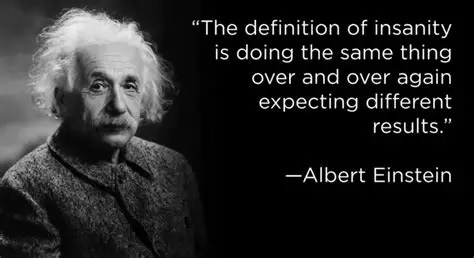
“Learn from yesterday, live for today, hope for tomorrow.  The important thing is not to stop questioning.” – Albert Einstein

Have you ever asked God, “Why?”

Have you ever questioned His existence?

Have you ever screamed out in agony, wondering why YOU even exist?

Have you ever wondered how a “loving God” could allow such pain and suffering?

Have you ever sat in a puddle of your own tears and felt you couldn’t go on?

Have you ever felt the hatred burning in your bones?

Have you ever tried to wake up, hoping it was just a nightmare?

Have you ever sought answers but found none?

Have you ever wondered, “Why me?”

Have you ever put on a fake smile so that you didn’t have to talk about it?

Have you ever wanted to start all over?

Have you ever wanted to give up? Everyday?

Have you ever wondered why you couldn’t get on the good side of life?

Have you ever felt cursed?

Have you ever felt depressed and regretted so much of your life?

I have.

“The power to question is the basis of all human progress.” – Indira Gandhi

How many times have you been told that you should never question God? I lost count of the times I was told that.  But guess what? He understands.  We were born questioning everything around us.  That is how we learn and grow.  The only ignorant question is the one that is never asked.  Asking questions clears confusion, gives us a better understanding of any given situation, and helps us find answers.  Questions help solve problems.  It is absolutely fine to question our life; it shows that we do not accept our current position or status and that we are willing to improve.

A Quiet Voice Echoes

A Quiet Voice Echoes

Dear Me,


I hear you.
I see what you endured.
I believe every word you wrote.

You were a victim—not because you were weak, but because others chose to harm you, control you, silence you.
It was not your fault. Not then, not ever.
You were not to blame for the loneliness, the violence, the brainwashing, the betrayal.
You were doing your best to survive inside a world that kept telling you to disappear.

And still, you are here.
You are speaking.
You are remembering.
You are healing.

I honor your pain. I honor your courage.
You don’t have to carry this alone anymore.
You are allowed to rest.
You are allowed to feel angry, sad, and confused.
You are allowed to feel everything.

There is no right pace. No deadline.
Only this: you are not silent anymore.
And that is everything.

I love you.
I am with you.
You are not alone.

Me

She Meow’s Like My Ex

She Meow’s Like My Ex

“She’s a diva,” I tell people.

She truly is demanding, entitled, and relentless. She will sit outside my door crying and bawling as if she has been wronged because I did not give her the beloved wet cat food this morning. She is so sure she is starving that she sits on the other side of the door, telling me so.

 I wasn’t trying to be mean or withhold food from her; she has a bowl of hard food available at all times, but she has become accustomed to a routine. A routine that doesn’t tell time unless, of course, I am late.

This particular day, I got up earlier than usual, around 3 a.m., and figured it might be a tad too early to feed the fat thing. I reasoned that if I fed her now, then she would be hungrier later. But she did not care. I was up, and she deserved her morning breakfast, which I ignored.

There are days I may linger in bed, especially on the weekend. And by linger, I mean 6 am or 7 am, but a lot later than the usual 4 or 5 am. If I dare allow myself a moment of pleasure in bed, longer than she’s used to, she will sit outside my bedroom door. Weeping and wailing about the hell she’s in, as if her stomach has shriveled and is actively atrophying. 

Is it wrong that I find myself resenting a cat?

She’s so needy. I can’t stand needy people, and this cat, in all her demanding glory, reminds me of my ex-husband. Always needing emotional propping. Constant ego strokes. He’d smell it if I didn’t convince him of my sincerity, and explode.

Oh, such a quandary living with a narcissist. You never know from one minute to the next if you’re going to set them off. No matter how hard you try to be perfect. And this needy, fluffy cat needed me to feed her.

I also find myself resenting her because she is so demanding. She stood outside my door, the door to my room – I don’t have a name for this room, but the room where I write, the room where I go to deconstruct. To get away. To lie in the red-light bed and forget. In this room, I sit, typing this. She paws under the door, meowing,

“Feed me bitch”.

Her demands take me back to my ex again, as everyone already knows a narcissist is demanding. They demand that you give them all the attention. If I showed my children more attention than him, he would start to act out in jealousy, so all the attention would be back on him. He insisted that I give him undivided attention 24/7. And if I had to take a break to use the bathroom or breathe, all hell would break loose, and I was disrespecting him.  He’d say,

“You aren’t listening to me! “.

This Tortie creature does the same thing. I can be sitting on the couch with a blanket watching TV, and she will be minding her own business, but as soon as I pull out a crochet project or the laptop. Then here she comes,

“Hey! Pay attention to ME!”

Staking claim to my lap, insisting I rub her head. I miss the days when she was less affectionate. She now needs pets and rubs more often than I care to give. Perhaps her deprived cries for attention cause me to want to withhold affection.

I used to be a cat person. Every cat I have ever owned was needy and demanding in its own way, but living with a narcissist for 24 years has helped me realize that maybe I shouldn’t be a pet owner because I didn’t even tell you about the codependent Goldendoodle.

That one needs a story of her own.

If Only…

If Only…

October 18, 2025

If only I weren’t sick with COVID right now, maybe I would feel more inspired or have the energy to put my thoughts on paper. But as fate would have it, I have little thoughts other than those directed towards health and healing.

I was reminded yesterday about a saying I heard or read. It said, “The problem with pain is that it demands to be felt.” The same goes for us. Pain, whether emotional or physical, has an insistent need to be felt.

Am I currently in pain? No, but something definitely feels “off” in my body, and thankfully, I know why. But what about the times when we don’t know why? When I’ve gone to the doctor and they’ve run test after test, only to come up with the same answer: nothing.

What about that feeling that still asks to be felt? I don’t know if I would call it a feeling exactly, but our body is definitely trying to get our attention. It says, Hey, look at me. Something is wrong. Keep looking. Keep searching. So we do, hoping to find a solution.

Often, the pain or problem felt within the body can be linked to something emotional. Something we haven’t fully processed. I know that’s the case with me. I have things, and traumas, and past experiences that I haven’t completely processed, and my body has demanded that I slow down and do that.

If only I listened to it more often. If only I listened to my body, would I then be more in tune with it? In tune with why it’s feeling the things it is feeling?

If only I could type without looking at the keyboard and stop overthinking it. Just as my body asks me to listen, maybe my creativity does too. If only I could just let the fingers move as the spirit led me to type the letters and form the phrases of the story I am writing. What would happen if I let the spirit move my fingers?

I think it’s called muscle memory when your brain remembers specific paths to take or keys to touch. After you’ve done something enough times, your brain knows how to do it. That’s why they say it’s like riding a bike. Apparently, we never forget. It may feel like a rut, but maybe it’s actually the rhythm of remembering, our brain and its muscle memory keeping us on track.

If only I could let go and listen long enough to hear the answers my life has been trying to tell me.