What I remember about my mother is…
October 14, 2025
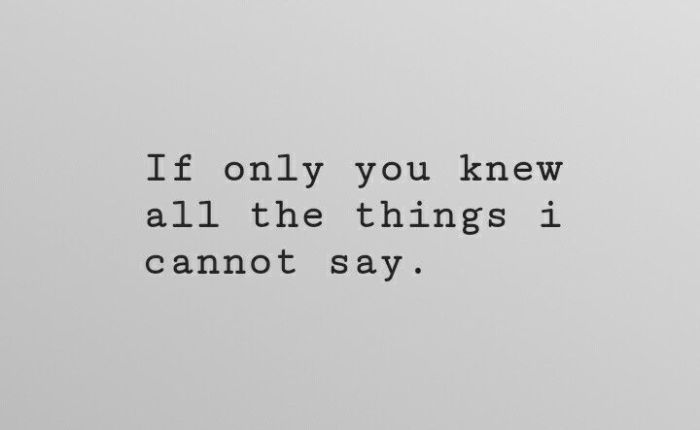
With a title like that, it makes me feel like it should go under the title of “what I can’t write about”. What I remember about my mother is how emotionally unstable she was when I was a teenager. But should I stay focused on that? I feel guilty even putting that on paper. Shouldn’t I be looking for the happy moments to remember about my mom? Like the time she took me to Disneyland? Or the time we simultaneously fell on the beach? Or the time we drove, what felt like across country, to visit family in Texas. Those were some fun times. And I suppose, if I allow myself, I can recall those and focus on them instead, but it feels like my mind wants to dwell on the events that scarred me or caused the most unrest.
Once, I remember in particular. She came home from church crying, sobbing, actually. Staring at her hands, hands that were starting to wither and constrict from years as a red cross nurse. When my 15-year-old-self asked her why she was crying.
She said, “Because Gayle wouldn’t talk to me . She wouldn’t even shake my hand”.
Gayle and my mom were best friends for a long time, then all of a sudden they weren’t. Some issue went down between my mom and Gayle’s son, Dave, the same one who molested me. And Gayle no longer wanted to be friends with my mom. I could not understand why she was allowing another human to cause her such distress. This woman controlled my mom’s every emotion. As a teenager, I wished my mom had been stronger. I knew that I was not able to go to my mom if I was in distress. She wouldn’t be able to handle it. I needed her to be emotionally available. I needed her to protect me. But instead, I had to be strong for her—a fifteen-year-old girl holding up a grown woman who couldn’t carry her own grief. She leaned on me like I was her anchor, her therapist.
What she wanted—what she demanded—was my undying devotion, my complete loyalty, maybe even my worship. But her constant victimhood repulsed me. The way she wallowed in it, wrapped herself in it like a favorite robe. She didn’t just live in that identity—she tried to pass it on to me. Now that I am an adult, she looks at me like I am broken. Like I am stuck in suffering, too fragile to stand on my own. But I’m not. I have already learned how to carry pain quietly. She doesn’t see that. She only sees what she wants to—someone who needs saving, so she can be the savior. But I don’t need her to rescue me. I need her to show up, like I needed when I was a teenager.
I remember my mom would go places on the weekends with her friends, and I would feel abandoned and neglected, wondering why she never took me. I suppose that is the life of a lonely only child. You get used to them keeping themselves occupied that you forget to invite them to places. Or maybe they stop asking because they always say no, like my last and only child at home.
I remember my mother being capitulating, emotionally distraught, and neglectful. It’s hard to put into words how exhausting it was to carry the emotional weight she dropped. I didn’t just have a mother—I had a fragile force of chaos that needed managing. I was the one steadying the ship, reading her moods like weather, preparing for storms. She needed me to be her anchor, her audience, her child-lover and devotee. But I needed her just to be a mother. I needed someone who could tell me everything was going to be okay. Instead, I spent most of my youth making her feel okay.
I also remember how she was so spiritual and sanctimonious until her family came around. She didn’t drink unless they were there. Now bear with me, I detect I am being a bit judgmental here, because I was raised in church and taught that drinking was sinful. So to see her drink when family came around seemed like a double standard. My adult self sees it a little differently now. I don’t know how to put it on paper. But good for her for choosing not to drink daily. Only allowing herself to let go of her inhibitions when the family was around.
I remember when I threw them a 25th anniversary party, I was a staunch Christian at the time, and I made sure EVERYONE knew that there was no alcohol allowed. So, they brought it in their ice chests, in the back of their cars. They would step outside to chug their beloved beer. I attempted to create order—purity—something untangled and clean. I wanted to make her proud, but I also wanted to undo the parts of her that embarrassed me, shamed me, weakened me. I wanted her to see me as strong, in control, untouched by the mess she seemed to bathe in. But the truth is, even then, I was still craving her approval, still hoping she’d finally see me—see what I was building to survive what she gave me.
Drinking is and was a thing my family does, has done, and still does. I did a genetic test, and it showed that specific genes inhibit my ability to produce dopamine. I can’t help but wonder if this is an inherited thing and why drinking and drugs are the go-to for dopamine hits in our family. Then I think about my mom and her pain pill addiction. She’s not like the ones you would think of who take them to be high; she’s what we call functioning. She waits until a specific time of day. Then mixes it with a beer for the best effect. But cannot go a day without the pill. To do so would cause excruciating pain.
What I remember about my mom is how she wanted to file for grandparent rights because we were not letting her see the grandkids, because she wasn’t in church, or because she was drinking. Honestly, I do not remember the actual reason why we did that. Again, it was self-righteousness on my part, but I remember that about my mom.
What I remember about my mom is how, when I turned my 22-year-old son in for molesting his sister, Mom was willing to stand by his side to testify on his behalf instead of standing by my daughter. THAT is what I remember about my mom. How she allows him to call her every week, how she gives him money, and how she accepts his letters. I know that is her grandson. It is my son. It hurts. It stings. But everyone assumes that “that is memaw,” and she can be weird like that. What devastates me isn’t just her loyalty to him. It’s what her loyalty costs. Her silence toward my daughter. Her refusal to draw a line. Her willingness to let me fracture. It’s like she needed to prove she could still be someone’s everything—and he gave her that opportunity. That kind of loyalty looks like love, but it isn’t love. It’s desperation. She’s always needed someone to cling to, to believe in, to fight for. I just never understood why it couldn’t be me.
What I remember is when she left my dad because she was so sure he was filming child pornography in their home. (He wasn’t) She still believes that to this day. Mom is delusional. Currently struggling with thinking someone has hacked her Facebook. Yes, it’s possible, but after looking at it multiple times, her FB is not being hacked. She has forgotten how to navigate it, and if FB upgrades, she will be even more confused and, with absolute certainty, think she is being hacked by someone else. There’s something hollow about watching your parent decline into paranoia. There’s grief in it, but also resentment. She still calls me like I’m her tech support, her lifeline, her handler. But I’ve been handling her my whole life. There’s no space to say, “I can’t do this anymore.” She wouldn’t hear it. She would only feel betrayed. Every time I try to step away, I feel like the bad daughter. But being her daughter has always felt like an assignment I didn’t ask for.
Reminding myself that I don’t have to decide right away whether to focus only on the “happy moments” or only on the painful ones. Memory is not tidy. It rarely divides neatly between joy and hurt. Often, the most actual writing comes when both are allowed to sit side by side.
I remember how, when she laughs, it is crackly, raspy. She has COPD from years of smoking. Laughter will send her into a coughing fit. Although the cough sounds congested, it is never productive; the phlegm persists.
I remember how mom goes silent when she is angry or feels wronged. Mom often feels like she has been wronged. She views life through a victim’s eyes.
When mom looks at me, she looks at me with pity, as if I am experiencing some horrible event. Yes, many times I have. But my daily life as a mom, wife, and office manager is not horrific, and I am not a victim because I go to work every day (well, technically not every day). It’s like she wants me to be wounded. Like she needs me to be just as broken as she is so she can understand me—or maybe justify herself. She calls it concern. But it feels like a projection. I’m not fragile. I’m tired. I’m functioning, flawed, healing—but I’m not living in a wound like she does. And every time she looks at me with those sad eyes, it’s like she’s trying to pull me back into her story, her suffering. I won’t go.
But still—I remember her. All of it. The good, the unbearable, the beautiful, the warped. I remember her as she was, not as I wish she had been. Maybe that’s the most honest kind of remembering there is. Not choosing sides between pain and peace, but letting them live together and letting them both be true. What I can’t write about is exactly what needs to be written. And maybe, somehow, that’s enough.



 Yoli's Write To Sanity