A Reflection on Grief

A Reflection on Grief

The Mourning Dove

I remember the first time I noticed a mourning dove was at our backyard feeders. Its coo stood apart from the others. A sound that seemed to linger instead of passing through. I remember thinking how different it was, like a new voice I had not heard before.

I had read that mourning doves sometimes appear after a loved one has died, offering comfort. I wondered briefly whether that was true and whether it was meant for me or someone else. Then I did what I had learned to do over the years, I dismissed the thought. Too many beliefs I once held had not unfolded the way I thought they would, so it felt safer not to attach any meaning to this.

Later that afternoon, my husband called to tell me they found his brother. He had died in his car during the night. It was the end of his quiet battle with addiction.

That mourning dove stayed, reminding us of how fragile life is. And that people are delicate too. Potential and talent do not protect or shield us. My brother-in-law was profoundly gifted, a creator, a man with vision and skill in the horticulture world. But addiction did not care about any of that; it never does.

Now, three years later, a small flock visits our feeders regularly. Like grief, showing up a little here and there and sometimes all at once.

The mourning doves have become a regular presence in our lives, just like grief.

My husband lost his mom when he was 14. We lost my son in 2020, and now his brother. Sadness has a way of settling in quietly, rearranging our lives without permission. But the coo of the Mourning Dove reminds us to pause and notice that calm can exist alongside pain.

The word Mourning carries a lot of weight, yet the Dove itself is gentle. It does not exaggerate loss; it endures it. Instead of feeling like a symbol of sadness, it becomes a symbol of peace and survival. Encouraging us to persist after something irreversible happens, reminding us that love does not disappear when someone is gone.

Now, when I hear their coo at the feeders, I do not dismiss it. I stop, listen, and remember. I take that moment to whisper a prayer for my mother-in-law and husband because I understand that grief can show up at unexpected times, and that peace can make remembering them easier.

Tortured memories

Addicted to forget them

Yet scarred thoughts remain

Enslaved for the fix

Blacked out,

resting thoughts at peace

A soul gone too soon

Addiction and suicides

Fatal kiss
Why Happiness Makes You Nervous

Why Happiness Makes You Nervous

For the girl who thinks the tightness in her chest is normal

Good times make you nervous, don’t they?

You don’t call it fear—you call it “being cautious,” or “not getting your hopes up.” But the truth is quieter: you’re not used to peace. For so long, love has felt like tension, panic, apologizing, overthinking, and walking around someone else’s moods like they’re landmines.

So when something finally goes right… Your whole body glitches.

You look around, waiting for the explosion.
You wait for the tone in his voice to shift.
You wait for the moment he decides you’re “too sensitive,” “too emotional,” or “too much.”

And if nothing happens right away, your brain fills the silence with dread: Is this the part where it all turns again?
You don’t trust happiness—not because you’re broken, but because you’ve survived too long without it.

Girls like us learn early that peace feels like a trap.
A setup.
A calm before the next storm.

No one told you that real love isn’t supposed to feel like bracing for impact.
No one told you that safety isn’t the same thing as “keeping the peace.”
No one told you that if your body relaxes only when he isn’t home… that’s not comfort. That’s survival.

Listen, sweetheart—if happiness feels foreign, it’s not because you’re incapable of it.
It’s because someone taught you to expect pain.

And here’s the part I wish someone had whispered to me sooner:
You don’t have to keep living in the story where fear feels like love. You don’t have to keep shrinking yourself just to fit into a relationship that was never safe to begin with.

Real peace doesn’t make you nervous.
Real love doesn’t make you flinch.
And real happiness doesn’t feel like a setup—it feels like finally coming home to yourself.

You deserve that kind of happiness.
And I promise… it won’t explode.

When someone ties despair to God Himself, it buries you in a deeper kind of fear. You stop dreaming. You stop believing in the better. And every time life gets quiet, you brace yourself, because you know the calm never lasts.

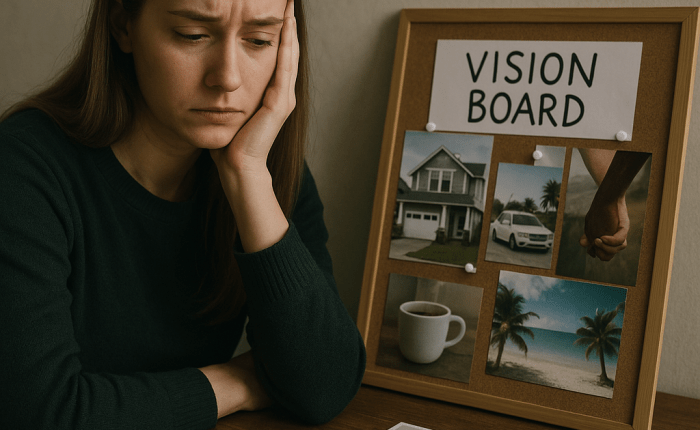
I remember once, after one of our rare calm seasons, we tried to dream again. We made a little vision board together — nothing extravagant, just things a normal couple would hope for. A peaceful home. A reliable car. A future that didn’t feel like walking through broken glass.

But his face went dark, the way it always did when anything felt too good.

He looked at me and said,

“God hates me. We will never get any of this.”

And just like that, the air changed.
The hope drained out of the room.
My body learned — again — that peace wasn’t safe, and happiness wasn’t to be trusted.

When You Take the Blame That Wasn’t Yours to Begin With

When You Take the Blame That Wasn’t Yours to Begin With

To Every Woman Still Carrying the Weight That Was Never Hers

I used to believe that everything was my fault.

The slammed doors, the silence, the yelling that followed the silence, the fists that followed the yelling—I took the blame for all of it. If dinner was cold, it was my fault. If he had a bad day, somehow I caused it. If he lost his temper, I should’ve known better. I should’ve stayed quiet. I should’ve smiled more. I should’ve been less.

When you live under the same roof as someone who thrives off control, you learn quickly that survival means shrinking yourself. It means bending until you barely resemble a person. It means learning the art of swallowing blame for things that never had anything to do with you—because arguing only brings pain, and agreeing brings temporary peace.

But what they don’t tell you is that even when you get out—when you finally pack the bags, find the courage, or flee in the middle of the night with nothing but your breath in your chest—that voice follows you.

Even in freedom, I found myself taking the blame for things that weren’t mine.

If a friend was upset, I’d replay our last ten conversations, convinced I did something wrong. If my boss looked stressed, I’d take on extra work, hoping it would ease a tension I didn’t cause. I’d apologize for everything. For asking questions. For not asking enough. For existing, sometimes. I was hunting for ways to feel terrible, and life kept handing me proof that I was right… because that’s what trauma does. It warps the lens.

But here’s the truth I’ve learned—he was wrong.

I was not the problem. I was not too sensitive. I was not too loud or too quiet or too emotional or too needy. I was not weak for staying. I was not selfish for leaving.

Healing isn’t linear, and it sure as hell isn’t clean. Some days, the guilt creeps back in like fog through a cracked window. But I catch it now. I see it for what it is: a ghost of the past, trying to convince me that I’m still that powerless woman I used to be.

I’m not her anymore.

I don’t carry blame that isn’t mine. I lay it down and walk away from it.

Now, I advocate. I speak. I write. I sit with other survivors and tell them: you are not crazy. You are not broken. And you are not to blame.

If you’re reading this and you’ve ever felt like the villain in your own story—take a breath. Hand back what was never yours to carry.

You deserve peace. You deserve love. And most of all, you deserve to be free from blame that was never yours to begin with.

You survived.

Now it’s time to thrive.

The Victim Mindset Is Keeping You Stuck

The Victim Mindset Is Keeping You Stuck

Why Blaming the Past Feels Safe—but Is Silently Sabotaging Your Growth

There’s a mindset that keeps people trapped—and often, they don’t even realize they’re in it. It shows up subtly, quietly, in the way someone reacts to life’s hardships. And over time, it becomes the lens through which everything is seen.

It’s the victim mindset.

It convinces you that life is just happening to you. That your circumstances, your past, and the way people have failed you are the reasons you can’t move forward. And while there may be truth in those hardships, staying stuck in that story only leads to one place: nowhere.

This mindset is especially dangerous because it feels justified. You’ve been hurt. Life has been unfair. Opportunities have slipped through your fingers. But the victim mindset doesn’t just acknowledge the pain—it builds a home in it. It keeps you focused on what’s been done to you rather than on what you can do now.

And the most painful part? Sometimes, it makes you push away the very help that could make a difference.

You might tell yourself that you’re independent—that you’ll figure it out alone. But if you’re rejecting real, practical help while still depending on handouts or the temporary kindness of others, that’s not strength. That’s survival. And survival is exhausting when there’s no plan to move beyond it.

When you stop asking yourself hard questions like, “What part am I playing in this?” or “What can I take responsibility for?”, you give your power away. It’s easier to blame the system, your past, or your circumstances. But blaming keeps you stuck. It keeps you from healing. And it lets you off the hook.

The truth is: you’re not powerless. You’re not broken. And you’re not doomed.

But if you’re constantly rejecting growth, avoiding discomfort, and refusing to let others help you in meaningful ways, you’re choosing stagnation. And deep down, you probably know it.

Real change is hard. Accepting help feels vulnerable. Facing your patterns takes courage. But that’s where transformation lives. It’s not in the blaming, the begging, or the surviving—it’s in the choosing.

You can’t heal what you refuse to take ownership of.
You can’t rise if you keep convincing yourself that you’re stuck.
And you can’t move forward if you keep turning your back on the help that’s already within reach.

Let this be the moment you get honest with yourself. Not to shame or guilt yourself—but to reclaim your power.

Because the victim mindset will always keep you stuck —and you deserve better than that.

I see this in my daughter. We have sent her to trade school twice, but she has dropped out both times. We paid off her car, paid her auto insurance for a year, and helped her pay for her own apartment.

And now she is in a worse place than before we did that, begging people for money.

My family members and I offer true, lasting help – like coming to stay with us so you can get on your feet, etc. – but she refuses. Instead, she chooses to remain in the chaos, her comfort zone.

GRATITUDE IN REVERSE

What felt like the end of the world turned out to be my greatest gift.

Albert charged into the side door of our house, clad in polyester basketball shorts and a t-shirt adorned with armpit sweat.

I inhaled, holding my breath, thinking, “Oh boy, what now?”.

“Pastor Riggs told me to hand in my resignation.”

He wouldn’t say he got fired — that would sound too obvious, like admitting he did something wrong. No, he was ‘asked to resign.’ He explained, with pride, that he had told the pastor off and had a long list of reasons.

All I could think of was Thanksgiving back in 2007, when we had to eat spaghetti because he had been fired from a previous position helping a pastor grow his church. He didn’t have a proper title, so we called him the church evangelist — but really, he was the church shit stirrer. I can recall three men who have dared to tell Albert the truth to his face. None of these men was a hothead like him. They had boundaries, and he crossed them. One preacher even went so far as to call him “a wolf in sheep’s clothing.” I remember that night and still chuckle inwardly.

But this day felt like the end of an era—the end of our lives. We knew poverty. We survived it. But I was so tired of just surviving. So tired of pinching pennies, being the recipient of groceries because people felt sorry for us. I was downright exhausted. He told off the wrong guy, and that guy had the balls to stand up for himself. Kudos. But that didn’t help the situation. We were in dire straits. Bills do not miraculously stop just because you lose a job. No, electricity still runs, and a bill is still accumulating.

This is when he decided we would pursue his lifelong dream of starting a cleaning business.

“Oh gawd, yuck. I hate cleaning.” I thought. I did not want to do this. But being the obedient wife I was,

I said, “Okay.”

I was already at my wits’ end with him. I had even filed a restraining order earlier that year, thinking it would change him and he would be a different person. It only changed me. I became a different person. I was finding my voice.

We pushed along, started from scratch, and kept on scratching until we had a decent little cleaning business. It turned out it wasn’t as brutal as I thought it would be —cleaning, that is. Since he was OCD, I had learned to pay attention to detail.

I remember one time he was at work (I was a stay-at-home wife and mom), he may have been at bible college. Regardless, I spent all day cleaning the house. I wasn’t taught to keep a clean home. As a kid, my room was livable — clothes piled up, and I’d make a path to the bed and push them off to sleep. Dishes would overflow in the sink and onto the counters, even with a dishwasher sitting right there. My mom never asked for help — just pouted on weekends, complaining nobody helped her. But she never asked for help. I do not remember a single time my mom showed me how to wash dishes or asked me to wash them. But when I stayed the summer at my aunt’s house, she made me clean up after myself and even showed me how to clean behind the toilet.

So like I said, living with an OCD person – my husband – taught me to pay attention to detail.

Back to the part where I had cleaned all day, then he came home and went on a rampage:

“What have you been doing all day? Why does the house look like this? Get off your lazy ass and clean this fucking house!”

Nothing was lying around —not even a particle on the floor; everything had been freshly mopped and vacuumed. Do you know what he saw? A smudge on the corner of a mirror. Something I had missed. I cried that day. But I learned how to pay attention to detail on that day, too.

Cleaning houses felt a bit rewarding. I cleaned behind toilets and wiped baseboards, tops of door frames, and ledges on the doors. Top to bottom. No mirror had a smudge, and you could eat off the toilet seat. 10/10 would not recommend, but it would have been safe to do so.

As time went by, my disgust for him grew. But I could not figure out how to survive on my own with all these kids still living at home. It wasn’t until he got sick. Real sick. He ran a fever for over a week and refused to see a doctor. He would come downstairs and cry and whine like a baby, literally. Imagine a 3-year-old whining when they want their way. That was him. Then he would go back upstairs to sleep. He slept and slept. I would bring him soup, tea, water, and even made a homemade herbal remedy, which, for the first time in our 23-year marriage, he took. I welcomed the quietness his illness brought me, but I still performed my wifely duties of “in sickness and in health,”. Then went to clean the houses by myself. My daughter, who was in Christian school, would take a few days off to help me, but I found it easier to clean by myself than to go behind her to make sure she did it right. Not that she couldn’t clean, but this was our only income, and I didn’t feel I had room for mistakes.

Two more days went by, and he did not get out of bed. I got scared. I realized something was really wrong with him. He’s not faking or overreacting this time. So I called my sister-in-law and told her what was going on, and she said,

“You march up there and tell him he is going to the doctor, that he doesn’t have a choice.”

And so I did. He refused, crying and whining the whole time I was helping him dress, like a child not wanting to leave the park. Then, I drove him straight to the hospital. The doctor asked a bunch of questions that I answered, since he liked to withhold vital information. I even got the doctor to give him a prostate exam, which brings a smile to my face today. Turns out it was his appendix. It had been oozing into his body, and instead of being able to have the simple surgery, he had the large one where they cut from the top of the sternum to the pubic bone. I felt little sympathy for him, and he is a miserable patient. I was thankful to have work to go to. Grateful that we had just started an enormous organization project that was able to keep me away from seeing his green face and the black bile coming out of his mouth. His recovery took over six weeks. But by then, I’d already been cleaning solo for 8 — and I realized I could keep doing it. I could support my family without him. He had already lost interest in cleaning, wanting always to rush through the houses. He was there only to collect the check. Turns out he did not have as great a work ethic as he proclaimed.

When we finally separated, he left me the house and the business. A detailed story for another page, but what I thought was the end was just the beginning.

I thought when he got fired, we were going to do like we always did and move to another state and start all over. But instead, we started a cleaning business I didn’t want to start, and that business helped me support my then-6 kids at home. And without him there to tell me how the money was going to be spent frivolously, I was finally able to buy my kids’ school clothes and school supplies. For the first time, when they came to me with a need, I was able to supply it.

And that was the greatest gift of all.

When Pain Feels Familiar, And Peace Feels Like ARisk

When Pain Feels Familiar, And Peace Feels Like ARisk

It’s not your fault you feel this way. But you don’t have to stay there.

Sometimes it feels like emotions happen to us, like the weather.
“I guess I’m just sad today.”
“It is what it is.”

But here’s the part no one tells you:

You might not get to choose the feeling that shows up. But you do have a say in how long it stays there.

When we’ve been through trauma or long-term hurt, sadness, or pain can start to feel familiar. It’s almost comforting in a strange way. We stop trying to feel better because part of us doesn’t trust that “feeling better” is even possible. So we sit in the sadness like it’s the only place we belong.

Sometimes, without realizing it, we even let the pain in like a guest who shows up uninvited…. and we don’t ask it to leave. Not because we want to suffer, but because suffering is what we know. It feels predictable. Safe. Normal.

But here’s the truth:

You’re allowed to feel your feelings, and you’re allowed to move through them.

Pain doesn’t have to be your home anymore. You deserve moments of peace, even if they feel unfamiliar at first, because you deserve better.

It took me over 20 years to realize that I deserved better. I sat in my pain day after day—wishing it would go away, wanting it to stop—but doing nothing about it because it had become my comfort zone. I was stuck in a rut and had no idea how to pull myself out.

But once I finally recognized that I did deserve better, the answers started coming to me — sometimes slowly, and sometimes all at once.

I spent 24 years in an abusive marriage. Today, I can say I made it out. And so can you.

Why No One Can Cheer You Up (And Why You Don’t Want Them To)

Why No One Can Cheer You Up (And Why You Don’t Want Them To)

It’s not that you can’t feel better…it’s that you don’t trust better.

When you’re upset, it feels like nothing can touch you. Friends try to cheer you up, but their words bounce right off. You shut it down with,

“You don’t understand,” or “I can’t help the way I feel.”

Here’s the thing: you’re not wrong for wanting to sit in your feelings. Pain can feel safer than pretending everything’s okay. But sometimes, without realizing it, you hold on to that pain like proof. Proof that you were hurt, evidence that your feelings are real, proof that you’re not invisible.

And letting it go? That feels scary. Because misery, as heavy as it is, can start to feel familiar. Almost like home.

You’re not broken for feeling this way. You’ve just learned to live with despair for so long that happiness feels foreign. But here’s the truth: you deserve more than the familiar depression. You deserve peace, even if it feels uncomfortable at first.

Such was I. I lived in an abusive marriage for 24 years. When I finally dared to leave, I started reflecting and asked myself,

“Why had I stayed so long?”

In the future, I knew I didn’t want to make the same mistake. I didn’t want to end up in another abusive marriage. So I looked back at my past relationships, and they were all the same. Abusive.

Wow. Who am I? And why am I choosing this path?

That’s when I realized I had an addiction problem. I was addicted to pain—the pain and the drama of the chaos. I was stuck in a cycle, like a revolving door. So I constantly had to remind myself why I was leaving. I had to remind myself that I deserved better and that I should look for someone who was the complete opposite.

And that’s precisely what I did. Today, I stand on the other side of abuse. Stronger, freer, and committed to helping others find their own path out.

Need help?
If you or someone you know is struggling with addiction, emotional distress, or abuse, support is available 24/7:

  • Addiction Recovery: Call 866-606-0182 or visit our treatment center directory
  • Suicide & Crisis Lifeline: Dial 988 (free, confidential, 24/7)
  • Domestic Violence Hotline: Call 800-799-7233 or text START to 88788
  • Sexual Assault Hotline (RAINN): Call 800-656-4673 or visit online.rainn.org

You are not alone. There is help. There is hope. And you are worth the healing.

Question Everything

Question Everything

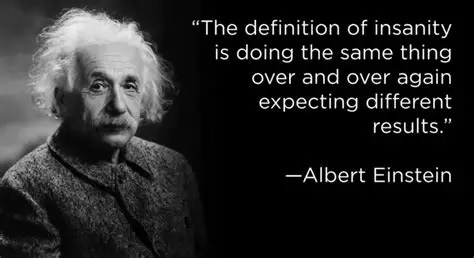
“Learn from yesterday, live for today, hope for tomorrow.  The important thing is not to stop questioning.” – Albert Einstein

Have you ever asked God, “Why?”

Have you ever questioned His existence?

Have you ever screamed out in agony, wondering why YOU even exist?

Have you ever wondered how a “loving God” could allow such pain and suffering?

Have you ever sat in a puddle of your own tears and felt you couldn’t go on?

Have you ever felt the hatred burning in your bones?

Have you ever tried to wake up, hoping it was just a nightmare?

Have you ever sought answers but found none?

Have you ever wondered, “Why me?”

Have you ever put on a fake smile so that you didn’t have to talk about it?

Have you ever wanted to start all over?

Have you ever wanted to give up? Everyday?

Have you ever wondered why you couldn’t get on the good side of life?

Have you ever felt cursed?

Have you ever felt depressed and regretted so much of your life?

I have.

“The power to question is the basis of all human progress.” – Indira Gandhi

How many times have you been told that you should never question God? I lost count of the times I was told that.  But guess what? He understands.  We were born questioning everything around us.  That is how we learn and grow.  The only ignorant question is the one that is never asked.  Asking questions clears confusion, gives us a better understanding of any given situation, and helps us find answers.  Questions help solve problems.  It is absolutely fine to question our life; it shows that we do not accept our current position or status and that we are willing to improve.

A Quiet Voice Echoes

A Quiet Voice Echoes

Dear Me,


I hear you.
I see what you endured.
I believe every word you wrote.

You were a victim—not because you were weak, but because others chose to harm you, control you, silence you.
It was not your fault. Not then, not ever.
You were not to blame for the loneliness, the violence, the brainwashing, the betrayal.
You were doing your best to survive inside a world that kept telling you to disappear.

And still, you are here.
You are speaking.
You are remembering.
You are healing.

I honor your pain. I honor your courage.
You don’t have to carry this alone anymore.
You are allowed to rest.
You are allowed to feel angry, sad, and confused.
You are allowed to feel everything.

There is no right pace. No deadline.
Only this: you are not silent anymore.
And that is everything.

I love you.
I am with you.
You are not alone.

Me

One Secret I Still Keep Is…

What You’d Never Guess Just by Looking

Does it have to be just one? There are a few secrets I keep.

The first thing that comes to mind is that I gave birth to 11 children. One at a time. However, that’s no longer really a secret. It is information I usually do not tell people. Not because it is such a big secret, but because their brains cannot seem to comprehend how one woman gave birth to that many children. Or why. Now that is the true secret.

Why? Why did I have that many kids?

Well, first and foremost, because we were in a religious mindset that allowed God to choose how many children we have. But I will tell you that when I was 40 and pregnant, I chose for myself to get that fertile tube tied up, or cut off, or whatever they do, so I cannot get pregnant again. (I only had one tube and ovary by the time 11 came around.) Another reason I had 11 children was that, with the birth of each new baby, came another person/soul who would love me unconditionally and make my fractured life feel whole, even if only temporarily. I desperately longed for someone to love me. And when a baby looks up at you and smiles because you are their entire world, you get the feeling.

Love. The missing piece of me.

Maybe it sounds selfish, but I wanted someone to need me the way I had needed others who didn’t show up.


Another secret I  keep is about my oldest son being in prison. He was a highly respected individual. Everyone loved him. So, for the longest time, whenever anyone asked me where he was or how he was doing, I would answer, “I don’t want to talk about it.” But the bigger secret in that is why he is in prison.

Why?

Because he was so traumatized as a child that he sexually traumatized a child, that’s why. It’s not an excuse, just a truth I’ve had to live with. Pain that isn’t healed will try to find something — or someone — to break.


A third secret I don’t tell anyone: I was a pastor’s wife for 20 years. I never really asked myself why I was, so the “why” in this situation is: why do I keep it a secret? Good question, good soul search here.

Why?

Because I do not want anyone to ask me what I believe now, I am still trying to figure all that out. Like, do I still want to use the term “God,” or is it the Universe, or is it just Spirit? None of those feels right. The closest to feeling like my truth is Universal God or Universal Spirit. But like I said, I am still working that out. I keep it a secret because I do not want people trying to persuade me back into church, back into conformity. I do not want to go to church every Sunday and Wednesday. I don’t want to go door-knocking, soul-witnessing, or whatever they call it. I cannot sit in a service without being overcome with anxiety. My nervous system shuts down, and I usually fall asleep. But I sit there and feel like a ghost of myself, singing words that no longer have a place to land inside me. I know this because I have tried. I tried to find a church so my youngest son could get a taste of religion and decide for himself whether it is something he wants. It’s a secret because I probably disagree with 90% of what they might be talking about if you tried to strike a spiritual conversation. I have read the Bible cover to cover multiple times. There is nothing they can say that will get me to see things differently. It’s a secret because I have not yet dared to share my beliefs with the world.

But here’s a start.

I believe God was female in nature. I believe the Bible is a history book. I think every religion has its great “man of the hour.” The Christians had Jesus. The Muslims have Mohammad. The Jews have the Messiah, and so on. I believe it’s the same thing, just described in a different style. Reaping what you sow is the same thing as karma. The Ten Commandments do not differ much from the Delphic maxims. Maybe the real secret isn’t what I’ve kept — it’s how long I’ve waited to say it out loud.


And the last secret I keep is my age.

They say you’re only as old as you feel. Some days I think I’m 37. Other days I feel 57. It changes with the weather, the weight of the day, or the way my knees sound when I stand up too fast. People often tell me I look so young — thankfully. And I want to keep it that way. Because age isn’t just a number, it’s a perception. It’s the difference between someone listening to your story and brushing it off. So I let them guess. And I let myself believe it too, some days.