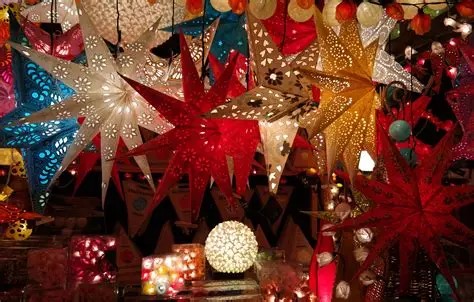
I don’t know when Christmas turned from magic and lights to misery and blight. I only know that one day the lights didn’t sparkle as much anymore. Shopping feels like a waste of time and a drain on life savings. I don’t see why we spend four weeks preparing for something that lasts a day and two more weeks taking it apart.
For me, Christmas starts at Thanksgiving, when our family combines the holidays. The tree goes up a week or so beforehand and stays for the long haul, like an unwanted guest. Or a fly trapped in a car. Some years, I play Christmas music. Most years, I keep playing my usual, Ozzy and the like. This year has been an Ozzy year (RIP).
I don’t know exactly when I started to hate Christmas. Maybe it was when my former husband threw a fit because I wasn’t decorating the tree the way he thought I should, or in the colors he preferred. I remember standing in the living room, feeling crushed. It was Thanksgiving night or the evening after. I had cooked all day, and the meal was devoured in about fifteen minutes. Then came the cleanup, too much for three young children to help with, while he lay on the couch and napped.
After a few years of begging to do it myself, I learned it was easier to stand by and hand him the ornaments. There was rarely a time when I was alone. He took up most of that space unless I woke earlier than him, something I trained myself to do after a few years of marriage.
.I was excited to put up the tree so the kids could feel the same anticipation we had as we grew up. We finished hanging the cursed lights you pray will still work from the year before. The last thing was the topper. No matter how hard you try, tree toppers never want to stay straight. It didn’t help that he was obsessive about details. Somehow, it became my fault that the angel leaned and refused to stay lit.
Then there was the money. I had no idea how we were going to buy presents with what little we had. He was in Bible college and believed he should not work. If God wanted him there, God would provide.
It was then that I started questioning the sacrifices we were making. We gave money we didn’t have to a church and to missionaries who earned more than we did. We decided things like toilet paper and electricity were luxuries, not needs.
How do you reconnect to Christmas after that?
When I was a child, my parents had a tradition that I could open one present on Christmas Eve. Sometimes I choose it. Sometimes they did. Now that my youngest is still at home, I understand why they sometimes chose it, because there was that one gift they dreaded wrapping.
The oversized gift hidden in my closet this year will be opened the same way, because it is simply too big to wrap.
I remember the year I received a Nintendo with a Smurf game. I stayed up all night playing. When my parents woke up, I was still sitting on the floor in front of our wood-encased television, controller in hand.
My mother asked if I had slept at all and warned that I would be too tired to open presents later. I told her I would be fine. I was twelve. Of course I was.
Every Christmas Eve, we went to my grandmother’s house for dinner and gifts. No one ever knew what to buy for my uncle, a grown man still living at home who owned every comic book printed. He usually received socks or an ugly sweater. I hated getting gifts from him because they were never helpful.
Then, one year, he bought me the entire Wizard of Oz book set. He was a reader. Once he learned I loved books, buying gifts for me became easy. That year, he earned my respect.
My grandmother made many of my gifts by hand. Stuffed animals. Dolls. Raggedy Ann and Andy. A panda bear. Characters from The Wizard of Oz, except the witch. Around that time, rumors circulated about possessed dolls. I wasn’t afraid of Raggedy Ann or Andy, but the Oz dolls terrified me. I stored them in my mother’s closet.
I was fifty-six years old when I learned the infamous Annabelle doll was a Raggedy Ann, identical to the one my grandmother had sewn for me.
Every year, she stitched us matching Christmas dresses or skirts. Mine always brushed the floor. By the time I was thirteen or fourteen, I decided that kind of outfit no longer served my image.
One year, she made me a stocking more than five feet tall. My mother filled it. Stockings were always my favorite part of Christmas. Candy and small surprises, one after another.
We used to cover the tree in silver tinsel so it looked like snow. It didn’t look like snow, but it looked like Christmas. The cats loved it too and walked around for days with tinsel trailing behind them. No one wanted to deal with that, so we didn’t.
As a child, I loved Christmas. The lights. The colors. The music. My earliest memory is of a tree in the front room and presents underneath it. Our dog unwrapped a gift I had made for my parents, and I was furious.
That same year, I wanted a necklace so severely that I couldn’t stand not knowing. I unwrapped a present early, saw it was the necklace, and wrapped it back up. When they asked, I blamed the dog. But they didn’t believe me.
Christmas stopped being simple over time; loss layered itself onto the season. One of my children is gone. A serious family rupture surfaced during the holidays. My former husband despised Christmas and made it miserable. Putting up the tree was always a fight. There was never enough money.
One year we threw the tree away, calling it an idol. I had the scripture to support it. He declared the sin we were committing and the consequences. I enforced them. Out went the tree. Out went the decorations.
Minimalism became our way of life before it had a name.
This is why my adult self does not love Christmas.
My inner teenager can take it or leave it. She once begged relatives to give her gift certificates so she could choose her own clothes. Instead, they bought things she wore once and never again. She loved shopping with her mother because she got to choose, except for the extra-tight parachute pants.
I don’t know exactly where I stopped enjoying Christmas, maybe when I got married, maybe when it became my responsibility to make it happen with people who made it difficult.
My current husband shares a similar background and the same ambivalence about the holiday. We try. We are doing fine. But Christmas is no longer all about lights. Not like when our mothers made it special.
Recently, I did something I hadn’t done in several years. I play instrumental Christmas music and turned it up. Then I baked.
Banana bread. Apple bread. Pumpkin. Gingerbread. Peanut butter cookies. Most of it adjusted to be Paleo.
All day I measured, mixed, and baked. Timers went off. Batter waited for its turn. I tasted everything.
My favorite was the banana bread sweetened only with bananas. Not overly sweet. Just enough.
The final loaf was made from leftovers. Extra pumpkin. Extra applesauce. I still don’t understand why recipes don’t simply use the whole can.
Halfway through, I remembered dinner. I pulled out the Instant Pot, added frozen meat and seasoning, and thirty minutes later, we ate.
The kitchen felt chaotic and magical at the same time, warm, messy, and smelling like Christmas.
I don’t enjoy Christmas as much as I’d like, but I am learning to find ways to make it more enjoyable.



 Yoli's Write To Sanity